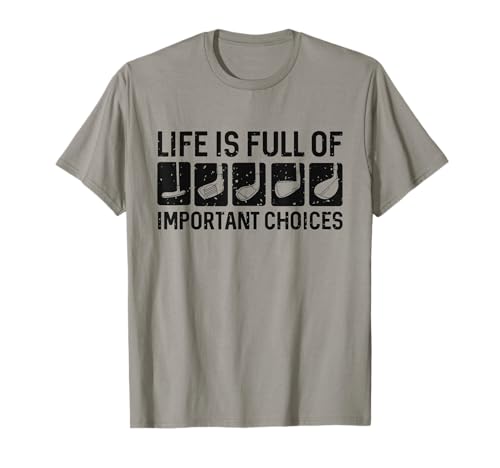
Life Is Full of Important Choices: Golf Edition
Every round is a chain of decisions — which club, which target, which shot to commit to. Here is how the choices you make on and off the course shape your score, your confidence, and your enjoyment of the game.
Why this topic matters: The phrase "life is full of important choices" fits golf better than almost any other sport. Between the first tee and the final putt, an average golfer makes well over one hundred decisions. Most of them are small, but a handful each round separate a good score from a frustrating one. This guide breaks those decisions down into clear, practical categories so you can choose smarter and play with more purpose.
The Choice Mindset: Why Golf Is a Decision Game
Golf is unusual because the ball sits still. You are never reacting to an opponent's speed or a defender's movement — you are choosing a plan and executing it. That makes the sport a constant exercise in decision-making, and it is exactly why the phrase "life is full of important choices" resonates with so many players. A golfer who thinks clearly will outperform a golfer with a prettier swing but a scattered plan.
The first choice is mental: deciding to be patient. Amateur golfers lose more strokes to impatience than to poor technique. Choosing a conservative target and an aggressive swing is one of the most reliable scoring principles in the game, and it costs nothing to adopt. If you want to build the fundamentals behind that approach, review the basic fundamentals of golf swing and treat them as the foundation your choices rest on.
The Three Decisions Before Every Shot
- Assessment: Read the lie, the wind, the pin position, and your own energy level honestly.
- Selection: Pick the club and shot shape that fit the assessment — not the shot you wish you could hit.
- Commitment: Once you decide, stop second-guessing. A committed average shot beats a hesitant perfect one.
Choosing Your Equipment Wisely
Equipment choices are the most visible decisions a golfer makes, and they are also the ones where tier matters more than marketing. Rather than chasing the newest release, choose gear that matches your swing speed, handicap, and typical miss. A mid-handicap player who selects game-improvement irons with more forgiveness will usually score better than one who insists on a professional-style blade.
Starter Tier
Complete sets and entry-level clubs designed for new golfers. Maximum forgiveness, lightweight shafts, and simple designs that help you learn without fighting the equipment.
Mid-Tier
Game-improvement and balanced-tier clubs for players building consistency. A solid choice for the category, offering a blend of forgiveness and feedback.
High-End Tier
Players irons, premium drivers, and tour-style wedges for low handicaps. More workability and precision, but they demand a repeatable swing.
Professional-Grade
Flagship-tier equipment built for elite ball-strikers. Fine margins, precise weighting, and premium materials for golfers who know exactly what they want.
If you are shopping for irons, compare golf irons for high handicappers against golf irons with the most forgiveness before deciding. Players on a tighter tier should also weigh second-hand golf clubs, and high handicappers can find excellent second-hand golf clubs for high handicappers that deliver strong performance within their class.
The Golf Ball Decision
Ball choice is one of the most underrated decisions in amateur golf. A soft-feel ball suits slower swing speeds and helps with control around the greens, while firmer tour balls reward higher swing speeds with more spin and distance. If you are unsure which profile fits you, use a find the right golf ball for me guide and consider the best golf ball for a slow swing. High handicappers should also review golf balls for high handicappers and soft feel balls for a more forgiving feel on off-center strikes.
Putter and Grip Choices
Putting is where choices pay off fastest. A properly fitted putter and the right grip size can transform your stroke. Explore putter fitting principles, compare putter grips, and use putting alignment and putting arcs tools to groove a repeatable path. Left-handed players hunting for options can browse used left putters for sale, and a center shaft mallet putter cover protects a center-shafted build.
Bag, Cart, and Accessory Decisions
Your bag and transport choices affect comfort over eighteen holes. A well-organized golf bag keeps clubs accessible, while push carts, remote control carts, and top-rated electric golf trolleys reduce fatigue. If you prefer to walk with power assistance, compare best electric walking golf carts and best value electric golf trolley options. Small accessories matter too — a reliable golf towel and a thoughtful set of swag bag ideas for golf tournament gifts show that details are part of the decision.
Course Management: The Choices That Save Strokes
Course management is the art of choosing where to land the ball rather than where to aim it. The best players in the world routinely aim away from flags to take trouble out of play. Amateurs can copy that approach immediately.
| Situation | Risky Choice | Smart Choice | Best For |
|---|---|---|---|
| Pin tucked behind a bunker | Attack the flag | Aim at the center of the green | Mid-tier and high handicappers |
| Narrow par 4 with water | Driver for maximum distance | Fairway wood or hybrid to a safe zone | Players protecting a good round |
| Long par 5 with a guarded green | Go for the green in two | Lay up to a comfortable wedge distance | Anyone without a reliable long club |
| Downhill lie with a front pin | Full swing at the flag | Take one more club and aim to the middle | All skill levels |
Club selection is the practical skill behind good management. Learn the principles of golf club selection and match your choices to your actual carry distances. If your swing speed sits near 100 mph, a shaft for 100 mph swing speed will give you a more predictable ball flight, and high balance point driver shafts can help with stability and control. Beginners who want a repeatable model should study the perfect golf swing for beginners and practice with a golf training aid for swing plane.
Choosing Where to Play and How to Practice
Where you play shapes how quickly you improve. Short courses are excellent for learning, and a best par 3 golf courses near me search or a quick look at the closest par 3 golf course to me can reveal low-pressure venues close to home. Public options abound — explore public golf courses within 50 miles of me, North Jersey public golf courses, or the Oxford Valley public golf course. Signature layouts like Royal American Links golf course, Patriots Point Links golf course, Punderson State Park golf course, Maplewood golf course tee times, Copperhead golf course tee times, and Firewheel golf course Old Course are worth planning around.
Practice decisions matter as much as on-course ones. A home setup with a best home practice putting green or best-rated indoor putting greens builds repetition. For full-swing feedback, a swing analyzer and portable launch monitors turn range sessions into measurable progress. Beginners can also follow driving range tips for beginners, and anyone protecting their property should look at netting to protect house from golf balls.
Technology Choices: Rangefinders, Watches, and Sensors
Technology is a decision aid, not a substitute for judgment. A rangefinder gives you the number; you still choose the club and the target. Compare rangefinders, most accurate laser range finder models, and rangefinder golf for the money options. If you want a watch form factor, review rangefinder watches for golf and smartwatch golf features. For swing data, the Blast Motion golf swing analyzer and sports sensors swing speed radar provide useful feedback. A golf Bluetooth speaker with GPS combines entertainment and course information, and a golf launch monitor with courses supports indoor practice.
Fitness and Recovery Choices
The body is part of the decision chain. Choosing to warm up, stretch, and train consistently protects your swing and your score. Build a routine from flexibility exercises, shoulder mobility work, and resistance training. Senior golfers chasing more speed can review more distance for senior golfers strategies.
Style and Gift Choices
Golf has a social side, and the choices you make around apparel and gifting reflect that. Consider short sleeve golf shirts for women, matching golf shirts for couples, and waterproof golf shoes for comfort in bad weather. For events, browse gift baskets for golf tournament ideas, golf outing prizes and giveaways, and personalized touches like sterling silver golf ball markers personalized or magnetic poker chip ball markers.
Quick Reference: Common Golf Decisions
- First club purchase: Choose a complete starter-tier set or a forgiving mid-tier iron set rather than professional-grade blades.
- Ball selection: Match compression and feel to your swing speed; softer balls suit slower swings.
- Tee shot on a tight hole: Choose accuracy over distance — hybrid or fairway wood is often the smarter play.
- Approach shot with a front pin: Take the middle of the green and accept a longer putt.
- Practice time allocation: Spend the majority on putting and short game; it is where strokes are saved.
- Technology purchase: Buy the device that answers the question you actually have, not the one with the longest feature list.
Frequently Asked Questions
What does "life is full of important choices golf" actually mean?
It is a reminder that golf, like life, is shaped by the decisions you make. Every shot involves a choice of club, target, and mindset, and the golfer who chooses wisely tends to score better and enjoy the round more.
How do I make better choices on the golf course?
Start with a clear pre-shot routine, assess the lie and conditions honestly, choose the club that reaches your realistic target rather than your best-ever shot, and commit fully to the shot once you have decided.
Do equipment choices really matter for mid-handicap golfers?
Yes. Mid-range and game-improvement clubs with more forgiveness help mid-handicap golfers keep the ball in play. Choosing the right ball, putter, and grips also makes a measurable difference to consistency.
What is the most important choice a golfer makes in a round?
Course management. Deciding when to attack and when to play safe often saves more strokes than any swing change. Conservative targets with an aggressive swing is a proven scoring approach.
Make the Next Choice a Smart One
From your first club selection to your final putt, every decision is a chance to improve. Explore the guides above and choose equipment, strategy, and practice habits that match your game today — then build from there.
Explore Golf Club Selection