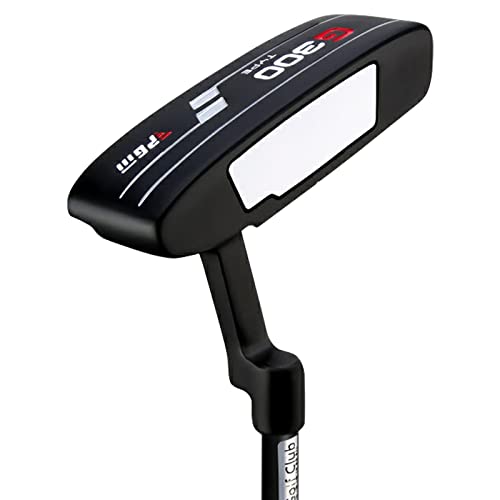
The Complete Guide to Blade Putters: Precision, Feel, and Timeless Design
Discover why the classic blade putter remains the top choice for golfers who prioritize feedback, control, and artistry on the greens.
FIND YOUR BLADE PUTTERKey Insight: A blade putter is characterized by its compact, traditional heel-toe weighted design. It's the preferred tool for players who rely on feel and a pronounced arc stroke, offering unmatched feedback on every putt compared to larger mallet putters.
What Makes Blade Putters Unique?
The defining characteristic of a blade putter is its straightforward, compact head shape. Unlike the high-MOI designs of modern mallets, the blade concentrates mass directly behind the sweet spot and at the heel and toe perimeters. This design philosophy dates back to the classic Ping Anser, but today's models feature advanced fitting technologies and milled faces from premium materials. When you strike a ball with a finely crafted blade, the feedback is immediate and detailed, allowing you to instantly understand the quality of the strike.
The primary engineering goal is to promote a natural toe flow throughout the stroke. Most blades are designed with a significant amount of toe-hang, making them ideally suited for golfers who have a distinct arc in their stroke path. The balance and weight distribution encourage the face to rotate open on the backswing and close through impact, which is a natural motion for feel-oriented players. This connection between the golfer's hands and the clubhead is what makes putting with a blade such a rewarding experience when your timing is right, unlike the face-balanced designs found in many counterbalanced models.
The Critical Role of Toe-Hang
Toe-hang is arguably the most important technical specification to understand. It dictates which stroke type a putter is best for. A full-shaft offset plumber's neck hosel generally creates maximum toe-hang (suited for a strong arc), while a flow neck or slant neck reduces it slightly (suitable for a moderate arc). A center-shafted blade, though rare, can approach face-balance. Matching your stroke's arc to the correct toe-hang ensures the face returns to square naturally at impact without you having to manipulate the putter.
Blade Putters vs. Mallet Putters
The choice between a blade and a mallet is the fundamental dividing line in putter selection. Mallets, with their larger profiles and deep center of gravity, are designed for maximum forgiveness and a higher Moment of Inertia (MOI). They resist twisting on off-center hits, which helps maintain distance control even on mishits. Blades, however, trade that inherent stability for precision feedback and a more workable, traditional feel. A slight mis-hit on a blade is instantly felt and heard, a feature that better players use as a learning tool to groove a more consistent strike on the green.
Advantages
- Unmatched feedback on impact
- Superior distance control on center strikes
- Enhances feel and touch on the greens
- Naturally suited for arc-based putting strokes
- Classic, timeless aesthetics at address
Disadvantages
- Less forgiving on mishits (loss of distance)
- Can be less stable on very short putts
- Not naturally suited for a straight-back-straight-through stroke
- Requires more precise strike timing
Manufacturing Methods: Milled vs. Cast vs. Insert
The way a blade putter is crafted profoundly impacts its feel and price. Understanding these methods will significantly narrow your search, especially if you are considering the right golf gear for your game.
| Manufacturing Method | Material | Feel Characteristic | Price Range |
|---|---|---|---|
| CNC Milled | 303/304 Stainless Steel, Carbon Steel | Exceptionally soft, solid, and pure | $300+ |
| Cast | 17-4 Stainless Steel, Zinc Alloys | Slightly firmer, audible click | $100–$250 |
| Multi-Material / Insert | Aluminum/Steel body with polymer or metal insert | Varies: Soft yet responsive; can tune feel | $150–$400 |
| Forged | Forged Carbon Steel | Buttery soft, dense feel | $350+ |
Who Should Use a Blade Putter?
A blade putter is not universally for everyone, but it strongly benefits a specific player profile. If you are a golfer with a pronounced putting stroke arc, where the putter head travels on a noticeable curve, a blade with high toe-hang will feel like a natural extension of your body. This type of stroke is common among feel-oriented players who visualize a curved path to the hole. For a deeper understanding of stroke mechanics, you can explore our resources on putting arcs.
Furthermore, golfers who have a solid, repeatable strike will find a blade to be a powerful tool for distance control. Because the clubface provides such precise feedback, it helps you build a reliable internal clock for long-range putts. While beginners and high-handicappers who struggle with consistent face contact may benefit from a more forgiving mallet putter, any player dedicated to improving their putting through feel and feedback will sharpen their skills faster with a blade. If you're unsure, using a putting mirror during practice can help you see your stroke path.
Understanding Putter Neck Configurations
The hosel or neck design is the primary driver of toe-hang. Here are the most common styles found on blades:
- Plumber's Neck: The most recognizable, offering maximum toe-hang for a strong arc.
- Flow Neck: A shorter, smoother connection that creates moderate toe-hang, bridging the gap between blade and mallet feel.
- Slant/Short Slant Neck: Creates offset and a specific degree of toe-hang, often used in modern blades for a slightly straighter stroke feel.
- Heel-Shafted: The shaft enters directly into the heel, offering extreme toe flow and a very traditional look preferred by purists.
Optimizing Your Blade for Performance
Once you've chosen the right head, the next step is customization. The grip is your only connection to the club, and for a blade putter, a slightly larger or textured putter grip can help reduce excessive wrist movement without eliminating the natural feel of the stroke. Adjusting the loft and lie angle to fit your posture and stroke is also critical. A professional putter fitting session will ensure your blade is optimized for your eye line and delivery, transforming a great putter into a perfect one. The right configuration will enhance your overall putting technique and complement your practice sessions, whether you are working with alignment trainers or rolling balls on your favorite putting mat.