Best Golf Swing Analyzers: Improve Your Game with Data
Discover how sensor, radar, and camera-based systems can analyze your swing and deliver instant, actionable feedback – from club path to tempo.
VIEW RECOMMENDED ANALYZERSGolfProAdvice Insight: A quality swing analyzer turns feel into fact. By measuring metrics like club speed, face angle, and tempo, these devices give you a clear, objective picture of your swing, allowing you to practice smarter and improve faster.
What Is a Golf Swing Analyzer?
A golf swing analyzer is a training aid that captures data about your swing motion and club delivery. Modern devices use sensors (attached to the club or glove), radar, or high‑speed cameras to track key parameters and display them on a smartphone app or computer. Unlike a simple video recording, these tools quantify the swing – giving you numbers you can work on.
Whether you’re a beginner trying to understand your basic mechanics or an experienced player fine‑tuning launch conditions, a swing analyzer can replace guesswork with precise information. They are a natural complement to golf training aids and can work alongside swing tempo trainers or plane trainers for a complete practice setup.
Types of Golf Swing Analyzers
Sensor-Based (Club/Glove)
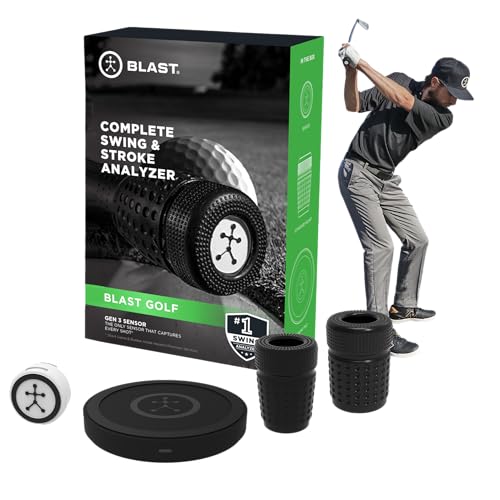
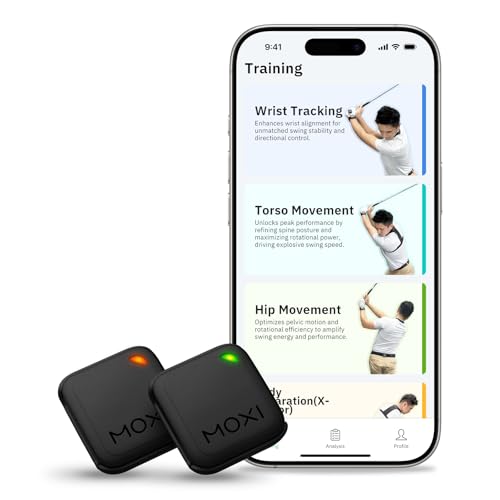
Small, lightweight sensors that attach to the club grip or your glove. They measure swing speed, tempo, path, and face angle. The Blast Motion Golf Swing Analyzer is a popular example, offering detailed metrics for full swing and putting.
Price range: $150–$300
Radar-Based Launch Monitors
Radar units sit behind the ball and track both club and ball data, including ball speed, launch angle, spin, and carry distance. Some models, like Sports Sensors Swing Speed Radar, are simple, while advanced personal launch monitors give tour‑level insight.
Price range: $300–$5,000+
Camera-Based / High-Speed Video
Systems that use one or more cameras to record your swing and overlay graphics on the video. Many golf simulators include camera‑based analysis, and dedicated apps turn your phone’s camera into a slow‑motion analyzer with drawing tools.
Price range: $200–$2,500
Smartphone Apps & Phone Sensors
Modern golf swing apps use your phone’s built‑in camera and motion sensors to detect movement. While less precise than dedicated hardware, they offer an affordable entry point. Pair with smart grips or club sensors for enhanced accuracy.
Price range: Free–$150
Key Metrics and What They Mean
Understanding the numbers is the first step toward real improvement. Here are the most common measurements you’ll encounter with a swing analyzer:
- Swing Speed / Club Head Speed: How fast the clubhead is moving at impact. Directly tied to distance. Compare yours with distance improvement guidelines.
- Tempo: The ratio of backswing to downswing time. A consistent tempo (often around 3:1) promotes solid contact.
- Club Path: The direction the clubhead is moving through impact (in‑to‑out, out‑to‑in). A key factor for ball flight control.
- Face Angle: The orientation of the clubface at impact relative to the target. Square face = straighter shots.
- Smash Factor: Ball speed divided by club speed. Indicates energy transfer efficiency; a higher number means purer strikes.
- Attack Angle: Whether you’re hitting down (irons) or up (driver) on the ball. Learn more in our swing fundamentals guide.
Many devices also capture hand speed, shaft lean, and lie angle, giving you a full diagnostic of your motion.
How to Choose the Right Swing Analyzer
With so many options, focus on these factors to find your perfect fit:
- Budget: Entry‑level sensors start around $150, while full‑featured launch monitors can exceed $2,500. Determine how deep you want to go.
- Portability & Setup: Clip‑on sensors are ultra‑portable; radar units need more space. Consider portable monitors if you split time between range and home.
- Data Accuracy: For serious game improvement, look for devices validated by teaching professionals and compare using our launch monitor comparison.
- App & Compatibility: Ensure the companion app is intuitive and works with your smartphone. Many apps integrate with golf coaching apps and golf fitness apps.
- Practice Environment: Radar and camera systems excel outdoors; some sensor‑based tools work indoors with limited space. Electronic swing trainers can also be a compact option.
Using a Swing Analyzer to Improve Faster
Merely owning a device isn’t enough – you need a plan. Try this proven routine:
- Set a baseline: Record 10 swings and note your averages for club speed, path, and face angle.
- Identify one priority: Pick the metric that most directly hurts your ball flight (e.g., an out‑to‑in path causing a slice). Use driver swing tips or iron swing tips to target that flaw.
- Drill with feedback: Perform slow‑motion swings checking the analyzer’s real‑time numbers. Combine with a swing plane trainer or impact bag to ingrain the correct feel.
- Track progress: Re‑test every two weeks. Watching your smash factor climb or path move toward zero is incredibly motivating.
- Review video side‑by‑side: Many apps let you sync data with video. Compare before‑and‑after swings to see the physical change alongside the numbers.
For home practice, a golf simulator with integrated swing analysis can create an all‑in‑one practice station that replicates course conditions.
Common Questions About Swing Analyzers
Are swing analyzers worth it? For golfers serious about improvement, yes – they provide objective data that even a teaching pro can’t always measure by eye.
Can I use a swing analyzer indoors? Sensor‑based and camera‑based devices work well indoors. Radar units need sufficient ball flight; check with portable monitors for net‑friendly options.
Do I need a launch monitor or a simple sensor? If you only care about club delivery, a sensor like Blast Motion is enough. If you want ball flight data (spin, launch), invest in a personal launch monitor.
Ready to bring measurable precision to your practice?
EXPLORE TOP SWING ANALYZERS