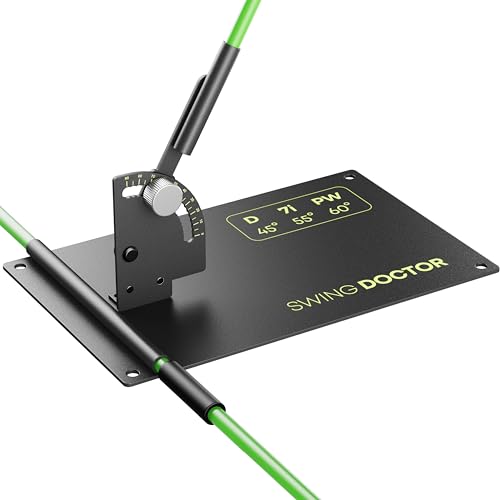
Swing Plane Trainers: Improve Your Golf Swing Path & Consistency
Discover the best swing plane training aids to fix slices, promote proper mechanics, and build a repeatable on‑plane golf swing.
Shop Swing Plane TrainersWhy Swing Plane Matters: The swing plane is the invisible path your club travels around your body. Grooving an on‑plane swing with a quality swing plane trainer eliminates slices, adds distance, and makes your ball striking far more consistent.
What Exactly Is a Swing Plane Trainer?
A swing plane trainer is a practice aid that gives you real‑time visual or physical feedback on your club’s path. Unlike generic drills, these trainers physically guide the club along the correct plane, helping you build muscle memory that transfers directly to the course. Whether you struggle with an over‑the‑top move, a flat backswing, or inconsistent contact, a dedicated plane trainer can be the fastest route to a reliable swing.
Most trainers fall into a few categories: circular plane rings that force the club to trace a perfect arc, laser‑guided systems that project a path line, and simple alignment sticks that create a visual gate. Each style suits different learning preferences, but they all share one goal—making the correct swing plane feel automatic.
How a Swing Plane Trainer Fixes Common Faults
Swing flaws rarely appear in isolation. An improper plane often causes a chain reaction: early release, weak contact, and a two‑way miss. Here’s how a plane trainer addresses the root causes:
- Over‑the‑top move: When the club comes down steep and outside the ideal path, a training aid for over‑the‑top swing physically blocks that motion, forcing the club to shallow naturally.
- Stuck inside: If the club drops too far behind you, a hoop‑style trainer gives immediate feedback, teaching you to maintain width and stay on plane through impact.
- Inconsistent low point: A consistent plane leads to a repeatable bottom of the arc, which is the foundation of solid iron swing tips and crisp ball‑first contact.
Combining a plane trainer with solid swing fundamentals creates a powerful practice loop that accelerates improvement far beyond what you’d achieve on the range alone.
Types of Swing Plane Trainers (And Which One Is Right for You)
The market offers a wide variety of plane training tools, each with unique benefits. Understanding their differences will help you pick the right aid for your practice routine.
1. Hoop‑style plane trainers are circular rings that attach to a stand or your bag. You simply swing inside the hoop; if you stray off plane, the club taps the ring. These are excellent for grooving a full‑swing arc and are often used by teaching professionals. For extra guidance, pair them with dedicated plane training accessories that include alignment rods.
2. Alignment stick drills remain the simplest and most affordable option. By positioning alignment sticks in the ground to reflect your target line and shaft angle, you create a visual plane gate. Check out golf swing plane drills with alignment sticks for step‑by‑step routines that turn a pair of sticks into a powerful training station.
3. Laser swing plane trainers project a light line onto the ground or mat, showing exactly where the club should travel. These high‑tech aids pair well with swing analyzers to give you both visual and data‑driven feedback.
4. Weighted and hinged trainers add resistance or flex at specific points. While they primarily target tempo and strength, models like weighted clubs can also encourage a wider arc and a deeper turn, reinforcing the on‑plane feel.
5. Impact bags and plane boards give physical feedback at the moment of truth. An impact bag teaches you to deliver the club squarely from the inside, while a plane board acts as a literal wall that guides the club shaft through the hitting zone.
How to Choose the Best Swing Plane Trainer for Your Skill Level
Not every trainer suits every player. Your current handicap, typical miss, and practice environment should all influence your decision.
For beginners: Start with a simple visual aid like alignment sticks or a low‑cost plane ring. These tools integrate seamlessly with getting started in golf and help you avoid ingraining bad habits early. A basic swing tempo trainer can also reinforce rhythm while you learn the plane.
For mid‑handicappers: A hoop‑style trainer or a laser device offers the precise feedback needed to tighten dispersion. If you’re already working on driver swing tips, a plane trainer that works with your longest club will deliver the most dramatic results.
For advanced players: You may benefit from a multi‑purpose system that includes plane, tempo, and impact feedback. Pairing a plane ring with a personal swing analyzer lets you fine‑tune small deviations that separate a good round from a great one.
Regardless of your level, the key is to use the trainer regularly. Even 10 minutes a day of structured practice with a quality training aid can lock in the feel of an on‑plane swing.
Drills to Supercharge Your Practice with a Swing Plane Trainer
Owning a trainer is only half the battle—using it correctly makes all the difference. Integrate these drills into your practice to build lasting muscle memory:
- Slow‑motion plane tracing: Take your setup inside a hoop trainer or behind an alignment stick gate. Perform 5–10 ultra‑slow swings, pausing at key positions to verify the club stays on plane.
- Impact bag plane check: Place an impact bag slightly forward of center. Swing into it with a half‑backswing, focusing on delivering the club from the inside. The bag stops the club and gives instant tactile feedback on path.
- Eyes‑closed rehearsal: Once you’ve grooved the feel with your eyes open, close your eyes and make practice swings. The absence of visual input forces your body to rely on the physical guidance of the trainer, deepening the motor pattern.
- Full‑bag integration: Alternate swings with the plane trainer and your own club. For example, make three swings with a weighted training club inside a hoop, then hit one ball with your iron. The contrast trains your brain to carry the feeling to real shots.
Record your practice sessions occasionally and compare your plane with and without the trainer. You’ll quickly see why structured plane drills are a staple on every professional’s practice ground.
Swing Plane Trainers and Your Whole Game
An on‑plane swing doesn’t just fix one fault—it elevates every club in your bag. When the shaft travels on a consistent path, you’ll notice tighter dispersion with your driver, cleaner contact with your irons, and even better rhythm with your wedges. The same muscle memory that keeps your driver on the fairway also helps you control trajectory with a pitching wedge or escape cleanly from a bunker.
Think of your swing plane as the backbone of your ball‑striking. Investing time with a plane trainer now means you’ll spend less time searching for fixes later. And because the correct plane naturally promotes a shallow angle of attack, you’ll also protect your body—minimizing the stress that leads to golf back injuries.