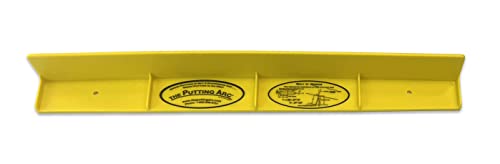
Master Your Putting Stroke with Putting Arcs
Discover how putting arc training aids can ingrain a repeatable putting stroke path, improve consistency, and help you sink more putts. Expert guide to choosing and using the right putting arc.
EXPLORE TOP PUTTING ARCSKey Insight: Every great putter has a repeatable stroke. Whether your stroke is straight‑back‑straight‑through or naturally arcs, a putting arc training aid provides immediate feedback to groove a consistent path.
What Is a Putting Arc?
A putting arc is a curved training guide that teaches your putter to travel on a slight, natural arc rather than a forced straight line. Many golfers, especially those using blade putters with toe‑hang, have a stroke that naturally opens and closes the face. A putting arc helps you embrace that arc while keeping the face square to the path, leading to better contact and more made putts. Even if you prefer a mallet putter with a face‑balanced design, practicing with an arc trainer improves awareness of your stroke’s true shape.
Think of the putting arc as a “road” for your putter. It removes the guesswork: instead of wondering if you’re taking the club back perfectly straight, you simply trace the guide. This is why top coaches and putting tips resources consistently recommend arc trainers for all skill levels.
Why You Need a Putting Arc Trainer
Many amateurs manipulate their hands to try to create a straight-back-straight-through motion, leading to pushed or pulled putts. An arc trainer eliminates this over‑manipulation by encouraging a natural, body‑driven stroke. Here are the core benefits:
- Immediate feedback: A physical arc guide lets you feel whether your stroke is on‑path or straying off‑plane.
- Face control: Because the face remains square to the arc (not to the target line), you’ll stop flipping the hands and start rolling the ball consistently.
- Better distance control: A smooth, uninterrupted path helps you accelerate through impact, improving distance lag putting.
- Pre‑round confidence: A few minutes with an arc trainer warms up your stroke and solidifies your feel before you hit the course.
How to Use a Putting Arc Trainer (Step by Step)
Follow these simple steps to get the most out of your putting arc aid:
- Set up square: Place the arc trainer on a flat surface and align the center line to your target. Stand so your eyes are directly over the ball.
- Position the putter: Rest your putter head behind the ball, with the shaft parallel to the arc’s curvature. Most arc aids work best with a slight forward press.
- Trace the arc: Make your backswing, letting the putter head glide along the curved guide. Focus on the shoulders rocking, not your hands.
- Return and release: Let the putter follow the arc back to impact and beyond. Keep the face looking at the path throughout.
- Drill with purpose: Start with short putts (3–5 feet) to ingrain the feel, then move back. Use putting gates or a putting mirror to double‑check alignment and eye position.
Pro tip: many golfers combine arc trainers with putting alignment tools and putting mats for a complete at‑home practice station.
What to Look for When Buying a Putting Arc
Not all putting arcs are created equal. When choosing the right training aid, consider these factors:
- Adjustable radius: Some arcs let you change the curve to match your putter’s toe‑hang. A tighter arc suits blades; a gentler arc works for mallets.
- Material & durability: High‑impact plastic or aluminum rails hold up to daily practice and won’t warp.
- Alignment guides: Integrated target lines or sight dots help you set up squarely every time.
- Portability: Lightweight, foldable designs are easy to toss in your bag and take to the practice green.
- Compatibility: Ensure the arc accommodates your putter’s head size (blade vs. mid‑mallet vs. large mallet).
Prices for quality putting arcs typically range from $30 to $150. Higher‑end models may include alignment mirrors, ball return tracks, or digital feedback. Even an affordable arc trainer will transform your practice if used consistently.
Arc Stroke vs. Straight‑Back‑Straight‑Through: Which Is Better?
There is no one‑size‑fits‑all answer; the best stroke is the one you can repeat under pressure. Research shows that an arcing stroke is biomechanically natural for most golfers because the spine is tilted and the shoulders rotate on a tilted plane. Forcing a straight back stroke can introduce tension and inconsistency. However, some players achieve great success with a face‑balanced putter and a straight stroke. A putting arc trainer helps you discover what feels most natural while still delivering a square face at impact. Ultimately, the goal is to find a putter fitting that matches your natural arc tendency, and then refine the motion with dedicated practice.
To further improve, pair your arc work with green reading skills. The purest stroke won’t help if you aim at the wrong spot. Together, a reliable arc and accurate reads are the keys to lowering your scores.
Ready to build a bulletproof stroke? Browse our handpicked selection of putting arc trainers below. Each product has been reviewed to help you find the perfect match for your stroke and budget.