
Club Selection: The Ultimate Guide to Building Your Perfect Golf Bag
Learn how to choose the right combination of drivers, irons, wedges, hybrids, and putter for your skill level and playing style. Get expert insights on fitting, gapping, and optimizing your 14‑club setup.
START YOUR CLUB JOURNEYKey Takeaway: Proper club selection is about more than just brand names. The right mix of clubs—matched to your swing speed, skill, and course conditions—can dramatically lower your scores and improve consistency.
Why Club Selection Matters
Whether you're a weekend warrior or a competitive amateur, the 14 clubs in your bag must work together to cover every distance from the tee box to the green. A poorly chosen set leaves distance gaps, promotes mishits, and costs strokes. This guide breaks down the selection process for each category—from drivers to putters—so you can build a bag that inspires confidence.
Step 1: Understand the 14‑Club Limit and Typical Set Makeup
The Rules of Golf allow a maximum of 14 clubs. Most players carry:
- 1 Driver – for tee shots on par‑4s and par‑5s.
- 1–2 Fairway Woods – for long approach shots and tight driving holes. Fairway woods like a 3‑wood or 5‑wood provide versatility.
- 1–2 Hybrids – easier‑to‑hit alternatives to long irons. Hybrids combine the control of an iron with the forgiveness of a wood.
- 4–6 Irons – typically 4‑iron through pitching wedge or 5‑iron through gap wedge, depending on preference.
- 2–4 Wedges – pitching wedge, gap wedge, sand wedge, and lob wedge for precise short‑game control.
- 1 Putter – the most used club. Choose between blade putters and mallet putters based on stroke type.
Beginners may start with a complete club set that includes a driver, fairway wood, a few hybrids, irons, a wedge, and a putter—a cost‑effective way to get properly gapped clubs. $300–$800
Step 2: Get Fitted – The Foundation of Smart Club Selection
Buying off‑the‑rack clubs without a driver fitting or iron fitting often leads to mismatched shaft flex, length, and lie angle. A professional fitting costs $50–$150 for a single club type, but many retailers waive the fee with purchase. Key fitting parameters:
- Shaft flex – regular, stiff, x‑stiff, or senior based on swing speed. See the shaft selection guide for details.
- Lie angle – ensures the clubhead sits flat at impact, reducing directional misses.
- Length – standard or custom; taller players may need +½ inch, shorter players -½ inch.
- Grip size – too thick or thin changes hand action. Regripping can adjust feel.
Even putter fitting is critical: the wrong length or toe hang can cause pushes and pulls.
Step 3: Select Clubs Based on Your Skill Level
High Handicappers (15+) & Beginners
Forgiveness is the priority. Look for game improvement irons with perimeter weighting and wide soles to launch the ball higher and straighter. Pair them with a driver that has a large sweet spot and adjustable loft (adjustable drivers help fine‑tune launch). Replace long irons with hybrids for easier ball‑striking. Budget‑friendly complete sets like complete club sets are a smart start. Expect to spend $500–$1,200 for a solid game‑improvement setup.
Mid Handicappers (8–14)
You're ready for more workability and control. Consider players irons or a combo set (cavity‑back long irons, forged short irons). Invest in a properly fit driver and fairway wood to maximize distance off the tee and into par‑5s. Iron sets with progressive design (more forgiveness in the 4‑5 irons, precision in 8‑PW) help balance feel and forgiveness. Mid handicappers often carry a hybrid and a pitching wedge matched to the set, plus specialty gap and sand wedges.
Low Handicappers (7 & under) & Advanced Players
You demand shot‑shaping precision. Many low handicappers prefer a muscle‑back or players iron for feedback, but still use a cavity‑back 3‑ or 4‑iron for forgiveness. Driver selection focuses on spin control; a low‑spin model with an adjustable hosel is common. A hybrid or a driving iron may replace a long iron depending on conditions. Your wedge setup should include specific bounces: low bounce for firm turf, high bounce for soft sand—wedge bounce guide explains the differences. Putter choice often moves to a counterbalanced putter for stability, or a blade putter for feel.
Step 4: Master Distance Gapping and Loft Selection
Your set should have consistent yardage gaps—ideally 10–15 yards between irons and 12–18 yards between wedges. Use a personal launch monitor to check actual carry distances. Many players find a large gap between their pitching wedge and sand wedge; adding a gap wedge (50°–52°) bridges it perfectly. The wedge bounce guide also helps match sole design to your turf conditions, preventing fat or thin chips. For longer clubs, a well‑spaced set of fairway woods and hybrids ensures you never face an awkward "tweener" distance.
Step 5: Specialty Clubs and Adjustability
Today's technology allows unprecedented personalization. Adjustable drivers let you change loft, lie, and weight bias on the fly—perfect for tuning trajectory. Some players add a high‑lofted fairway wood (7‑ or 9‑wood) instead of a hybrid for higher ball flight. Counterbalanced putters help stabilize the stroke for players with inconsistent tempo. Left‑handed and women's specific sets are also available; check women's golf clubs and senior golf clubs for lighter shafts and shorter lengths.
Budget Considerations and When to Upgrade
A brand‑new full bag can cost anywhere from $800 for a starter set to over $2,500 for top‑tier components. Here's a realistic price breakdown:
- Driver: $300–$600 (see drivers)
- Fairway wood: $200–$350
- Hybrid: $150–$300
- Iron set (4‑PW): $500–$1,200 for game‑improvement; $800–$1,500 for players irons
- Wedges: $120–$180 each
- Putter: $100–$400
- Complete club sets (including bag): $400–$900
Upgrade clubs when you've outgrown their forgiveness or when wear (grooves, face) starts to affect performance. A fitting every 2‑3 years ensures your clubs match any changes in your swing.
Final Checklist for Perfect Club Selection
- ✅ Get a professional fitting for driver, irons, and putter.
- ✅ Use launch monitor data to gap clubs correctly.
- ✅ Prioritize forgiveness if you're a high handicapper; workability for low.
- ✅ Carry at least 3 wedges with proper bounce for course conditions.
- ✅ Replace hard‑to‑hit long irons with hybrids.
- ✅ Re‑grip annually – fresh grips maintain control.
With the right selection, you'll hit more greens, save strokes around the green, and have confidence over every shot. Explore our course strategy tips and scoring tips to make the most of your newly optimized bag.
Top Club Fitting & Selection Tools
⚠️ AFFILIATE DISCLOSURE: This website contains affiliate links. As an Amazon Associate, we earn from qualifying purchases. If you make a purchase through these links, we may receive a small commission at no additional cost to you. Read our full affiliate policy.

Golf Club Range Chart Card, Golf Club Distance Card for Men Women Beginners, Yardage Reference Cheat Sheet for Driver Irons Wedges, Credit Card Size Golf Accessories, Quick Club Selection Guide

KALAUTO Golf Club Distance Chart & Golf Rules Quick Reference 2024 | Golf Club Bag Accessories & Golf Gear | Must Have Golf Accessories for Men, Women & Junior Golfers | Pocket Sized 3.54“ x 5.12”

2 Pack Golf Club Distance Card with Clip, Yardage Range Chart Card | Quick Club Selection Cheat Sheet, Sturdy Golfing Accessories Gift for Men Women Beginners, Yardage Reference for Driver Irons

OLMSXZE Golf Club Range Chart Card – Large Font Golf Distance Card for All Clubs, Waterproof Pocket Yardage Guide, Golf Accessories for Men & Women, Fits Wallet & Golf Bag

Jemzio Golf Club Range Chart Card (Golf Club+Card+Lanyard+Magnifier) | Quick Club Selection Cheat Sheet, Sturdy Golfing Accessories Gift for Men Women Beginners, Yardage Reference for Driver Irons
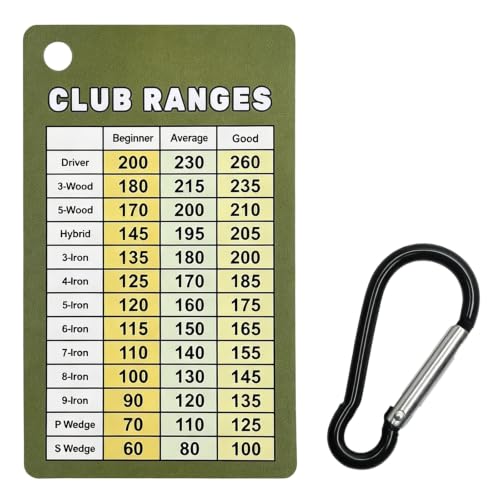
Golf Club Range Chart Card, Larger No-Glare Golf Distance Card with Clip

KVMORZE Golf Club Range Chart Card, Golf Club Distance and Rules Card

East of Eden, John Steinbeck Centennial Edition
Disclaimer
GolfProAdvice provides educational content only. Not a substitute for professional golf instruction. Always warm up properly before playing and consult a golf professional for personalized swing advice. Some content may use AI. We are not responsible for injuries or equipment issues. By using this site, you accept these terms. If you do not agree, please leave this website and discontinue its use. Read full disclaimer.