Smart Grips: The Ultimate Guide to Golf Grip Technology
Discover how smart grips with built‑in sensors give you real‑time data on grip pressure, tempo, and consistency – turning every practice swing into a learning opportunity.
VIEW BEST SMART GRIPSGolfProAdvice Insight: Smart grips bridge the gap between feel and data. By measuring what your hands are doing at impact, they help you eliminate guesswork and build a more repeatable, effective swing – whether you’re a weekend golfer or an aspiring tour player.
What Are Smart Grips?
Smart grips are advanced golf club grips that contain embedded sensors, accelerometers, and gyroscopes to capture detailed data about your swing. Unlike traditional rubber grips, these high‑tech alternatives connect wirelessly (via Bluetooth) to your smartphone or tablet, feeding real‑time metrics directly into golf swing analysis apps. They measure parameters such as grip pressure, tempo, club path, face angle, and even impact location – giving you a level of insight that was once only available with expensive launch monitors.
Essentially, a smart grip transforms any club into a portable swing analyzer. Some models replace the entire grip, while others slip over your existing grip as a sensing sleeve. Both designs are used by tour professionals, coaches, and amateurs who want data‑driven practice without the need for a full golf simulator setup. The technology has become increasingly affordable, with quality options now available in the $150–$400 range.
How Smart Grips Work
Inside each smart grip is a compact sensor module that records motion thousands of times per second. When you take a swing, the onboard sensors detect acceleration, rotation, and vibration. The data is processed by the grip’s microprocessor and transmitted via Bluetooth to a companion app. The app then translates raw numbers into easy‑to‑understand visualizations – swing path traces, tempo ratios, and pressure heat maps.
Many smart grips also include audio or haptic feedback. For example, if your grip pressure exceeds a pre‑set threshold, the grip might vibrate or emit a tone, training you to maintain a lighter, more consistent hold. This instant feedback is what sets smart grips apart from traditional club sensors that simply record data for later review. The ability to correct flaws in real time accelerates the learning process dramatically.
Key Features to Look For
- Pressure Sensing: The ability to measure how tightly you grip the club at different phases of the swing. Consistent light pressure promotes clubhead speed and reduces tension.
- Tempo Measurement: Most smart grips provide a backswing‑to‑downswing ratio. The ideal 3:1 tempo is a benchmark used by many pros.
- Club Path & Face Angle: Advanced grips track the path of the clubhead and the orientation of the clubface through impact, helping you cure slices and hooks without a full swing analyzer.
- Impact Location: Some models can pinpoint where on the clubface you strike the ball, giving you the data you’d normally get from impact tape or a personal launch monitor.
- App Integration & Cloud Storage: Look for grips that sync with well‑supported apps offering cloud backup, video overlay, and trend analysis over time.
- Battery Life & Charging: Most smart grips use rechargeable lithium‑ion batteries lasting 6–10 hours of active use. USB‑C charging is becoming standard.
Benefits of Using Smart Grips
The number one benefit is objectivity. Feel can be deceptive – what you think is a smooth, even grip might actually be jerky or too tense. Smart grips remove subjectivity by showing you exactly what’s happening. This data helps you make permanent changes faster than relying on video alone.
Smart grips also excel at building consistency. By practicing with a specific target pressure or tempo window, you develop muscle memory that transfers directly to the course. Coaches love them because they can assign measurable homework – “keep your grip pressure under 8/10 on every swing this week.” And because the data is stored, you can track progress over weeks and months, just like with a dedicated shot tracker.
For equipment fitters, smart grips provide immediate feedback on how different shaft flexes or clubhead designs affect your delivery. This can complement a professional driver fitting by revealing whether a change in grip size or texture improves your numbers. And for juniors or beginners, the gamified feedback makes practice more engaging and structured.
Smart Grips vs. Traditional Training Aids
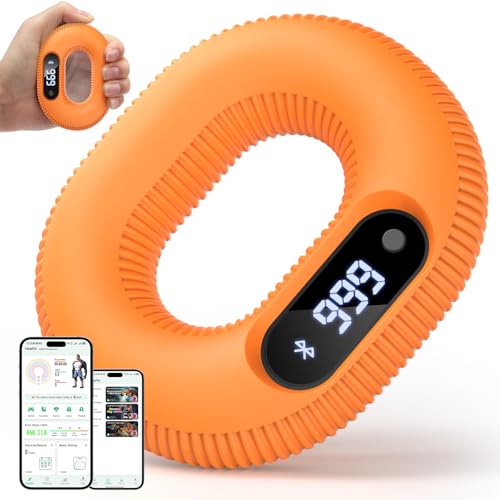
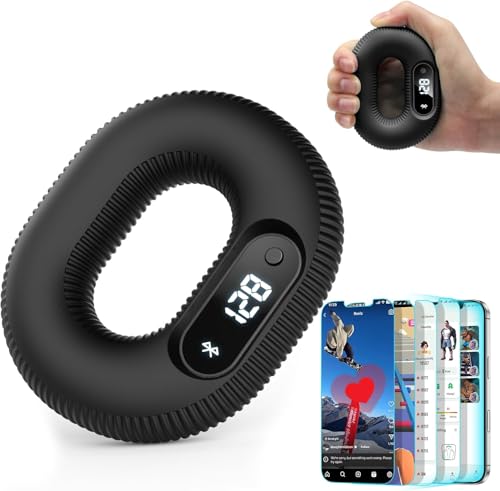
Traditional aids like the grip pressure trainer are simple mechanical devices that teach light grip pressure through tactile feedback, but they don’t capture data. Smart grips digitize the same concept and add layers of analysis. Similarly, while a basic swing tempo trainer can help you groove a rhythm, a smart grip quantifies that rhythm and lets you see how it changes with different clubs or under pressure.
The main trade‑off is price. A smart grip costs significantly more than a molded training grip. However, if you value measurable progress and the ability to diagnose specific swing faults, the investment is often well worth it. Many users find that a single smart grip on a 7‑iron or driver provides enough feedback to improve their entire game, making it a cost‑effective alternative to multiple separate training gadgets.
Tips for Choosing the Right Smart Grip
- Compatibility: Check that the grip fits your club’s shaft diameter (most are .600″ or .580″ butt). Some grips come in multiple sizes.
- Primary Goal: If you struggle most with grip pressure, choose a model with detailed pressure mapping. If tempo and transition are your focus, prioritize a grip with excellent tempo analytics.
- App Ecosystem: A great sensor is useless without intuitive software. Read reviews of the companion app and ensure it supports your smartphone (iOS/Android).
- Battery & Charging: Consider how often you practice. A grip with 8+ hours of battery life and quick charging will be less likely to interrupt your session.
- Installation: Some smart grips are installed like regular grips (requiring grip tape and solvent), while others are sleeve‑type that slip over your existing grip. Choose based on your comfort with club modification.
- Budget: Prices range from about $150 for basic sensor sleeves to $400 for full‑featured integrated grips. Decide which features matter most and shop accordingly.
Frequently Asked Questions
Can I use a smart grip during a round?
Most governing bodies, including the USGA, currently prohibit the use of electronic devices that provide real‑time swing feedback during a stipulated round. Smart grips are legal for practice and non‑competitive rounds, but always check the latest golf rules and local tournament conditions.
Do smart grips change the feel of the club?
They add minimal weight (typically 10‑30 grams) and may feel slightly thicker. Many manufacturers design the grip texture to mimic premium standard grips, so the difference is subtle once you’re accustomed to it.
Can I move a smart grip between clubs?
Sleeve‑type sensors are easily transferred. Integrated full‑grip replacements are semi‑permanent and require re‑gripping to move. If you want to analyze multiple clubs, a sleeve design or a dedicated electronic swing trainer might be more convenient.