The Ultimate Guide to Divot Repair Tools
Repair ball marks the right way, protect the greens, and keep your putting surfaces smooth with the best divot tools for every golfer.
SHOP DIVOT TOOLSDid You Know? An improperly repaired ball mark can take weeks to heal, while a properly fixed one recovers in just 24 hours. A quality divot tool is one of the smallest investments that makes a huge difference in course conditions and your putting.
What Are Divot Tools and Why Every Golfer Needs One
A divot tool—also called a pitch mark repair tool or ball mark repair tool—is a small, handheld device designed to fix the indentations (ball marks) your golf ball makes when it lands on the green. These marks, if left unrepaired, damage the putting surface and create bumps that can throw off your putts. Carrying a reliable divot tool is a fundamental part of golf gear and shows respect for the course.
While the term “divot” technically refers to the turf displaced from a fairway shot, divot repair tools are used exclusively on the green to repair pitch marks. Most feature a pair of prongs, a switchblade mechanism, or a magnetic system to lift and flatten the grass back into place. Using one takes only seconds but dramatically improves green quality for everyone.
Types of Divot Tools: Fork, Switchblade, and Magnetic
Choosing the right divot tool starts with understanding the different styles available. Each has unique benefits, and your choice may depend on convenience, pocket safety, and personal preference.
Traditional Fork Tools: The classic two‑pronged design is lightweight, affordable (typically $5–$10), and simple to use. You insert the prongs at the edge of the ball mark and gently push the turf toward the center. Many golfers prefer the fork style for its no‑moving‑parts durability. You’ll find aluminum, steel, and even plastic versions. Some feature a ball marker holder on top, making them a compact addition to your pocket or bag.
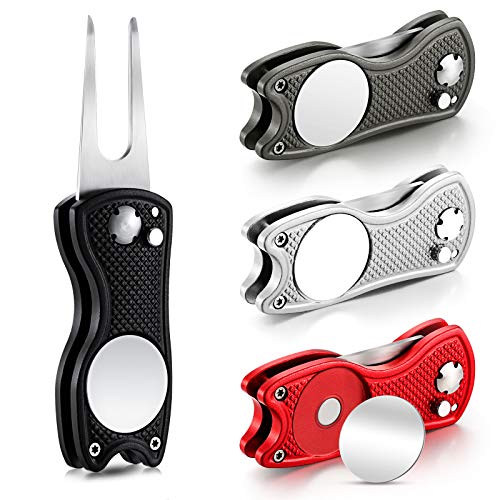
Switchblade Divot Tools: These are spring‑loaded tools that open with the press of a button, deploying the prongs like a switchblade knife. They offer one‑handed operation and look stylish clipped to a pocket or hat. Prices usually range from $10–$40, with premium models built from aircraft‑grade aluminum or titanium. The retractable design prevents the sharp prongs from tearing your pocket or glove—a major reason many golfers upgrade to a switchblade.
Magnetic Divot Tools: These combine a repair tool with a magnetic ball marker, keeping everything together. The magnet holds the marker securely on the tool, so you’ll never fumble for a separate marker again. When you need to mark your ball on the green, you simply slide the marker off and replace it later. If you frequently use a magnetic ball marker, this all‑in‑one option is a game‑changer. Browse our dedicated guide on ball markers to find complementary styles.
How to Properly Repair a Ball Mark on the Green
Even the best divot tool won’t help if you use the wrong technique. The most common mistake is prying the center of the mark upward, which tears the roots and kills the grass. Instead, follow this proven method taught by superintendents:
- Insert the prongs at the outer edge of the ball mark, at a 45‑degree angle.
- Gently push the turf toward the center, working your way around the entire depression.
- Avoid lifting or twisting—this severs the roots.
- Tap the repaired area lightly with your putter or foot to smooth the surface.
Proper ball mark repair is part of golf etiquette and is expected at every level of the game. It also directly impacts your own putting—a smooth green offers truer rolls, so you’ll benefit from taking the time to fix your marks and those of others. For more on green reading and putting, visit our putting tips guide.
Key Features to Consider When Buying a Divot Tool
With so many options on the market, focusing on a few key features will help you pick the perfect tool:
- Material: Aluminum and stainless steel resist rust and stand up to years of use. Plastic is lightweight but less durable.
- Prong design: Thin, sharp prongs penetrate firm greens easily. Some tools have curved prongs that follow the ball mark’s shape.
- Portability: Look for a clip if you want to attach it to your belt, hat, or bag. Compact size matters if you carry your tools in a pocket.
- Magnetic integration: If you use a magnetic ball marker, choosing a tool with a built‑in magnet saves space and frustration.
- Personalization: Many brands offer custom engraving, making divot tools a popular gift item.
Expect to spend between $5 and $40 for a quality divot tool. Entry‑level fork tools are budget‑friendly, while premium switchblade models with magnetic markers often start around $25+. The small investment pays off in long‑lasting performance and convenience.
Divot Tools and Ball Markers: The Perfect Pairing
A divot tool and a ball marker go hand in hand. After marking your ball, you’ll need to repair any pitch mark you’ve created. Magnetic divot tools combine both functions into one sleek accessory, eliminating the need to carry separate items. Some traditional fork tools also include a magnetic seat for a marker. If you prefer a separate high‑quality marker, check out our curated selection of ball markers for options that match your style.
Using a divot tool with a matching marker is a smart, organized way to keep your pocket clutter‑free. Many golfers also attach the tool to their hat via the magnetic clip, making it instantly accessible without digging through a bag.
Care and Maintenance
Divot tools require minimal upkeep. After a round, wipe off any grass or soil residue to prevent corrosion, especially if you have a steel model. Keep switchblade mechanisms clean and occasionally apply a drop of lubricant to the hinge for smooth operation. If your tool has a magnetic element, avoid exposing it to extreme heat, which can weaken the magnet over time.
Most divot tools will last for many seasons with basic care, making them one of the most durable pieces in your golf gear collection.
Frequently Asked Questions
Do I really need a divot tool if I rarely hit the green in regulation?
Yes. Even if you don’t make many ball marks yourself, you’ll often encounter unrepaired marks from previous players. Fixing those helps maintain the green for everyone and improves your own line to the hole.
Can I repair a ball mark with a tee?
While a tee can work in a pinch, a proper divot tool is far more efficient and less likely to damage the turf. The thin prongs of a divot tool are specifically designed to lift the grass without tearing roots.
What’s the difference between a divot tool and a ball marker?
A divot tool repairs indentations on the green; a ball marker marks your ball’s position so you can lift it to clean or avoid interference. Magnetic tools combine both functions.