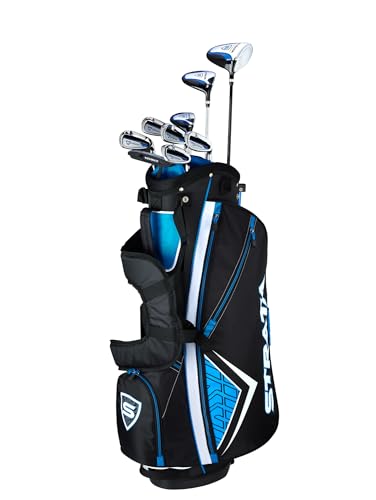
Golf Club Selection: How to Choose the Right Clubs for Your Game
Selecting the right golf clubs is one of the most impactful decisions you can make for your game. This comprehensive guide breaks down every club category, explains what to look for based on your skill level and swing characteristics, and helps you build a set that delivers confidence and consistency on the course.
Why Club Selection Matters: The average golfer uses 14 clubs during a round, yet many players carry clubs that do not match their swing speed, skill level, or course conditions. The right clubs enhance forgiveness, optimize launch conditions, and make the game more enjoyable. This guide walks you through each decision point so you can build a set that works with your game, not against it.
Step 1: Understand Your Game Before You Choose
Before examining specific clubs, take an honest inventory of your current game. Club selection starts with self-assessment, not with browsing product listings. Consider these factors:
Skill Level and Handicap
Your handicap index is the single most useful starting point. High handicappers (20+) generally benefit from maximum forgiveness and distance-focused designs. Mid handicappers (10–19) often transition to clubs that balance forgiveness with workability. Low handicappers (under 10) typically gravitate toward players irons and more precise equipment. If you are just starting out, exploring clubs designed for high handicappers gives you a practical baseline.
Swing Speed and Tempo
Swing speed determines shaft flex and clubhead design. A slow, smooth swing pairs well with lighter shafts and higher-lofted clubs that help launch the ball. A fast, aggressive swing generates enough speed to benefit from stiffer shafts and lower-lofted designs. If your driver swing speed sits around 100 mph, the shaft selection for 100 mph swing speed guide covers flex and profile options in detail.
Typical Miss Pattern
Do you slice, hook, or hit the ball relatively straight? Your miss pattern influences club selection more than most golfers realize. Players who slice the ball may benefit from draw-biased woods and offset irons. Players who hook may prefer neutral or fade-biased designs. Understanding your basic fundamentals of golf swing helps you identify the right corrective club features.
Step 2: Drivers and Fairway Woods
The driver is the longest and lightest club in the bag, designed to maximize distance off the tee. Fairway woods and hybrids bridge the gap between driver and irons.
Driver Selection Factors
When choosing a driver, focus on three variables: loft, shaft flex, and adjustability. Higher handicappers typically benefit from 10.5 to 12 degrees of loft, which helps get the ball airborne and reduces sidespin. Lower handicappers may prefer 8 to 10 degrees for a more penetrating ball flight. Adjustable hosels allow you to fine-tune loft and lie angle without buying a new club, a feature that adds long-term flexibility to your investment.
Fairway Woods for Beginners
Fairway woods are often easier to hit than long irons and provide valuable distance from the fairway. A 3-wood or 5-wood is a common choice for golfers who struggle with long irons. Beginners should look at fairway woods suited to beginners that feature shallow faces, low centers of gravity, and lightweight shafts.
Hybrids as Iron Replacements
Hybrids combine the forgiveness of a wood with the turf interaction of an iron. They are particularly useful for replacing 3, 4, and even 5 irons in the bags of mid and high handicappers. If you struggle with long irons, a hybrid is one of the most practical club selection decisions you can make.
Step 3: Selecting the Right Irons
Irons are the scoring clubs, used for approach shots, par-3 tee shots, and many recovery situations. Iron selection is where most golfers spend the most deliberation.
Game Improvement vs. Players Irons
Game improvement irons feature larger heads, perimeter weighting, and stronger lofts that promote forgiveness and launch. Players irons have thinner toplines, less offset, and more compact shapes that offer workability and feedback. Mid and high handicappers should lean toward game improvement models, while low handicappers may prefer the precision of players irons. The irons with the most forgiveness guide explores specific design features that help reduce the severity of mishits.
Iron Shaft Selection
Shaft weight and flex matter as much as clubhead design. Steel shafts offer consistency and feedback; graphite shafts reduce vibration and are lighter, which benefits players with slower swing speeds or joint concerns. Most game improvement iron sets are available in both shaft materials, so you can match the shaft to your physical profile.
Iron Loft and Gapping
Modern game improvement irons often have stronger lofts than traditional sets. A 7-iron in a modern set may play like a 6-iron from a decade ago. Pay attention to loft gaps between irons to maintain consistent distance spacing. If you are upgrading from an older set, testing your distances on a launch monitor helps you avoid gaps or overlaps at the top of your bag.
Step 4: Wedge Selection and Gapping
Wedges handle the scoring zone: approach shots inside 130 yards, chip shots, pitch shots, and bunker play. A well-considered wedge setup is essential for lowering scores.
The Four-Wedge System
A common setup includes a pitching wedge, gap wedge, sand wedge, and lob wedge. The pitching wedge usually comes with the iron set and has 44–48 degrees of loft. The pitching wedge guide explains how this club bridges the gap between irons and specialty wedges. Gap wedges (50–54 degrees) fill the distance gap, sand wedges (54–58 degrees) handle bunkers and greenside shots, and lob wedges (58–62 degrees) offer maximum loft for delicate flop shots.
Bounce and Grind
Wedge bounce refers to the angle of the sole relative to the ground. High-bounce wedges suit soft conditions and steep attack angles; low-bounce wedges suit firm turf and shallow swings. Most golfers benefit from a mid-bounce sand wedge and a low-to-mid bounce lob wedge. Understanding your pitching technique helps you choose the bounce that matches your delivery into the ball.
Step 5: Putter Selection and Fitting
The putter is the most frequently used club in the bag and deserves the same attention as your driver. Putter selection comes down to head shape, length, lie angle, and grip.
Blade vs. Mallet
Blade putters offer traditional aesthetics and feedback for skilled players with consistent strokes. Mallet putters provide higher moment of inertia (MOI) for greater forgiveness on off-center strikes. Many mid and high handicappers find mallets easier to align and more stable through the stroke. A putter fitting measures your stroke path, tempo, and aim bias to determine which head shape suits you best.
Putter Length and Lie
Putter length affects posture and eye position. Standard lengths range from 33 to 35 inches, but taller players may need longer putters and shorter players may need shorter ones. Lie angle influences how the sole sits at address; an ill-fitting lie angle causes inconsistent face aim. A professional fitting adjusts both length and lie to your natural setup.
Grip Size and Style
Putter grips come in standard, midsize, and oversize options. Larger grips reduce wrist movement and can help players with yippy or inconsistent strokes. The right putter grip promotes a quieter stroke and more consistent face control. Grip style is a personal preference, but testing a few options during a fitting session clarifies which size stabilizes your stroke.
Step 6: Building a Complete 14-Club Set
With 14 clubs allowed in the bag, building a balanced set requires planning. A typical setup looks like this:
| Club Category | Typical Quantity | Primary Purpose | Tier Consideration |
|---|---|---|---|
| Driver | 1 | Maximum distance off the tee | Premium or mid-range based on adjustability needs |
| Fairway Woods / Hybrids | 2–3 | Long approach shots, tee alternatives | Mid-range or high-end tier for forgiveness |
| Irons | 5–7 | Approach shots, par-3 tee shots | Game improvement (mid-tier) for most amateurs |
| Wedges | 2–4 | Scoring zone, bunkers, short game | Essential tier to high-end depending on versatility |
| Putter | 1 | Green performance | Professional-grade fitting recommended for all levels |
The key to a balanced set is even distance gapping. Every club should serve a distinct yardage range. If two clubs travel nearly the same distance, one is redundant. Adjust the top and bottom of your bag based on the courses you play most often. A links-style course may demand more wedges; a long parkland course may justify an extra hybrid or fairway wood.
Step 7: Get Fitted Before You Buy
Club fitting is the process of matching clubs to your body measurements and swing dynamics. A professional fitting session uses launch monitor data to optimize shaft weight, flex, lie angle, and clubhead selection.
What a Fitting Measures
A fitting session typically measures swing speed, ball speed, launch angle, spin rate, and dispersion. For irons, the fitter checks lie angle using a lie board or dynamic measurement. For the driver, they adjust loft and shaft profile until the launch conditions match your swing. For putters, they assess length, lie, and head shape relative to your stroke.
Launch Monitors and Data
Launch monitors provide objective data that removes guesswork from club selection. Key metrics include club path, face angle, attack angle, and smash factor. If you are curious about using launch data at home, portable launch monitors offer a practical way to track your progress and validate club choices over time.
Step 8: Smart Alternatives for Club Selection
Not every golfer needs a full new set. There are practical pathways to building a capable bag without purchasing everything at once.
Pre-Owned and Second-Hand Clubs
Pre-owned clubs offer a way to access higher-tier designs at lower entry points. Second-hand golf clubs from reputable sellers often arrive in excellent condition, and many are only a generation or two behind current models. For high handicappers, second-hand clubs for high handicappers present a particularly sensible starting point because forgiveness technologies remain effective even in older designs.
Used Clubs from Local Markets
Local classifieds and golf shops frequently list used clubs that have plenty of play left in them. Inspect grips, shaft condition, and face wear before buying. A regripping service is an efficient way to refresh a used set without significant expenditure.
Step 9: Common Club Selection Mistakes to Avoid
Even informed buyers make avoidable errors. Here are the most frequent pitfalls:
- Choosing clubs based on brand reputation alone: Brand heritage does not guarantee performance for your swing. Test before you commit.
- Ignoring shaft flex: The wrong flex leads to inconsistent ball flight and lost distance. Shaft matters as much as the clubhead.
- Overcrowding the top of the bag: Many golfers carry both a 3-wood and a 5-wood plus a 3-iron, leaving distance overlaps. Choose the clubs you actually use.
- Skipping the putter fitting: The putter is the most-used club. A proper fitting session can shave strokes immediately.
- Buying a full set before learning your distances: Start with a partial set, learn your yardages, then fill gaps gradually.
Final Checklist: Ready to Choose Your Clubs
Before finalizing your club selection, run through this quick checklist:
- ✔️ You know your handicap and typical miss pattern.
- ✔️ You have measured or estimated your driver swing speed.
- ✔️ You have tested at least two or three iron models in your target category.
- ✔️ You understand your wedge gapping and bounce needs.
- ✔️ You have considered a putter fitting or at least tested multiple head shapes.
- ✔️ You have planned your 14-club setup with even distance gaps.
- ✔️ You have considered pre-owned or second-hand options where appropriate.
With a deliberate, informed approach to club selection, you will build a set that supports your strengths and mitigates your weaknesses. The result is more consistent ball striking, better course management, and a more enjoyable experience every time you tee it up.
Frequently Asked Questions
How many clubs should a beginner carry in their golf bag?
Beginners are allowed to carry up to 14 clubs, but starting with a smaller set of 7 to 9 clubs is often more practical. A typical starter set includes a driver, a few irons, a wedge, and a putter. Limiting your selection reduces decision fatigue and helps you learn each club's behavior more thoroughly.
Should I choose game improvement irons or players irons?
Game improvement irons feature larger clubheads, perimeter weighting, and stronger lofts that help with forgiveness and distance. Players irons offer thinner profiles, more workability, and better feedback for shot shaping. Mid-to-high handicappers typically benefit most from game improvement models, while low handicappers often prefer the control of players irons.
How do I determine the right shaft flex for my swing?
Shaft flex generally corresponds to swing speed. Slower swing speeds (under 85 mph with a driver) typically suit regular or senior flex, moderate speeds (85–100 mph) suit stiff flex, and faster speeds (over 100 mph) benefit from extra stiff flex. A professional club fitting measures your swing speed and tempo to identify the optimal flex.
What is the ideal wedge setup for most golfers?
A practical wedge setup includes a pitching wedge (typically 44–48 degrees), a gap wedge (50–54 degrees), and a sand wedge (54–58 degrees). Many golfers also carry a lob wedge (58–62 degrees) for specialized short-game shots. The key is consistent gapping of 4 to 6 degrees between wedges.
How important is putter fitting compared to other clubs?
Putter fitting is arguably the most important fitting in your bag. The putter accounts for roughly 40 percent of all strokes in a typical round. Proper length, lie angle, head shape, and grip size significantly impact your ability to start the ball on your intended line consistently.
Can I mix and match brands within my golf club set?
Yes, mixing brands is perfectly acceptable and common among amateur and professional golfers alike. The goal is to build a set where each club serves a specific purpose for your game. Focus on performance and consistency rather than brand uniformity.