Golf Irons with Most Forgiveness: The Ultimate Guide
Discover the irons that minimize the damage of off-center hits. We break down the design features, top models, and buying strategies so you can choose the most forgiving irons for your swing.
What You'll Learn
What Makes a Golf Iron Forgiving?
Forgiveness in a golf iron refers to the club's ability to produce a playable result even when the ball is struck away from the sweet spot. In practical terms, a forgiving iron helps you maintain ball speed, launch angle, and directional control on off-center hits — whether you catch it slightly thin, a touch heavy, or toward the toe or heel.
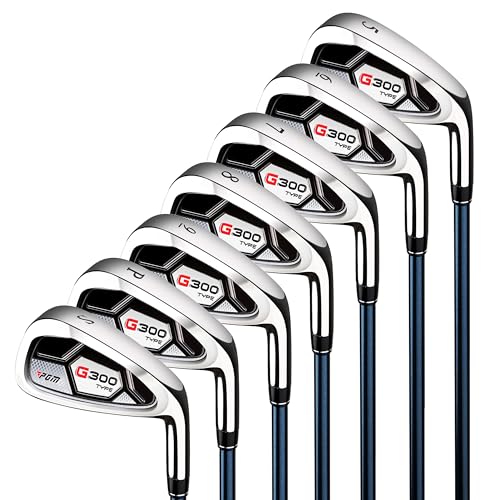
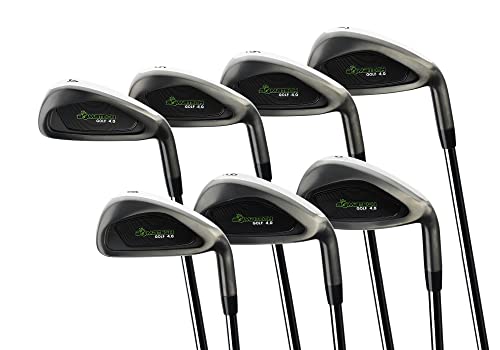
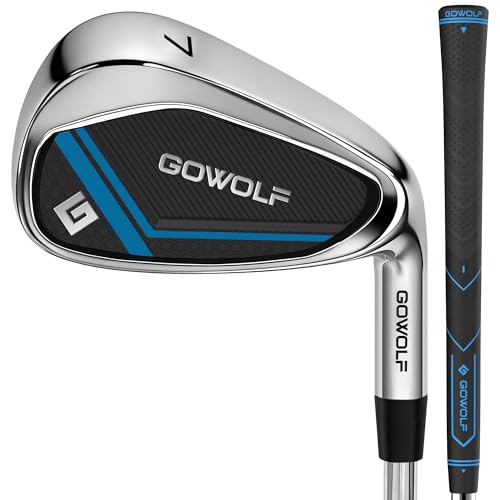
Modern forgiving irons achieve this through a combination of design choices: larger clubhead profiles, perimeter weighting, low and deep center of gravity (CG), wider soles, and stronger lofts. These features are engineered to reduce the penalty of mishits and promote a higher, straighter ball flight. If you are just getting started, exploring game-improvement irons is an excellent first step toward understanding this category.
The concept matters most for players who do not strike the ball consistently in the center of the face. For high-handicap golfers, the difference between a blade and a super game-improvement iron can be dozens of yards and several strokes per round. Even better ball strikers can benefit from a modest level of forgiveness in the long irons, where contact is naturally less consistent.
Key Features That Deliver Forgiveness
When comparing forgiving irons, you will encounter several recurring design features. Understanding each one helps you identify which models genuinely deliver on the promise of forgiveness versus those that simply look the part.
Perimeter Weighting
Mass is positioned around the outer edges of the clubhead, creating a higher moment of inertia (MOI). A higher MOI resists twisting on off-center hits, keeping the ball closer to your intended line.
Low and Deep CG
A center of gravity that sits low and far back helps launch the ball higher and increases dynamic loft at impact. This is particularly valuable for players with moderate or slower swing speeds.
Wide Sole Design
A wider sole lowers the CG and improves turf interaction. It helps prevent digging on fat shots and adds stability through the turf, making the club more playable from a variety of lies.
Cavity Back Construction
By removing mass from the center of the clubface and redistributing it to the perimeter, cavity back irons create a larger effective hitting area compared to muscle-back blades.
Oversized Clubhead
A larger clubface provides a bigger sweet spot and more confidence at address. The added surface area also contributes to a higher MOI and more consistent ball speed.
Stronger Lofts
Many forgiving irons feature stronger lofts to offset the higher launch characteristics. This combination can produce distance gains while maintaining a playable trajectory.
For golfers with higher handicaps or slower swing speeds, these features can be transformative. If you want to go deeper into club selection, our guide on golf irons for high handicappers explores specific recommendations and fitting tips.
Forgiveness Categories Explained
Golf irons are generally grouped into categories based on their design intent and forgiveness level. Understanding these categories helps you narrow down the market and identify the type of iron that matches your skill level and goals.
Super Game-Improvement Irons
These are the most forgiving irons available. They feature the largest clubheads, the widest soles, the lowest and deepest CG, and the highest MOI. Super game-improvement irons are designed primarily for beginners, seniors, and high-handicap golfers who struggle with consistent contact and launch. They often feature hybrid-style construction in the long irons and may include offset to help square the clubface.
Game-Improvement Irons
Game-improvement irons offer a balance of forgiveness and playability. They are slightly more compact than super game-improvement models but still include perimeter weighting, cavity back designs, and low CG. This category suits a wide range of golfers, from beginners who have developed some consistency to mid-handicappers looking for a blend of forgiveness and feel. The golf irons for mid handicappers guide covers this category in more detail.
Players Distance Irons
Players distance irons occupy the space between game-improvement and players irons. They offer a more compact look at address and better feel, while still incorporating some forgiveness features like forged faces, hollow-body construction, and perimeter weighting. These irons are suitable for lower mid-handicappers who want distance and a degree of forgiveness without the bulk of traditional game-improvement designs.
Key takeaway: The "most forgiving" category is super game-improvement, followed by game-improvement. If maximum forgiveness is your priority, focus your research on these two categories.
Top Forgiving Iron Models to Consider
The market offers a wide range of forgiving irons from major manufacturers and direct-to-consumer brands. Rather than focusing on a single winner, it helps to understand which models stand out in each tier. Below are some of the most respected forgiving iron families, organized by tier so you can compare relative positioning.
Super Game-Improvement Tier
These models prioritize maximum forgiveness above all else. They feature oversized profiles, wide soles, and aggressive perimeter weighting. Examples include the Cleveland Launcher XL Halo, the Callaway Big Bertha family, and the Cobra T-Rail hybrid-iron sets. These are excellent choices for beginners and players who want the easiest possible launch and the most generous sweet spot.
Game-Improvement Tier
This is the most competitive and popular category. Models like the Ping G series, TaylorMade Stealth HD, Callaway Rogue ST Max, Cobra Aerojet, and Mizuno JPX Hot Metal are perennial favorites. They offer substantial forgiveness in a more refined package, with better feel and aesthetics than super game-improvement designs. Many of these irons are available in multiple shaft options to suit different swing speeds and tempos.
Players Distance Tier
For golfers who want forgiveness without sacrificing looks and feel, players distance irons are worth exploring. The Titleist T200, TaylorMade P790, Callaway Apex, and Ping i525 are well-regarded examples. These irons provide a compact profile, forged or hollow-body construction, and enough forgiveness for consistent players who occasionally miss the center.
If you are looking specifically at the higher end of the market, the term "premium" and "luxury" tiers apply to forged multi-piece constructions and tour-inspired designs. These irons offer a blend of forgiveness and workability, but they are generally best suited to lower handicappers. For most recreational golfers, the game-improvement tier offers the best balance of performance and value.
Forgiving Irons Comparison Table
Use the table below to compare the general characteristics of forgiving irons across categories. The descriptors are relative and intended to help you understand where each category sits in the market.
| Category | Head Size | Sole Width | MOI / Forgiveness | Typical Player | Market Tier |
|---|---|---|---|---|---|
| Super Game-Improvement | Oversized | Very wide | Highest | Beginners, seniors, high handicaps | Entry-level to mid-range |
| Game-Improvement | Large | Wide | High | Mid to high handicaps | Mid-range to premium |
| Players Distance | Mid-size | Moderate | Moderate | Low to mid handicaps | Premium to luxury |
| Players / Tour | Compact | Narrow | Low | Low handicaps, tour players | Luxury |
As the table illustrates, forgiveness generally increases as you move from compact players irons toward oversized super game-improvement models. The trade-off is typically in workability, feel, and aesthetics. Most recreational golfers find the game-improvement category offers the best balance for their needs.
Who Should Buy Forgiving Irons?
Forgiving irons are not just for beginners. They can benefit a wide range of golfers, and the right choice depends on your swing characteristics, consistency, and goals.
High-Handicap Golfers
If you regularly shoot above 90 or struggle with consistent ball striking, super game-improvement or game-improvement irons are likely your best option. The added forgiveness will help you keep the ball in play, maintain distance on mishits, and enjoy the game more. Our guide on golf irons for high handicappers provides more specific recommendations.
Mid-Handicap Golfers
Mid-handicappers often benefit from game-improvement irons or players distance irons. If you strike the ball reasonably well but want extra help on off-center hits, a game-improvement iron with a slightly more compact profile may be ideal. The golf irons for mid handicappers guide covers this in depth.
Seniors and Slower Swing Speeds
Golfers with slower swing speeds often struggle to launch the ball high enough and maintain distance. Forgiving irons with low CG and wide soles can help increase launch angle and ball speed. Models with lightweight graphite shafts are particularly popular in this segment. For more on adapting your game, see our article on the golf swing for seniors with limited flexibility.
Beginners
New golfers should prioritize forgiveness above all else. Super game-improvement irons or a hybrid-iron set will make learning the game more enjoyable and help you develop consistency faster. Pairing forgiving irons with properly fitted golf balls for high handicappers can further enhance your on-course results.
Rule of thumb: The less consistently you strike the center of the face, the more forgiveness you should seek in your irons.
Fitting and Shaft Considerations
Even the most forgiving iron head will underperform if paired with the wrong shaft or an incorrect lie angle. A proper fitting session is one of the best investments any golfer can make. During a fitting, a professional will assess your swing speed, tempo, launch angle, and shot pattern to recommend the right combination of head, shaft, and grip.
Shaft selection is particularly important. Lighter steel shafts and graphite shafts are popular in forgiving iron sets because they help generate clubhead speed and launch. Heavier steel shafts may suit stronger players who want more control. Flex selection — from senior or ladies flex through regular, stiff, and extra stiff — should match your swing speed and tempo.
Lie angle is another critical factor. Irons that are too upright or too flat can cause shots to miss left or right regardless of how forgiving the head is. A fitting session will help you determine the correct lie angle for your swing. If you are upgrading from an older set, consider whether a flexible shaft golf training club could help you transition to a new swing feel.
For golfers dealing with physical limitations, pairing forgiving irons with a focused golf flexibility exercise routine can improve your ability to rotate through the ball and make consistent contact. Similarly, a structured golf strength training program can help you maintain stability and control throughout the swing.
Ready to Upgrade to More Forgiving Irons?
Browse our curated selection of forgiving golf irons and find the right set for your game.
View Recommended IronsFrequently Asked Questions
A forgiving golf iron typically features a larger clubhead, perimeter weighting, a low and deep center of gravity, and a wider sole. These design elements help maintain ball speed and accuracy on off-center hits, reducing the penalty of mishits.
Yes, many mid-handicappers benefit from forgiving irons, especially game-improvement models that offer a balance of forgiveness and workability. Players distance irons are also suitable for lower mid-handicappers who want a more compact look without sacrificing too much forgiveness.
Beginners generally benefit most from super game-improvement or game-improvement irons. These irons provide maximum forgiveness, helping new golfers achieve better results while learning the swing. A hybrid-iron set is often a practical starting point.
Not necessarily. Many forgiving irons feature stronger lofts and thin, flexible faces designed to produce distance. In fact, some game-improvement irons are among the longest in the market. The key is choosing a model that matches your swing speed and launch characteristics.
Most golfers replace irons every five to eight years, but the right interval depends on usage, wear, and changes in your swing. If the grooves are worn or your swing speed has changed significantly, it may be time for a new set.
Forgiving irons can help by reducing the severity of mishits and keeping the ball in play more often. Combined with practice on your short game and course management, they can certainly contribute to lower scores. However, they are not a substitute for consistent practice and sound fundamentals.