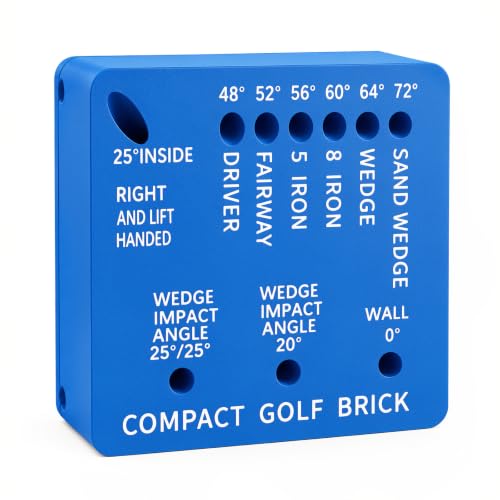
Golf Training Aid for Swing Path: Build a Repeatable, Powerful Swing
Your swing path is the single biggest factor in controlling ball flight. Whether you fight a slice, a hook, or simply want more consistency, the right training aid can give you the visual and physical feedback you need to groove a repeatable in-to-out path. This guide breaks down the best training aids for swing path, how they work, and how to use them effectively.
Why Swing Path Matters: The path your clubhead travels through impact directly influences spin, curvature, and distance. An out-to-in path produces cuts and slices, while an in-to-out path promotes draws. Training aids for swing path make the correct path feel obvious, so your body can learn the correct motion faster.
Understanding Swing Path Before You Buy a Training Aid
Before you invest in any training aid, it helps to understand what swing path actually is and why it goes wrong. Swing path refers to the direction the clubhead is moving as it approaches and passes through the ball, measured relative to your target line. A neutral path travels directly toward the target at impact, while an in-to-out path moves from inside the target line to outside it, and an out-to-in path does the opposite.
The most common path fault among amateur golfers is an over-the-top move, which creates an out-to-in path and typically produces a slice. This often stems from an early shoulder turn or an arms-dominant downswing. A training aid for swing path is designed to give you immediate feedback on this fault and guide you toward a more neutral or in-to-out delivery. If you are working on the broader concept of swing plane, you may also benefit from golf training aids for swing plane, which address the tilt and orientation of the swing arc.
It is also worth understanding how swing path interacts with clubface angle. A path that is too far in-to-out combined with a closed face produces hooks, while an out-to-in path with an open face produces slices. Training aids help you isolate the path variable so you can diagnose which issue you are actually fighting. Players who struggle with consistency may also benefit from strengthening their body with a golf stretching routine and golf strength training, since physical restrictions often force compensations in the swing.
Types of Golf Training Aids for Swing Path
Swing path training aids fall into several categories, each with a different feedback mechanism. Understanding the differences helps you choose the tool that matches your learning style and practice environment.
Swing Gates and Path Guides
These are among the most popular and intuitive aids. A swing gate consists of two uprights that create a narrow corridor the clubhead must pass through. If you swing out-to-in, you clip the outer post; if you swing too far in-to-out, you clip the inner post. The physical feedback is immediate and unmistakable. Many gates are adjustable, allowing you to narrow the corridor as your path improves.
Plane Guides and Alignment Rod Systems
These aids use rods or rails to define the ideal swing plane. You set the guide at the correct angle, then practice swinging the club along the rail. Plane guides are particularly useful for players who need to feel the correct plane from the takeaway through impact. They are closely related to swing plane trainers, and many products serve both purposes.
Weighted and Flexible Shaft Trainers
Some training clubs use a flexible shaft to exaggerate the feel of the clubhead and promote a smoother, more on-plane release. These are excellent for tempo and path awareness, though they provide less precise feedback than a physical gate. Products like a flexible shaft golf training club can complement a gate or plane guide in a complete practice routine.
Impact and Path Feedback Mats
Some mats and boards are designed to show the direction of your divot or clubhead through impact. These are useful for players who want path feedback without setting up a full gate system, and they work well in indoor or limited-space practice setups.
How to Choose the Right Swing Path Training Aid
The right aid depends on your budget tier, practice space, and the specific fault you are correcting. Here is a practical framework for choosing.
For beginners and budget-friendly setups: A simple adjustable swing gate or a set of alignment rods is usually enough. These entry-level tools provide clear feedback without requiring a large practice area. If you are also working on your overall game, a golf practice net with hitting mat can turn your backyard into a usable practice station.
For mid-range and committed players: A combined plane guide and gate system, or a dedicated swing plane trainer, offers more precise feedback. These mid-tier aids often include adjustable components so you can progress as your path improves. Players who prefer data may also want to look at a golf launch monitor and simulator to measure path and face angle numerically.
For high-end and technical players: Premium training systems with adjustable rails, multiple feedback points, and integration with video or launch monitor data offer the most complete solution. These top-tier aids are best suited to players who practice frequently and want precise, measurable feedback.
Whatever tier you choose, prioritize aids that give you immediate, unambiguous feedback. A tool that tells you clearly whether your path was correct is more valuable than a complicated system that is difficult to set up. If you are also working on your swing mechanics more broadly, a golf swing app can help you record and analyze your motion alongside your training aid work.
How to Use a Swing Path Training Aid Effectively
Buying the aid is only half the battle. How you practice determines whether the new path actually transfers to the course. Follow these principles to get the most from your training aid.
Start slow and exaggerate the correct feel. Begin with half-speed swings, focusing on passing the clubhead through the gate or along the guide. The goal is not distance; it is feeling the correct path. Slow motion practice builds the motor pattern more effectively than full-speed swings.
Use feedback, then remove it. Practice with the aid for a set of swings, then hit several balls without it while trying to reproduce the same feel. This transfer step is essential. A common mistake is becoming dependent on the aid and never practicing without it.
Combine path work with face control. Path and face angle work together. A path aid corrects the direction of travel, but you still need to control the clubface. Use a mirror or video to check your face angle alongside your path work. Players working on their overall consistency may also benefit from swing adjustments for seniors with limited flexibility if physical restrictions are part of the issue.
Practice in short, focused sessions. Fifteen to twenty minutes of deliberate practice with a swing path aid, three to four times per week, is more effective than occasional long sessions. Keep a simple log of your ball flight tendencies so you can track improvement over time.
Use video feedback. Record your swing from down the line and face-on while using the aid. Video reveals whether your path correction is real or whether you are compensating in another part of the swing. Pairing video with a training aid accelerates learning significantly.
Common Mistakes When Training Swing Path
Even with the right aid, some common mistakes can slow your progress. Watch out for these pitfalls.
Over-gripping and tension. When focusing on path, many players unconsciously tighten their grip, which restricts the release and defeats the purpose. Keep your grip pressure light and your arms relaxed. If you struggle with grip pressure, a dedicated grip pressure trainer can help.
Ball position errors. Ball position affects path. A ball too far forward encourages an out-to-in path, while a ball too far back encourages an in-to-out path. Check your ball position against a reliable reference before blaming the aid.
Ignoring setup and alignment. Your path is influenced by your alignment. If you are aimed incorrectly, the aid will give you misleading feedback. Always check your alignment with rods or a trusted reference before each practice session.
Practicing only with the aid. As mentioned earlier, the transfer step is critical. If you never practice without the aid, you will not know whether the new path has become automatic.
Expecting overnight results. Changing your swing path is a motor learning process that takes weeks of consistent practice. Be patient and track your progress with video and ball flight data.
Building a Complete Practice Routine Around Your Swing Path Aid
A swing path aid works best as part of a structured practice routine. Here is a simple framework you can follow.
Warm-up (5 minutes): Start with dynamic stretches and a golf stretching routine to prepare your body. A tight body forces compensations that affect path.
Path work with the aid (10 minutes): Use your swing gate or plane guide for slow, deliberate swings. Focus on the feel of the correct path and check your setup before each rep.
Transfer practice (10 minutes): Hit balls without the aid, trying to reproduce the feel. Use video to verify your path is holding.
Face and target work (10 minutes): Practice controlling the clubface and hitting to specific targets. This integrates your new path with real shot-making.
Cool-down and review (5 minutes): Review your video, note your ball flight tendencies, and log your practice. This reflection step is where learning consolidates.
Players who want to build a more complete home practice setup may benefit from a golf practice net cage with simulator impact screen, which allows full-speed swings with feedback in a limited space. If you are working on your short game alongside your full swing, a putting green practice mat can round out your practice area.
Frequently Asked Questions
What is a golf training aid for swing path?
A golf training aid for swing path is a physical tool—such as a plane guide, swing gate, or alignment rod system—that gives you visual and physical feedback on whether the clubhead is traveling on the correct in-to-out or neutral path through impact. These aids help correct over-the-top moves, slices, and hooks by making the correct path feel obvious.
Do swing path trainers actually work?
Yes, when used correctly and consistently. Swing path trainers work by creating a physical constraint or feedback loop that forces your body to find a repeatable path. They are most effective when combined with video feedback and a clear understanding of your ball flight tendencies. Like any training aid, results come from deliberate practice, not occasional use.
Can a swing path aid help fix my slice?
A slice is most commonly caused by an out-to-in swing path with an open clubface. A swing path training aid that guides the club on a more in-to-out path can directly address the path component of the slice. However, face angle also matters, so combining a path aid with grip and face control work produces the best results.
How often should I practice with a swing path trainer?
Short, focused sessions of 15 to 20 minutes, three to four times per week, are more effective than long marathon sessions. The goal is to build a new motor pattern, which requires repetition with feedback. Use the aid for a portion of each practice session, then hit balls without it to transfer the feel to your real swing.
Can I use a swing path aid indoors?
Yes, many swing path aids are designed for indoor use, especially adjustable gates and alignment rod systems that do not require a full ball flight. For indoor practice, ensure you have adequate ceiling height and use a practice net or impact screen to catch balls safely.
Ready to groove a better path? Browse the recommended swing path training aids below and start practicing with feedback today. Combine your aid with video analysis and a structured practice routine for the fastest results.