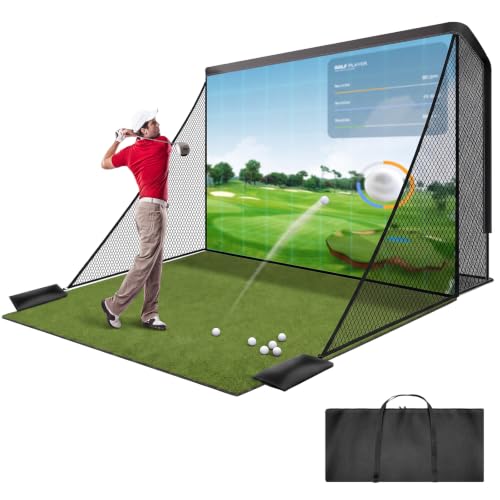
Why Invest in a Cage & Impact Screen Combo?
For serious golfers, a simple net can catch balls, but it does nothing for visual feedback. A dedicated golf simulator impact screen, housed within a sturdy practice net cage, changes everything. It allows you to project your favorite simulator software directly onto the hitting surface, creating an immersive experience. This setup not only contains errant shots with side and top netting but also protects your surroundings from damage while providing a crystal-clear image for analyzing your ball flight control. Whether you're working on your driver swing tips or dialing in your irons, this is the ultimate home practice solution.
Key Components of a Complete System
- The Frame (The Cage): Typically made of steel or heavy-duty fiberglass, the frame must be robust enough to withstand the impact of golf balls traveling at high speeds. Look for frames with secure, non-slip connectors.
- The Impact Screen: This is not just any fabric. A true impact screen is made from tightly woven polyester or a multi-layer material designed to absorb shock, deaden the ball, and drop it quietly to the floor while displaying a sharp, bright image from your projector.
- Side & Top Netting: Essential for safety, high-quality nylon netting encloses the sides and top, catching shanks, sky-balls, and wedge shots that launch at extreme angles. This turns your hitting bay into a safe, fully enclosed environment.
- Optional Hitting Mat & Flooring: While separate, the best hitting mats are designed to absorb shock and prevent joint stress, completing the realistic and safe practice feel.
Net Cage vs. Impact Screen Enclosure: What's the Difference?
A common point of confusion is whether you need a simple net cage or a full screen enclosure. A net cage is primarily for ball containment—perfect for practicing swing mechanics or using a personal launch monitor that displays data on a separate device. An impact screen enclosure, however, is a specialized cage where the front panel is replaced with a projector-ready screen. This is the heart of a true golf simulator setup. If your goal is visual immersion, course play, and realistic feedback, a cage designed to hold a high-quality impact screen is non-negotiable. The cost can start at around $800+ for a basic net cage and rise to $2,500 or more for a premium, full-enclosure impact screen kit with a frame.
| Feature | Basic Practice Net Cage | Simulator Impact Screen Enclosure |
|---|---|---|
| Primary Use | Ball containment, swing work | Immersive simulation, visual feedback |
| Front Surface | Nylon or polyester netting | Heavy-duty, projector-ready fabric |
| Image Quality | Not applicable | Designed for clear, bright projection |
| Ball Noise | Can be loud (impact sound) | Engineered for quiet, deadened impact |
| Ideal For | Driving range replacement, driving range gear alternative | A complete simulator setup at home |
Choosing the Right Impact Screen Material
The screen itself is the most critical part of your visual experience. The market standard is a heavy, three-layer polyester fabric. The front layer provides a smooth, tight surface for HD projection. The middle layer is a dense mesh that absorbs the ball's energy. The back layer provides structural integrity and prevents light bleed. When researching products, prioritize screens that are confirmed to be compatible with your specific launch monitor comparison choice, as some Doppler-based radar units require a specific distance from the screen to read accurate data. A screen that is too loose or too tight can affect both image quality and ball rebound, creating a safety hazard. Premium screens will also feature reinforced hems with grommets for a perfectly taut installation using bungee cords or ball bungees.
Space Planning & Installation Essentials
Before clicking "buy," you must measure your space. A standard enclosure is about 8-10 feet wide, 8-9 feet high, and 10-15 feet deep. You'll need additional room behind the screen (at least 12 inches) for the ball to flex the screen on impact, and a minimum of 6-7 feet behind the hitting area for a comfortable, unrestricted swing. Ceiling height is a critical and often overlooked factor. Measure your full swing arc, especially with a driver, to ensure the club never contacts the ceiling. For golfers with steeper swing fundamentals, an extra foot of clearance is recommended. Many cages are designed for DIY assembly with snap-button or push-pin connectors, but having a second person for assembly is strongly advised.
Top Features to Look For
To avoid buyer's remorse, focus on these non-negotiable features when comparing products. First, the frame gauge matters; thin 0.8mm steel tubes will bend and warp over time, while 1.5mm+ heavy-duty steel offers lasting stability. Second, the screen's noise dampening capability is paramount for indoor comfort. Third, the ease of assembly and portability can be a deciding factor if you can't leave the setup permanently. Finally, look for kits that include everything you need: frame, screen, netting, bungees, and a carry bag. A complete kit often offers better value and ensures all components are perfectly compatible, saving you from a frustrating DIY mismatch. Reading user reviews on durability can significantly inform your strategy tips for building a setup that lasts.