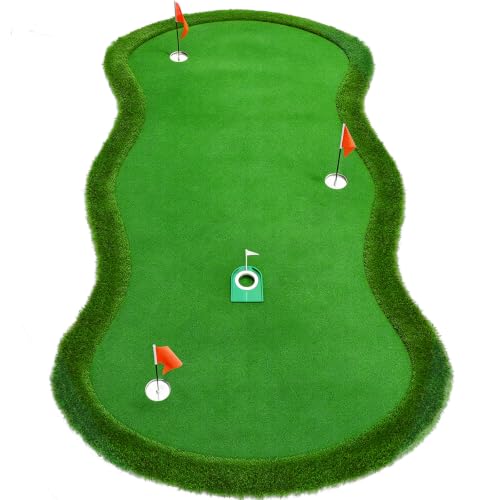
Master Your Putting at Home with a Quality Practice Green
Improve your putting stroke, distance control, and green reading skills without leaving the house. Discover the best golf putting greens and practice mats to transform your game.
EXPLORE PUTTING GREENSWhy Invest in a Putting Practice Mat? Consistent practice on a quality putting green builds muscle memory, improves accuracy, and boosts confidence on the course. It’s one of the most effective training aids for lowering your scores.
Types of Golf Putting Greens & Practice Mats
Not all practice surfaces are created equal. Understanding the differences helps you pick the right tool for your space and goals.
- Roll‑up putting mats: Lightweight and portable, these are ideal for living rooms or offices. Most feature alignment lines and a slight incline to return the ball. Popular lengths range from 8 to 15 feet.
- Indoor putting greens with contours: These mats use foam inserts or adjustable slopes to simulate real‑green breaks. They often come with multiple cups and hazard markings for varied practice.
- Outdoor artificial turf greens: For backyards or patios, UV‑resistant synthetic turf provides a more realistic experience. These permanent installations can be custom‑shaped with real fringe and undulations.
- Putting mirror & gate combos: Some mats are designed to be used with putting alignment tools, giving you instant feedback on eye position and stroke path.
Key Features to Look For
When comparing putting mats, focus on the details that affect practice quality:
- Surface material & stimp speed: Look for nylon or polypropylene turf that mimics real green speeds (stimpmeter 9–11). Some mats allow you to adjust speed by brushing the fibers.
- Alignment guides: Printed lines, triangles, or railroad tracks teach you to square the face and aim correctly. Combined with putting gates, they reinforce a consistent stroke.
- Ball return system: A built‑in return ramp saves time and keeps rhythm during repetitive drills.
- Contour adjustability: Advanced mats let you slide foam wedges under the surface to create left‑to‑right or uphill breaks, sharpening your green reading skills.
- Size & storage: Measure your available space. Standard lengths (8–12 ft) fit most rooms; roll‑up designs stow under furniture.
Benefits of Regular Putting Practice at Home
Even 10 minutes a day on a practice mat can yield measurable results on the course:
- Stroke consistency: Repeating the same motion on a consistent surface engrains a reliable stroke path.
- Distance control: Drills with fixed targets train your brain to judge speed – the most critical skill in putting.
- Confidence on short putts: Seeing the ball drop repeatedly builds mental toughness for those 3‑footers under pressure.
- Immediate feedback: Alignment aids and mirrored surfaces reveal flaws you might not feel during the stroke.
How to Choose the Best Practice Mat for Your Needs
Start by answering these questions to narrow down your options:
- Indoor or outdoor? If you’ll use it primarily inside, a roll‑up mat with a smooth roll is perfect. For outdoor permanent setups, consider a UV‑treated artificial turf system that integrates with your home practice setup.
- How much space do you have? A 10‑foot mat works for most hallways or basements; smaller 6‑foot versions suit tight corners.
- Do you need adjustable breaks? If your home course has undulating greens, a mat with movable contours will prepare you better.
- Budget: A good entry‑level practice mat costs around $50–$80, while premium models with realistic roll and alignment aids range from $150 to $300. High‑end systems with adjustable slopes can exceed $500.
Price at a glance: Most golfers find excellent value in the $80–$200 bracket, which typically includes a true‑roll surface, alignment graphics, and automatic ball return. These mats deliver tour‑quality feedback without the cost of a permanent green installation.
Expert Tips for Effective Putting Practice
Even the best mat requires deliberate practice. Incorporate these drills to maximize your training:
- Gate drill: Place a putting gate two inches in front of the ball to ensure the putter face stays square through impact.
- Distance ladder: Lay alignment sticks at 3, 5, and 7 feet. Hit three balls to each target, focusing on a consistent backstroke length.
- One‑handed putting: Remove your dominant hand to feel the putter head swing freely – this builds touch and rhythm.
- Mirror work: Pair your mat with a putting mirror to check eye position and shoulder alignment on every stroke.
- Pressure putts: Set a goal (e.g., 10 consecutive 4‑footers) and start over if you miss. This simulates on‑course tension.
For more structured routines, explore our complete collection of putting tips and integrate them with your home mat sessions.