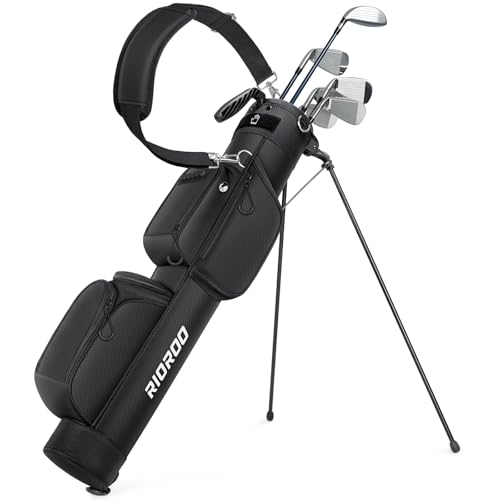
Best Clubs to Have in Your Golf Bag
A well-built golf bag covers every distance and situation on the course. Here is the complete club setup that gives you the best chance to score, from driver to putter.
EXPLORE THE SETUPWhy your bag setup matters: The rules of golf allow up to 14 clubs, but the right mix depends on your swing speed, handicap, and the courses you play. This guide explains each club type, how many of each to carry, and how to build a bag that closes your yardage gaps.
The Core Club Types in a Complete Bag
Every golf bag is built from a handful of club families. Each family serves a different purpose, and together they create a complete set that lets you attack par 3s, par 4s, and par 5s with confidence. Understanding what each club does is the first step toward choosing the right blend for your game.
1. The Driver
The driver is the longest club in the bag and is designed for maximum distance off the tee. It has the largest clubhead and the lowest loft, which produces the highest ball speed. The driver is the foundation of your tee game, and a well-fitted model can add valuable yards while keeping the ball in play.
For golfers who want more distance and forgiveness, the best driver for distance and forgiveness should match your swing speed and launch conditions. Players with adjustable models can fine-tune loft and shot shape, which is covered in the guide to adjustable drivers. If you are new to the game, the best clubs to buy for beginners will help you choose a driver that is easy to hit.
2. Fairway Woods
Fairway woods are the bridge between the driver and your irons. A 3-wood or 5-wood gives you a long, high-launching option from the fairway, off the tee on tight holes, and even from light rough. They are more forgiving than long irons and easier to launch for most amateur golfers.
High handicappers and slower swingers often benefit from the best fairway woods for slow swing speed, while beginners can start with the best fairway woods for beginners. Budget-conscious players should also look at the best budget fairway woods for high handicappers.
3. Hybrids
Hybrids replace long irons and combine a fairway wood head with an iron shaft. They are among the most forgiving clubs in golf, launching the ball high with a steep descent angle that holds greens. For many amateur golfers, a hybrid or two is the single biggest upgrade they can make to their bag.
The best golf hybrid for high handicapper is a great starting point, and the best 4 hybrid for high handicapper fills the gap between your fairway wood and your mid irons. Players who want a complete upgrade path can compare options in the best golf clubs for high handicappers guide.
4. Irons
Irons are the scoring clubs in your bag. They cover the approach shots from roughly 200 yards and in, and they are the clubs you will use most often on par 4s. Modern irons are grouped into three broad tiers:
- Game-improvement irons: Larger heads, stronger lofts, and perimeter weighting for maximum forgiveness. Ideal for beginners, high handicappers, and mid handicappers.
- Players irons: Compact heads with thinner toplines and more workability. Best for low handicappers and consistent ball strikers.
- Players-distance irons: A hybrid of the two, blending forgiveness with a compact profile and stronger lofts.
High handicappers should prioritize the most forgiving irons for high handicappers or the best and most forgiving golf irons. Players looking for a cavity-back design can review the best cavity back irons for high handicappers, while confident strikers may prefer the best blade irons for high handicappers if they want more control.
5. Wedges
Wedges are the scoring tools that save your round. Most golfers carry a pitching wedge, a gap wedge, a sand wedge, and sometimes a lob wedge. The right wedge setup creates consistent yardage gaps from 130 yards in and gives you the tools for bunker shots, chips, and flop shots.
Mid and high handicappers should focus on the wedges for mid to high handicappers, which offer more bounce and forgiveness. Left-handed players can check the 60 degree left handed lob wedge for high-lofted short-game options.
6. The Putter
The putter is the most used club in your bag, accounting for roughly 40 percent of your strokes. Blade putters offer feel and control for players with a consistent arc stroke, while mallet putters provide stability and alignment help for those who struggle with direction. Whatever style you choose, the putter must match your stroke type, length, and grip preference.
A Balanced 14-Club Setup
The maximum number of clubs allowed in a round is 14. A balanced bag covers every distance without gaps and gives you options for every lie and condition. The table below shows a classic 14-club setup that works for a wide range of handicaps.
| Club | Typical Loft | Primary Use | Who Should Carry It |
|---|---|---|---|
| Driver | 9° – 12° | Tee shots, maximum distance | All golfers |
| 3-Wood or 5-Wood | 13° – 19° | Long fairway shots, tight tees | Most golfers |
| Hybrid (3H or 4H) | 19° – 23° | Replacing long irons | Mid and high handicappers |
| 5-Iron – 9-Iron | 23° – 41° | Approach shots | All golfers |
| Pitching Wedge | 44° – 48° | Full and partial approach shots | All golfers |
| Gap Wedge | 50° – 54° | Bridging pitching and sand wedge | Most golfers |
| Sand Wedge | 54° – 58° | Bunkers, chips, pitches | All golfers |
| Lob Wedge | 58° – 64° | Short-sided shots, flop shots | Optional, skilled players |
| Putter | Varies | Green play | All golfers |
How to Tailor Your Bag to Your Game
There is no single perfect bag. The right setup depends on your swing speed, handicap, and the type of course you play most often. Use the guidance below to match your clubs to your game.
For Beginners
Beginners should prioritize forgiveness and ease of launch over workability. A starter set with a driver, a fairway wood or hybrid, mid irons, a sand wedge, and a putter is enough to learn the game. The best clubs to buy for beginners and best golf clubs for beginners to intermediate guides explain which models make the learning curve smoother.
For Intermediate Players
Intermediate players can start replacing long irons with hybrids and adding specialty wedges to close yardage gaps. The best clubs to buy for intermediate player guide covers the transition from starter sets to a more complete, balanced bag.
For High Handicappers
High handicappers benefit most from forgiveness. Game-improvement irons, hybrids, and higher-lofted fairway woods will deliver more consistent results than blades or low-lofted long irons. The best golf clubs for high handicappers guide is a strong starting point.
For Left-Handed Golfers
Left-handed golfers have fewer options on the shelf, but the market has improved dramatically. The best clubs for left handed golfer guide covers the top models across every club category.
Building a Bag on a Sensible Tier
Golf equipment spans a wide range of quality tiers. Instead of chasing the newest release, focus on the tier that matches your game and your commitment level. Entry-level and budget-friendly clubs offer solid performance for new golfers, while mid-range models add better shafts, more adjustable features, and improved forgiveness.
Premium and top-tier clubs use advanced materials, tighter tolerances, and tour-inspired designs for players who want every possible advantage. Used clubs are also an excellent option for golfers who want mid-range performance at a lower commitment level. The used golf clubs guide explains what to check before buying pre-owned equipment.
Closing Yardage Gaps
A complete bag should have no more than 10 to 15 yards of gap between consecutive clubs. Large gaps force you to manufacture shots, which reduces accuracy and consistency. The best way to identify gaps is to measure your carry distances on a launch monitor or at a driving range with marked targets.
If you find a large gap between your fairway wood and your longest iron, add a hybrid. If your gap is between your pitching wedge and sand wedge, add a gap wedge. If your wedges are too close together, remove one and add a club at the top of the bag instead. The guide to launch monitors explains how to measure your distances accurately at home or at the range.
Bag Setup and Course Strategy
Your bag should support the way you play your home course. On a long, open course, carrying a driver, two fairway woods, and a hybrid gives you more long-distance options. On a short, tight course, more wedges and fewer long clubs may be the better choice. The principles of course management apply directly to bag building: choose clubs that let you hit the shots your course demands.
If you play public courses, the public golf courses near me and best public golf courses near me guides can help you find layouts near you and plan your bag around their yardages and hazards.
Quick Recap: The Ideal Bag
- Driver: One club, matched to your swing speed and launch conditions.
- Fairway woods: One or two clubs for long fairway shots and tight tees.
- Hybrids: One or two clubs to replace long irons.
- Irons: Five to six irons covering your mid and short approach distances.
- Wedges: Two to four wedges to cover short-game distances and conditions.
- Putter: One putter matched to your stroke and alignment preference.
A balanced bag is not about having the most clubs. It is about having the right clubs for your distances, your swing, and your course. Build around forgiveness, close your yardage gaps, and add specialty clubs only when they solve a real problem on the course.
Frequently Asked Questions
How many clubs should be in a golf bag?
The rules of golf allow a maximum of 14 clubs in your bag during a round. Most golfers carry a driver, a few fairway woods or hybrids, a set of irons, two to four wedges, and a putter to stay within that limit.
What is the most important club in the golf bag?
The putter is used on roughly 40 percent of your strokes, making it the most frequently used club. However, the driver sets up your tee shots and the wedges save your score around the green, so a balanced setup matters more than any single club.
Should beginners carry a full set of 14 clubs?
Beginners do not need all 14 clubs right away. A starter set with a driver, a fairway wood or hybrid, mid irons, a wedge, and a putter is enough to learn the game. You can add specialty clubs as your swing and course management improve.
How do I choose between hybrids and long irons?
Hybrids are easier to launch and more forgiving, which makes them ideal for mid and high handicappers or slower swing speeds. Long irons offer more workability and a lower ball flight, which suits stronger players with consistent ball striking.