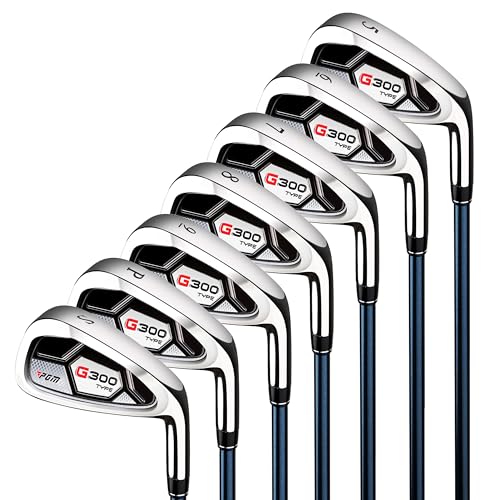
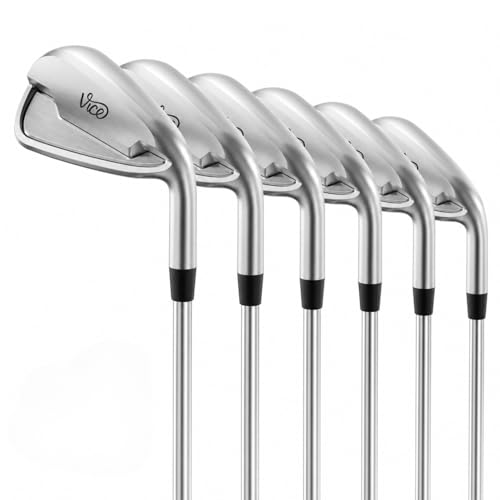
Best and Most Forgiving Golf Irons: A Complete Guide
Discover the irons that help you hit more greens, lose fewer strokes on mishits, and play with confidence — no matter your handicap.
VIEW TOP PICKSWhy forgiving irons matter: Most amateur golfers lose strokes not from perfect swings, but from mishits. Forgiving irons are engineered with perimeter weighting, a larger sweet spot, and a low center of gravity to keep your ball flying straighter and farther — even when your strike isn't perfect. This guide breaks down what makes an iron forgiving, which models lead each tier, and how to choose the right set for your game.
What Makes a Golf Iron Forgiving?
Forgiveness in golf irons comes from several design elements that work together to minimize the penalty of off-center strikes. Understanding these features helps you evaluate any iron you're considering.
Perimeter Weighting
Mass is moved to the heel and toe of the clubhead, increasing the moment of inertia (MOI). Higher MOI means the clubhead resists twisting on mishits, keeping the ball closer to your intended line and preserving ball speed.
Larger Sweet Spot
A bigger effective hitting area means slight misses still produce solid results. Game-improvement and super game-improvement irons typically offer the largest sweet spots in the category.
Low Center of Gravity
A low CG helps launch the ball higher and easier, which is especially valuable for slower swing speeds and players who struggle to get the ball airborne consistently.
Cavity Back Design
Hollowing out the back of the iron redistributes weight to the perimeter. Cavity-back irons are the classic forgiving design, though modern hollow-body and multi-material constructions take forgiveness further.
Wider Sole
A wider sole improves turf interaction and helps prevent digging, making it easier to make clean contact from a variety of lies — a key benefit for mid and high handicappers.
Offset
Many forgiving irons feature offset (the leading edge sits behind the shaft), which helps square the face at impact and promotes a higher ball flight — useful for slicers and slower swingers.
Forgiving Irons by Quality Tier
We classify forgiving irons into four universal tiers. These descriptors reflect relative market positioning and build sophistication, not price. Use them to match a set to your budget and goals.
| Tier | Best For | Key Characteristics |
|---|---|---|
| Entry-Level | Beginners, high handicappers on a budget | Basic cavity-back designs, larger heads, wide soles, strong offset. Excellent forgiveness for the investment, though feel and workability are limited. |
| Mid-Range | Improving mid-handicappers | Refined cavity-back or hollow-body construction, better stock shafts, improved feel. A strong balance of forgiveness, distance, and playability. |
| Premium | Serious golfers seeking top performance | Multi-material heads, forged faces, advanced CG placement, premium shaft options. Excellent forgiveness with better feel and tighter dispersion. |
| Luxury | Players wanting the finest craftsmanship | Tour-level materials, hand-finishing, exotic shaft pairings. Forgiveness is still present, but the focus shifts toward feel, consistency, and prestige. |
Top Forgiving Iron Picks by Tier
Entry-Level: Best Value Forgiveness
Entry-level forgiving irons are the smartest starting point for new golfers and high handicappers. They prioritize ease of use above all else — wide soles, generous offset, and large cavity backs make it easier to launch the ball and keep it in play. If you're just getting started, see our guide to the best golf clubs for beginners to intermediate players for a broader equipment overview.
These sets typically pair well with a golf ball suited to your swing speed, so don't overlook the ball when building your bag. For players who want maximum help, a forgiving hybrid can replace long irons and make the set even easier to hit.
Mid-Range: The Sweet Spot for Most Golfers
The mid-range tier is where most improving golfers find their best match. These irons offer noticeably better feel and consistency than entry-level sets while retaining generous forgiveness. Hollow-body and players-distance designs blur the line between game-improvement and better-player irons. If you're a high handicapper looking specifically at cavity-back options, our guide to the best cavity-back irons for high handicappers dives deeper into this category.
Premium: Advanced Forgiveness with Better Feel
Premium forgiving irons use multi-material construction and forged faces to deliver distance and consistency with a softer feel at impact. They suit mid-to-low handicappers who want forgiveness without sacrificing shot feedback. Pair these with a properly fitted shaft — our guide for intermediate players explains how shaft choice affects performance.
Luxury: Craftsmanship Meets Forgiveness
Luxury irons represent the pinnacle of club-making. They still offer meaningful forgiveness — often through hidden weighting and refined sole designs — but the emphasis is on feel, consistency, and aesthetic refinement. These sets are best suited to players who have a consistent swing and want the finest materials available.
Who Should Choose Forgiving Irons?
Forgiving irons benefit a wide range of players, but they're especially valuable in these scenarios:
- High handicappers and beginners who need help launching the ball and keeping it in play.
- Slow swing speeds that benefit from a low CG and higher launch.
- Players who struggle with consistency and lose strokes on mishits.
- Golfers returning after a break who want a confidence-inspiring set.
- Seniors looking for lighter, easier-to-swing options — see our guide to the best driver for seniors with slow swing speed for a similar approach in the woods category.
If you're specifically shopping for the most forgiving options available, our dedicated page on the most forgiving irons for high handicappers goes even deeper. Also, don't overlook the rest of your bag — a forgiving driver and a reliable rangefinder round out a high-handicapper-friendly setup.
Pros and Cons of Forgiving Irons
Advantages
- Larger sweet spot reduces penalty on mishits
- Higher launch and easier ball flight
- More consistent distance control
- Confidence-inspiring at address
- Wide sole improves turf interaction
- Better suited to slower swing speeds
Trade-Offs
- Less shot-shaping workability
- Thicker topline and larger profile may not appeal to traditionalists
- Feel can be firmer than blade or players irons
- Offset can be distracting for some golfers
- Distance gaps can be larger in some sets
How to Choose the Right Forgiving Irons
Selecting forgiving irons isn't just about picking the most forgiving head. Consider these factors before committing:
- Get fitted. Lie angle, shaft flex, and length matter enormously. A professional fitting will reveal whether a set actually suits your swing.
- Test on a launch monitor. Compare ball speed, launch angle, and dispersion between models. Forgiveness is measurable.
- Consider shaft weight and flex. Lighter graphite shafts can help slower swingers; heavier steel suits stronger players.
- Look at the set composition. Hybrids or utility irons can replace hard-to-hit long irons — check our best 4 hybrid for high handicappers guide.
- Don't overlook wedges. Forgiving wedges complement forgiving irons — see our wedges for mid to high handicappers recommendations.
Ready to Upgrade Your Irons?
Browse our hand-picked selection of forgiving golf irons below and find the set that matches your game.
SEE TOP RECOMMENDATIONS