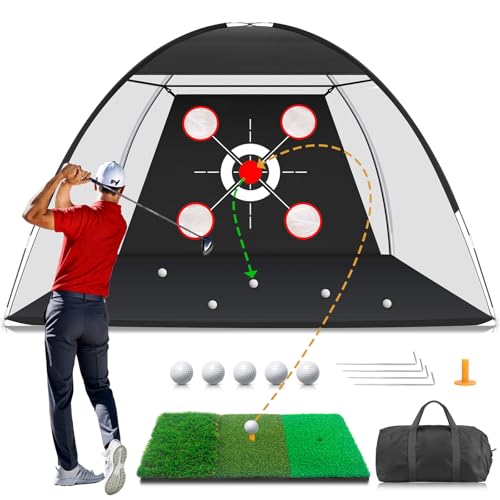
Indoor Golf Practice Net and Mat: Your Ultimate Home Setup Guide
Build the perfect indoor golf practice station with a high‑quality net and mat. Improve your swing year‑round without leaving home.
EXPLORE PRACTICE NETS & MATSWhy Practice Indoors? An indoor golf net and mat give you the freedom to work on your swing, check your ball flight, and build muscle memory in a controlled environment – no more weather excuses. Whether you’re a beginner or a seasoned player, a home setup is one of the smartest investments you can make for your game.
Benefits of an Indoor Golf Practice Net and Mat
Regular practice is the key to lower scores, but not everyone lives near a driving range or has the time to visit one. An indoor golf practice net and mat eliminates travel time and lets you hit real balls into a net in the comfort of your garage, basement, or spare room. Here are some of the main advantages:
- Convenience: Practice anytime – early morning, late at night, or during bad weather.
- Cost‑effective: No range fees or bucket costs after the initial purchase.
- Instant feedback: Combine your net with a personal launch monitor or a swing analyzer for data‑driven improvement.
- Consistency: Hitting off the same mat every day helps you groove a repeatable swing.
- Full‑swing focus: Unlike a simulator, a simple net setup lets you concentrate on ball‑striking without the distraction of a screen.
Choosing the Right Golf Hitting Net
Not all nets are created equal. When shopping for an indoor golf net, consider these factors to match your space and skill level.
Net Size and Frame Type
Indoor nets come in various sizes, from compact pop‑up models to larger cage‑style nets. A pop‑up practice net is ideal for tight spaces and can be set up in minutes. If you have a dedicated room or garage, a cage‑style net with a simulator impact screen offers more protection and can double as a movie screen when paired with a projector.
Durability and Material
Look for nets made from heavy‑duty nylon or polyester with reinforced stitching. If you hit high‑speed shots, a net with a secondary baffle or double‑layer target area will prevent wear and tear. Read our guide to the best golf hitting nets for garage use for top picks that stand up to daily sessions.
Portability and Storage
If you need to take the net down between sessions, choose a model that folds flat or comes with a carrying case. Lightweight nets can be moved from the garage to the backyard on nice days, giving you even more versatility.
Selecting a Quality Golf Hitting Mat
Your mat is just as important as the net. A poor‑quality mat can lead to joint pain and unrealistic feedback. Here’s what to look for:
Realistic Turf and Shock Absorption
A good golf hitting mat should mimic real fairway turf while protecting your wrists and elbows. Mats with multiple layers of foam or rubber absorb impact and let you hit down and through the ball without bouncing the club. For simulator setups, a hitting mat designed for launch monitors will give accurate spin and launch data.
Size and Thickness
For indoor use, a mat that is at least 3 feet by 5 feet gives you room to stand and swing comfortably. Thicker mats (1.5 inches or more) are recommended if you plan to hit irons aggressively. If you share the space, a modular mat with interchangeable hitting strips can extend its life.
Alignment and Tee Options
Some mats include alignment lines or built‑in rubber tees. A mat with a designated tee area for drivers and fairway woods is useful if you work on your long game. Pair your mat with alignment sticks to improve your aim and posture.
How to Set Up Your Indoor Practice Area
Creating a safe and effective indoor golf setup involves a few simple steps:
- Measure your space: Ensure you have at least 10 feet of ceiling height for a full driver swing. A room that’s 10 feet wide and 15 feet deep is ideal for a net and mat.
- Protect the surroundings: Place the net against a wall, and consider side barrier nets or foam padding if there’s a risk of errant shots.
- Install flooring: Use interlocking foam tiles under your mat to reduce noise and protect the floor.
- Add technology: Mount a launch monitor behind or next to the hitting area to track ball speed, spin, and distance.
- Lighting and ventilation: Good lighting helps you see the ball, and a fan keeps you cool during long practice sessions.
For a complete home golf studio, check out our home practice setup guide with ideas for everything from putting greens to full simulators.
Budgeting for Your Indoor Practice Setup
An entry‑level net costs between $50 and $100, while a high‑end cage net can run $300+. Practice mats range from $40 for basic mats to $500 for commercial‑grade turf. A realistic budget for a solid home practice station is $150–$700, which includes a durable net and a comfortable hitting mat that will last for years.
Practice Drills to Maximize Your Net and Mat
Hitting balls into a net without a target can feel aimless. Incorporate these drills to make your indoor practice intentional:
- Spray face tape drill: Apply impact tape to your clubface and work on hitting the center consistently. The tape reveals your strike pattern instantly.
- Alignment rod drill: Place an alignment stick on the ground parallel to your target line and practice square setups.
- Swing path drill: Set up a second stick just outside the ball to groove an inside‑out path.
- Video analysis: Record your swing from down the line and face‑on angles. Use a swing analyzer to get 3D data.
- Distance control: If you use a launch monitor, practice hitting specific carry numbers with wedges and short irons.
Maintaining Your Net and Mat
To get the most out of your investment, follow these care tips:
- Check net tension: Loose nets can allow balls to slip through. Tighten straps and replace frayed sections promptly.
- Rotate the mat: Frequently used spots can wear down. Turn the mat periodically to even out turf wear.
- Clean regularly: Brush away dirt and tee debris from the mat, and wipe down netting with mild soap and water.
- Inspect the frame: Look for bent poles or weak joints, especially on portable nets.
Pro Tip: Even with a net, it’s wise to check your golf swing apps for video analysis, and compare your data with a launch monitor comparison to ensure you’re making progress.