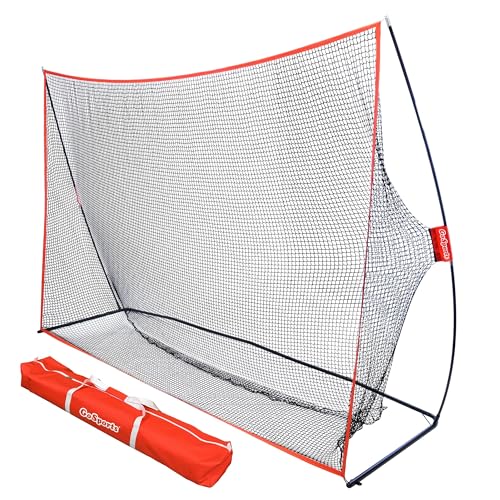
Best Golf Hitting Nets for Garage Practice: Top Picks & Buying Guide
Turn your garage into a year‑round golf practice studio. We break down the most durable, space‑saving nets and the key features to look for before you buy.
Why Practice Golf in Your Garage?
A garage golf net gives you the freedom to work on your swing whenever you want, without worrying about weather, daylight, or range hours. Whether you’re a beginner grooving the fundamentals or an experienced player fine‑tuning your impact, a home setup can be a game‑changer.
Pairing a quality net with a personal launch monitor transforms your garage into a data‑driven practice bay. You can analyze ball speed, launch angle, and spin – feedback that was once only available at high‑end fitting studios. If you eventually want to play virtual rounds, a net is the first step toward a full golf simulator setup.
Even without technology, simply hitting balls into a net builds muscle memory and confidence. It’s the most convenient way to increase your practice volume, and as any teaching pro will tell you, consistency is the secret to lowering your scores.
Key Considerations When Choosing a Garage Hitting Net
Not all hitting nets are created equal. The ideal garage net balances durability, size, and ease of use. Here are the seven factors that should drive your decision.
1. Net Size & Dimensions
Garage ceilings typically range from 8 to 10 feet. You’ll need a net tall enough to contain full driver swings without hitting the ceiling. Look for nets at least 7 feet high and 8‑10 feet wide. Many dedicated practice nets are designed with these dimensions in mind. If you have a particularly low ceiling, consider a compact or angled net.
2. Material Durability
The best garage nets use heavy‑duty nylon or polyester with reinforced stitching and multiple ply layers. A tight, high‑density mesh prevents balls from sneaking through, even at high swing speeds. Check for UV resistance if your garage door lets in sunlight, as some materials can degrade over time.
3. Frame Stability
Freestanding nets with sturdy fiberglass or steel poles are popular because they require no wall mounting. However, if floor space is at a premium, a retractable net that pulls down from the ceiling – like the ones covered in our retractable garage net guide – can be a brilliant space‑saving solution. Always ensure the frame can withstand repeated ball impacts without tipping.
4. Side Netting & Ball Containment
Even the straightest hitters shank one occasionally. Nets with integrated side panels or wings catch those wild shots and protect your walls, car, and shelves. Some nets also include a bottom skirt that funnels balls back to your feet, saving you from constant retrieval.
5. Quick Assembly & Portability
If your garage doubles as a parking spot, you need a net that can be set up and taken down in minutes. Pop‑up designs and folding frames excel here. An indoor golf net and mat combo often includes a compact, easy‑to‑store net perfect for shared spaces.
6. Compatibility with Launch Monitors & Simulators
If you plan to use a launch monitor, make sure the net has enough depth to allow the device to sit the required distance behind the ball. Radar‑based monitors like those compared in our launch monitor comparison need a clear view of the ball flight, so a deep net or an open side setup works best. For a full simulator environment, check our simulator setup guide.
7. Budget & Value
Expect to spend between $100 and $500 for a durable garage net. Basic models with a simple frame and net start around $100–$150, while heavy‑duty options with extensive side netting and premium materials can reach $400–$500. Investing a little more often means better longevity and a more realistic practice experience.
How to Set Up a Golf Net in Your Garage Like a Pro
Getting the most out of your garage net requires more than just taking it out of the box. Follow these practical tips to build a safe, effective practice environment.
- Measure your space carefully. Confirm ceiling height, width, and depth before ordering. Leave at least 2‑3 feet behind the net for ball deceleration.
- Protect the floor and your joints. Use a quality hitting mat to absorb shock and simulate real turf. A mat also prevents club damage on concrete.
- Ensure proper lighting. Bright, shadow‑free lighting helps you see ball flight and check your positions. LED shop lights work perfectly.
- Add feedback tools. Place alignment sticks on the mat to monitor your stance and swing path. A swing analyzer clipped to your club provides instant data on tempo, speed, and plane.
- Secure the net. If using a freestanding net, weigh down the base with sandbags or gym weights to prevent movement during aggressive swings.
Frequently Asked Questions
Can I hit drivers in my garage with a hitting net?
Yes, provided your ceiling height is at least 8.5‑9 feet and the net is tall enough. Measure your driver swing arc carefully. If space is tight, practice with irons and fairway woods instead, or look for a net specifically rated for full driver swings.
Will a garage net completely replace going to the driving range?
A net is a fantastic supplement, but not a total replacement. You can’t see full ball flight, so it’s best for ingraining mechanics and practicing with a launch monitor. Occasional range sessions remain useful to confirm ball flight and carry distances.
What’s the difference between a hitting net and an impact screen?
An impact screen is designed for projector use in a golf simulator. It’s made of tightly woven, smooth fabric to display an image and withstand repeated direct hits. A standard hitting net is simpler, with a mesh design to absorb and stop the ball. If you plan to eventually project a virtual course, start with an impact screen setup.
How do I prevent balls from bouncing back at me?
Most quality nets are engineered with a slight forward tilt or a loose drape that absorbs energy and drops the ball straight down. Ensure the net is correctly tensioned – too tight can increase rebound. Adding a baffle net or heavy blanket behind the main net also helps.