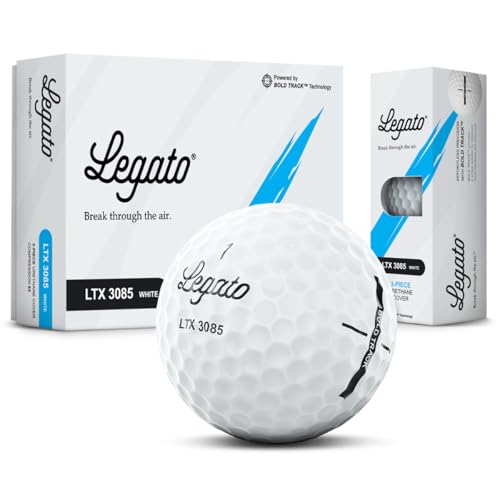
What Are Low Spin High Compression Golf Balls?
Low spin high compression golf balls combine two performance characteristics that, when matched to the right player, produce a powerful and penetrating ball flight. The high compression core — typically rated around 90 to 110 on the compression scale — is firm enough to store and release energy efficiently when struck with a fast swing. The low spin cover and mantle system is designed to reduce excessive backspin and sidespin on full-swing shots, which keeps the ball from ballooning and helps it carry further through the air before releasing on the fairway.
This category sits at the performance-focused end of the ball market. It is not designed for every golfer, but for players with the swing speed to activate the core, it can be a genuine game-changer. If you are currently playing a softer ball and losing distance to a high, spinning flight, exploring a forgiving yet firmer option or a dedicated low-spin model could unlock meaningful gains.
How Compression and Spin Work Together
Compression describes how much a golf ball deforms at impact. A higher compression ball requires more force to compress fully. When a fast swinger strikes a high compression ball squarely, the core compresses and rebounds rapidly, transferring energy back into the ball for greater ball speed. At the same time, the cover and mantle layers are tuned to reduce spin on driver and iron shots. The result is a flatter trajectory, less curvature, and more roll-out — the classic distance profile.
Conversely, slower swing speeds may not fully compress a high compression ball, leading to a dead feel and lost distance. That is why matching compression to swing speed matters so much. If your swing speed is on the moderate side, a low compression golf ball for slow swing speeds is usually the smarter starting point.
The Construction Behind the Performance
Most modern low spin high compression golf balls use a multi-layer construction: a firm, large core; one or more mantle layers that manage spin separation; and a thin urethane cover that preserves short-game feel. The mantle is often where the low-spin magic happens — it stiffens the outer portion of the ball to reduce spin on high-speed full swings while the soft cover retains touch around the greens.
This is why premium models in this category no longer force golfers to choose between distance and feel. The best examples deliver low driver spin, a strong iron flight, and dependable wedge control in a single ball. When evaluating options, look for models that explicitly describe a low-spin profile alongside a firm compression rating.
Who Should Play Low Spin High Compression Golf Balls?
These balls are not a universal recommendation. They reward a specific player profile and can actually hurt golfers who fall outside it. Use the guidance below to decide whether this category fits your game.
Ideal Player Profiles
- Fast swing speeds (roughly 95 mph and above with the driver): enough speed to fully compress a firm core and realize the distance benefits.
- Low to mid handicappers: players with repeatable swings who can control trajectory and benefit from reduced spin.
- Power hitters fighting ballooning: golfers who already generate plenty of spin and need to flatten their flight.
- Players seeking maximum total distance: those prioritizing carry plus roll-out off the tee.
- Golfers with a high ball flight: a low-spin ball can bring trajectory down to a more efficient window.
Who Should Look Elsewhere
- Slower swing speeds: a high compression core may not compress fully, costing distance and feel.
- High handicappers who need spin and forgiveness: a softer, higher-spinning ball may be more playable and help hold greens.
- Golfers with a low, hooking ball flight: reducing spin further can make it harder to hold the green on approach shots.
If you are still figuring out where you fit, exploring golf balls for mid handicaps can help you benchmark your needs before committing to a firmer, lower-spin model.
Benefits of Low Spin High Compression Golf Balls
When matched correctly, this ball category delivers a distinct set of on-course advantages. Understanding these benefits helps you evaluate whether the trade-offs are worth it for your game.
Greater Distance Off the Tee
The headline benefit is distance. Lower spin reduces the lift that causes a ballooning flight, allowing the ball to carry farther and run out more on landing. Combined with the ball speed generated by a firm core, this can translate into meaningful yardage gains for fast swingers. If your current ball climbs too steeply and drops short, a low-spin model can flatten the window and add total distance.
More Penetrating, Controllable Ball Flight
A flatter trajectory is easier to control in the wind. Low spin high compression balls tend to bore through the air rather than ride up, which reduces the effect of crosswinds and headwinds. This makes them popular among stronger players who value trajectory control and predictability on approach shots.
Reduced Sidespin and Curvature
Because the cover and mantle system limit spin, off-center strikes tend to curve less dramatically. That does not make the ball draw- or fade-proof, but it can tighten dispersion for players who already strike the ball reasonably well. The result is more fairways and fewer costly misses.
Preserved Short Game Feel in Premium Models
The old trade-off — distance versus feel — has largely been solved in premium balls. Modern urethane covers remain soft enough for wedge spin and putting touch, so you do not have to give up greenside performance to gain driver distance. This is a key reason why tour-level low spin models appeal to better players who demand both.
Efficient Energy Transfer
A well-struck high compression ball returns more energy at impact, producing higher ball speed relative to swing speed. For players with the speed to activate the core, this efficiency is the mechanical foundation of the distance advantage.
Potential Drawbacks to Consider
No ball is perfect for every golfer. Being honest about the limitations helps you make a confident decision rather than chasing hype.
- Not ideal for slower swing speeds: if you cannot compress the core, you may lose distance and feel.
- Reduced approach-shot spin: lower spin can make it harder to stop the ball quickly on firm greens.
- Firmer feel: some golfers prefer a softer, more muted sensation at impact.
- Higher skill demand: these balls reward consistent, repeatable swings rather than masking flaws.
If any of these drawbacks sound like your game, a softer or higher-spinning model — such as a ball suited to mid handicappers — may be the better fit.
How to Choose the Right Low Spin High Compression Ball
Selecting the right model comes down to matching compression, construction, and feel to your swing and preferences. Work through the factors below in order.
1. Match Compression to Swing Speed
This is the most important decision. As a rough guide, golfers with driver swing speeds around 95 to 105 mph often thrive with balls in the mid-to-high compression range, while faster players above 105 mph can fully exploit the firmest models. If you are unsure of your swing speed, a fitting session or launch monitor session will give you the data you need — a launch monitor that shows ball flight is especially useful for seeing how different balls actually perform.
2. Prioritize Multi-Layer Construction
Multi-layer balls offer the best separation between driver spin and wedge spin. A firm core with a spin-managing mantle and a soft urethane cover gives you the low-spin full-swing profile without sacrificing greenside control. Single-piece or two-piece distance balls may reduce spin but often feel harsh and lack short-game finesse.
3. Consider Your Short Game Priorities
If you rely heavily on wedge play and need maximum spin around the greens, choose a premium model with a soft urethane cover. If you rarely face fast, firm greens and prioritize pure distance, a firmer cover may be acceptable. Be honest about which part of your game matters most.
4. Test in Real Conditions
Range testing is useful, but on-course testing reveals how a ball behaves in wind, off the tee, and around the greens. Try a sleeve of your shortlisted balls during a practice round and compare trajectory, feel, and stopping power before committing.
5. Weigh Consistency Over One-Off Gains
A ball that occasionally adds a few extra yards but feels unpredictable is a poor long-term choice. Prioritize a model that delivers consistent distance and a familiar feel across your entire set. Consistency is what lowers scores over a season.
Low Spin vs. High Spin Golf Balls: A Comparison
The table below summarizes how low spin high compression balls compare with softer, higher-spinning alternatives. Use it to clarify which profile aligns with your game.
| Characteristic | Low Spin High Compression | High Spin Soft Compression |
|---|---|---|
| Typical tier | Premium / Tour | Mid-range to Premium |
| Core firmness | Firm (high compression) | Soft (low compression) |
| Driver spin | Low | Moderate to high |
| Ball flight | Flatter, penetrating | Higher, softer |
| Best swing speed | Fast (roughly 95+ mph) | Moderate to slow |
| Wind performance | Strong | Moderate |
| Greenside feel | Good in premium urethane models | Very soft |
| Ideal player | Low/mid handicapper, power hitter | High handicapper, slower swinger |
Pros and Cons at a Glance
Pros
- Maximum distance for fast swing speeds
- Penetrating, wind-resistant flight
- Reduced sidespin for tighter dispersion
- Efficient energy transfer
- Premium models retain short-game feel
Cons
- Poor fit for slow swing speeds
- Less approach-shot spin on firm greens
- Firmer feel that not everyone enjoys
- Rewards consistent ball striking
- Premium tier can be a larger investment
Fitting and Testing Tips
Getting the most from a low spin high compression ball starts with a proper fitting. Here is how to approach it practically.
- Measure your swing speed: use a launch monitor or a fitting bay to establish your driver swing speed baseline.
- Compare spin numbers: look at backspin and sidespin figures across balls rather than relying on feel alone.
- Check carry and total distance: the right ball should improve total distance without excessive roll-out that makes positioning unpredictable.
- Test wedge spin: hit approach shots to a green and observe stopping power. A premium low-spin ball should still check up reasonably well.
- Evaluate feel on the putting green: putting feel is personal — choose a ball that sounds and feels right to you.
If you already use a rangefinder or GPS device to plan shots, pairing your ball testing with accurate distance data will make comparisons far more reliable. Devices like laser rangefinders or GPS rangefinders help you verify on-course distances during practice rounds.
Pairing Your Ball With the Right Equipment
A low spin ball works best when your clubs complement its profile. If your driver already produces low spin, pairing it with a low-spin ball can push spin too low, costing carry. Conversely, a high-spin driver head paired with a low-spin ball can produce a balanced, efficient flight.
Shaft choice matters too. A low launch low spin driver shaft combined with a low-spin ball creates a very flat, strong flight suited to fast swingers. If you prefer a higher launch window, a high launch low spin driver shaft can pair well with this ball category to optimize carry. Players seeking a balanced middle ground often look at a mid launch mid spin driver shaft.
If you are also considering a new driver to match your ball, exploring the most forgiving golf driver options or the longest and most forgiving drivers can help you build a coherent tee-to-green setup.
Common Myths About High Compression Golf Balls
Myth 1: High compression balls are only for professionals
While tour players favor firm balls, the category has expanded. Many mid handicappers with solid swing speeds benefit from firm cores. The key is matching compression to speed, not assuming only elites can use them.
Myth 2: Low spin means no short game control
Modern multi-layer constructions separate full-swing spin from wedge spin. A low-spin driver profile can coexist with strong greenside control thanks to soft urethane covers and spin-managing mantle layers.
Myth 3: Firmer always means longer
Distance depends on matching compression to swing speed. A firmer ball struck with insufficient speed can actually travel shorter than a properly matched softer ball. Fitting is essential.
Frequently Asked Questions
What are low spin high compression golf balls?
They are golf balls built with a firm, high compression core and a cover system designed to reduce excessive spin on full swings. This produces a flatter, more penetrating flight and greater distance for players with sufficient swing speed.
Who should play low spin high compression golf balls?
Golfers with faster swing speeds (roughly 95 mph and above), low to mid handicappers, and power hitters who generate plenty of spin and need to flatten their trajectory for more distance.
Do low spin high compression golf balls sacrifice short game feel?
Premium multi-layer models with soft urethane covers retain excellent greenside feel and wedge spin. The old trade-off between distance and feel has largely been solved in the best modern designs.
How does compression rating affect ball performance?
Higher compression balls require more swing speed to compress fully. When matched to a faster swing, they deliver more efficient energy transfer, lower spin, and longer distance. Slower swingers may struggle to compress them.
Can high handicappers use low spin high compression golf balls?
Some can, particularly those with fast swing speeds. However, many high handicappers benefit more from a softer, more forgiving ball that provides extra spin and feel. A fitting session will clarify the best choice.
How do I test a low spin high compression ball?
Use a launch monitor to compare spin, ball speed, carry, and total distance against your current ball. Then test on-course in real conditions, paying attention to trajectory, wind performance, and greenside stopping power.
Final Thoughts
Low spin high compression golf balls are a specialized tool built for a specific player: the faster-swinging golfer who generates more spin than they need and wants to convert that speed into distance and control. For that player, the right model can be transformative, delivering a flatter, more powerful flight without sacrificing short-game performance.
For slower swingers or high handicappers who rely on spin and forgiveness, a softer alternative is usually the better path. The most important step is honest self-assessment followed by real-world testing. Once you know your swing speed and spin profile, the right ball becomes obvious — and your scores will reflect the improvement.
Ready to find your ideal low spin high compression ball?
Browse our curated selection of top-performing models below, chosen for distance, control, and consistent performance.
VIEW RECOMMENDED GOLF BALLS