Best Golf Clubs for Intermediate Players
A complete, research-backed guide to choosing irons, drivers, wedges, and putters that match the game of a mid-handicap golfer — so you can stop fighting your equipment and start scoring.
If you have moved past the beginner stage, you already know the basics: you can make contact consistently, you understand course etiquette, and you have a rough idea of your yardages. What usually holds mid-handicap players back is not effort — it is a mismatch between their evolving swing and the clubs in their bag. Beginner sets are built for maximum forgiveness and often sacrifice feel and shot control. Tour-style clubs demand consistency that most intermediate players are still developing. The right answer sits in a middle ground, and this guide walks through it category by category.
Below you will find a structured breakdown of what to look for in each club type, how to think about the trade-offs between forgiveness and workability, and how to build a coherent set rather than a collection of random purchases. Whether you are upgrading a single club or rebuilding your entire bag, the same decision framework applies.
Irons: The Backbone of an Intermediate Set
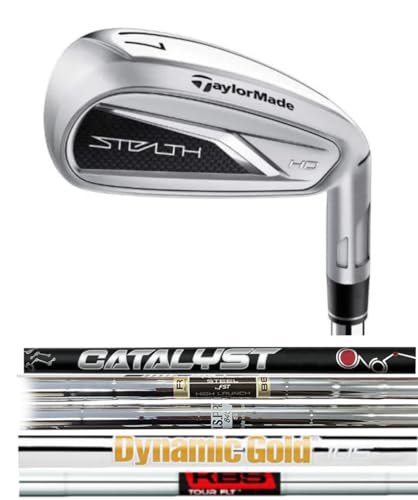
Irons are where the intermediate decision matters most. You are caught between two worlds: game improvement irons that prioritize forgiveness, and players irons that reward precision. The sweet spot for most mid-handicap golfers is a game improvement or players-distance iron with a cavity-back design, moderate offset, and a sole wide enough to prevent digging on slightly fat strikes.
Look for irons with a thin-to-medium topline and a head size that inspires confidence without looking like a shovel. Progressive sets — where long irons are more forgiving and short irons are more compact — are especially well suited to intermediate players because they match the forgiveness to the difficulty of each club. If you want to understand the mechanical foundations that make these irons work for your swing, reviewing swing fundamentals is a worthwhile complement to any equipment decision.
What to prioritize in intermediate irons
- Forgiveness on off-center strikes: Perimeter weighting and cavity-back construction keep ball speed up when you miss the center.
- Launch and descent angle: Stronger lofts in players-distance irons help, but check that you can still stop the ball on greens.
- Shaft weight and flex: Steel shafts in the 95–115 gram range suit most intermediate swing speeds; lighter graphite is worth considering for slower tempos.
- Consistent gapping: A set with even yardage gaps between clubs matters more than any single club's spec sheet.
If you are also rethinking the short end of your set, the wedge bounce guide explains how sole geometry affects turf interaction — a detail that becomes increasingly important as your ball-striking improves.
Drivers: Forgiveness Without Giving Up Distance
The driver is the club most intermediate players want to upgrade first, and for good reason. Modern drivers offer adjustable hosels, movable weights, and high-MOI shapes that make it easier to keep the ball in play. For a mid-handicap golfer, the priority is a head that resists twisting on heel and toe strikes and a shaft that matches your tempo rather than your ego.
A driver in the mid-range to premium tier from a major manufacturer will typically offer the adjustability you need to fine-tune launch and spin. If you struggle with a slice, look for draw-biased weighting; if you fight a hook, neutral or fade-biased settings are available. The most forgiving driver in golf is a useful reference point for understanding how MOI translates into real-world accuracy.
Driver selection checklist
- Loft: Most intermediate players benefit from 9–12 degrees depending on swing speed and angle of attack.
- Adjustability: A movable weight or adjustable hosel lets you correct a miss without buying a new club.
- Shaft profile: Match shaft weight and flex to your transition and tempo — a professional fitting is the most reliable way to get this right.
- Head shape: Larger footprints inspire confidence; compact shapes suit players who prefer a traditional look.
Wedges: Where Intermediate Players Gain the Most Strokes
Short game is the fastest route to lower scores, and wedges are the tools that make it possible. Intermediate players should carry at least three wedges — typically a pitching wedge, a gap wedge, and a sand wedge — with lofts spaced to produce even yardage gaps. Bounce selection matters: moderate bounce (10–12 degrees) works for most conditions, while low bounce suits firm, tight lies and high bounce suits soft sand.
If your handicap is still on the higher side, the guidance in best wedges for high handicappers overlaps usefully with intermediate recommendations, particularly around sole grinds and forgiveness. Pairing the right wedge with a disciplined wedge swing technique will do more for your scoring than any single equipment upgrade.
Wedge setup for mid-handicap golfers
- Loft gapping: Aim for roughly 4–6 degree gaps between wedges to keep distance control predictable.
- Bounce: Moderate bounce is the safest all-around choice for mixed conditions.
- Grind: A versatile grind lets you open the face without the leading edge lifting too far off the turf.
- Grooves: Fresh grooves matter — worn wedges cost you spin and control around the green.
Putters: Stability Over Style
Putting is the most personal part of the bag, but for intermediate players the general principle is stability. Mallet and mid-mallet putters with high MOI resist twisting on off-center strikes, which matters when your stroke is still being refined. A face-balanced putter suits a straight-back, straight-through stroke, while a toe-hang putter suits an arcing stroke. Getting this match right is often worth more than any other single equipment change.
If you are working on your stroke mechanics alongside equipment, the true pendulum motion putting trainer is a useful practice aid for grooving consistency. And if you are curious about non-traditional options, used broomstick putters are worth exploring for players who prefer a anchored-style setup.
Building a Coherent Set, Not a Collection
The biggest mistake intermediate players make is buying clubs piecemeal based on hype rather than building a set with consistent gapping and a unified design philosophy. A coherent bag has even yardage gaps from driver to lob wedge, shafts that match your tempo across the set, and a mix of forgiveness that matches your consistency club by club.
If you are starting from scratch or rebuilding, used golf clubs and used complete golf sets are legitimate routes to a well-matched set at a lower commitment level. For players who want to fine-tune their swing alongside new equipment, swing analyzers and swing tempo trainers provide feedback that makes equipment decisions more informed.
Set composition by tier
- Essential tier: Driver, 5-wood or hybrid, 5–PW irons, SW, putter — a functional baseline for most mid-handicap players.
- Balanced tier: Add a gap wedge and a lob wedge, plus a hybrid to replace the longest iron.
- Top-tier: Custom-fitted shafts throughout, adjusted lofts and lies, and a wedge setup tuned to your home course conditions.
Fitting: The Multiplier on Every Equipment Decision
No equipment guide can replace a proper fitting. Lie angle, shaft flex, grip size, and swing weight all interact with your body and swing in ways that off-the-rack clubs cannot account for. For intermediate players, a fitting is often the difference between clubs that feel "fine" and clubs that feel like they were made for you. If you are preparing for competitive play, the principles in tournament preparation apply equally to equipment readiness — know your yardages, trust your clubs, and eliminate variables before the first tee shot.
If you are still refining your mental approach to the game, visualization techniques pair well with equipment confidence. And if you are considering a broader upgrade across your bag, the best clubs for intermediate players overview is a useful reference point for cross-category comparison.
Frequently Asked Questions
What type of clubs are best for an intermediate golfer?
Intermediate golfers benefit most from game improvement irons, a forgiving driver with adjustable weighting, versatile wedges with moderate bounce, and a mallet or mid-mallet putter that offers stability on off-center strikes.
Should intermediate players use forged or cast irons?
Most intermediate players should lean toward cast, cavity-back irons because they offer more forgiveness and consistency. Forged irons suit players with repeatable ball-striking who prioritize feel and workability over forgiveness.
How often should an intermediate player replace their clubs?
A well-fitted set of intermediate clubs can last many seasons. Replace clubs when the grooves on wedges wear down, when your swing speed or technique changes significantly, or when a proper fitting reveals a clear mismatch with your current set.
The best clubs for an intermediate player are the ones that match your current swing, not the swing you hope to have next season. Prioritize forgiveness where you need it, feedback where you can use it, and consistency in gapping across the set. Pair that equipment strategy with deliberate practice, and the path from mid-handicap to single digits becomes far more realistic.