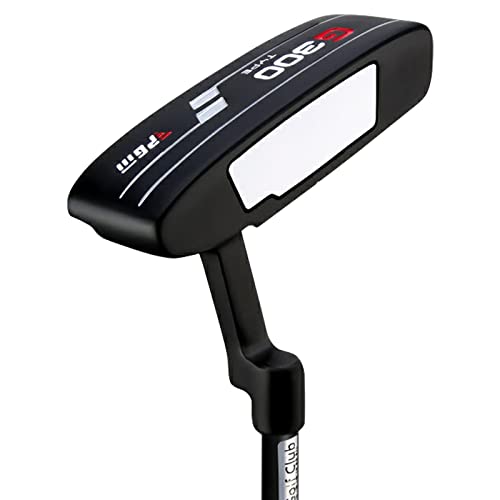
Find the Right Putter for Your Stroke
Master the green with a putter that matches your arc, aim, and feel preferences. Discover blade, mallet, and counterbalanced options.
SHOP PUTTERS & TRAINING AIDSGolfProAdvice Insight: The putter is the most used club in your bag, accounting for roughly 40% of your strokes. Choosing a model that suits your natural stroke path and eye dominance can transform three‑putts into tap‑ins. Use this guide to understand the differences, then browse our curated selection below to find the perfect flatstick.
Blade vs. Mallet vs. Counterbalanced Putters
Putter heads fall into three broad categories, each with distinct performance benefits. Understanding them is the first step toward finding your ideal putter.
Blade Putters
Blade putters are the classic, narrow‑profile design favored by traditionalists and players with an arcing stroke. They typically feature significant toe‑hang, which suits a pronounced inside‑to‑inside path. The compact head offers maximum feedback and workability, allowing skilled players to manipulate face angle. If you have a strong arc or prefer a responsive, firm feel, a blade putter is often the best fit.
Mallet Putters
Mallet putters use a larger, high‑MOI (moment of inertia) head design. The deep profile and perimeter weighting stabilize the face on off‑center hits, improving consistency for players with a straight‑back‑straight‑through stroke. Many mallets are face‑balanced or nearly so, making them extremely forgiving on slight mishits. Modern mallets often include alignment aids, like long sightlines or contrasting visual cues, to boost aim accuracy.
Counterbalanced Putters
Counterbalanced putters add extra weight in the grip or upper shaft to shift the balance point higher. This reduces wrist breakdown and promotes a smoother, pendulum‑like stroke. They are particularly effective for players who struggle with the yips or need help maintaining a consistent tempo. Many counterbalanced models are also offered in mallet or mid‑mallet shapes, combining stability with stroke‑smoothing weight distribution.
Match Your Putter to Your Stroke
The relationship between toe hang and stroke path is critical. Toe hang refers to how much the toe points downward when the putter is balanced on your finger. A putter with more toe hang closes more during an arcing stroke, while a face‑balanced model resists rotation, ideal for a straight path. For players with a straight‑back‑straight‑through motion, a putter for a straight‑back‑straight‑through stroke is key; a suitable putter grip can further enhance that technique.
Your eye dominance also matters. Right‑eye dominant golfers may prefer a putter that sits slightly behind the ball with a specific offset, as discussed in our guide to the best putter for right‑handed, right‑eye dominant players. Left‑eye dominant players might find a different alignment best, so it’s worth visiting a putter fitting session to fine‑tune both head style and hosel configuration.
Putter Grips: Size, Shape & Material
Your grip is the only connection to the club, and putter grips are more varied than any other club’s. Oversized putter grips reduce wrist action and can calm a jerky stroke, while pistol‑shaped grips promote a traditional hand position. Non‑tapered “straight” grips encourage even pressure in both hands, popular on mallets. If you’re adopting a straight‑back‑straight‑through stroke, consider a grip specifically designed for that path. Material choice—rubber, cord, or synthetic leather—affects tackiness and feedback, so try several options at your local shop before committing.
Why a Putter Fitting Transforms Your Scores
A professional putter fitting examines your aim, stroke path, face rotation, and launch conditions to recommend the ideal head shape, loft, lie angle, and length. Even a half‑degree of lie change can dramatically improve your start line. Many fitting studios now use high‑speed cameras to track ball roll, ensuring you leave with a putter that delivers a pure end‑over‑end roll. Combined with a home practice setup like a putting mat and alignment tools such as putting mirrors or putting gates, you can groove a repeatable stroke that holds up under pressure.
Putter Price Ranges: What to Expect
Modern putters span a wide price spectrum. Entry‑level models start around $100–$150 and often feature cast stainless steel heads with standard steel shafts. Mid‑range putters ($150–$300) include popular name‑brand mallets and blades with improved milling and face inserts. Premium putters ($300+) offer fully milled faces, customizable weighting, and exotic materials like carbon steel or multi‑material construction. Custom fitting and aftermarket shafts can push the price above $500, but for most players a quality milled face in the $200–$300 range offers an exceptional blend of feel and performance.
Dial In Your Setup with Training Aids
Once you’ve chosen your putter, refine your stroke with dedicated training aids. Putting mats provide a true roll at home, while putting mirrors and putting gates build alignment and path consistency. For arc training, putting arcs guide the putter head along the correct curve. Using these aids for even 10 minutes a day can significantly improve your accuracy, turning your new putter into a weapon on the greens.
Ready to Sink More Putts? Shop Our Top Picks
The right putter gives you confidence over every critical three‑footer and lag putt. Armed with an understanding of head styles, stroke matching, and grip options, you’re ready to choose the flatstick that fits your game. Explore our handpicked selection of top‑rated putters and training tools below, and click through to lock in today’s best price.