Best Handheld Golf GPS Rangefinder: The Hybrid Distance Solution
Stop choosing between laser precision and GPS convenience. Modern handheld devices combine both technologies into one powerful tool that gives you exact yardages to the pin and full-course views—even when the flag is hidden.
Explore Top Hybrid ModelsWhy a handheld GPS rangefinder? If you have ever stood in the fairway with a clear look at the flag and wished you had a laser, or faced a blind approach shot and wished you had a GPS map, you already understand the problem. The best handheld golf GPS rangefinders solve both scenarios in a single device. They deliver laser-level accuracy when you can see the target, and satellite-powered front-middle-back distances when you cannot. For golfers who play a variety of courses and want one reliable tool in the bag, this category has become the smartest choice.
Hybrid vs. Pure Laser vs. GPS-Only: Which Handheld Fits Your Game?
Before diving into specific recommendations, it helps to understand the three distinct device categories available today. Each serves a different type of golfer, and choosing the wrong one often leads to frustration—or paying for features you never use. If you are still weighing the fundamentals of distance measurement, our guide to the best laser range finder for golf covers pure-laser options in depth.
Hybrid Laser + GPS
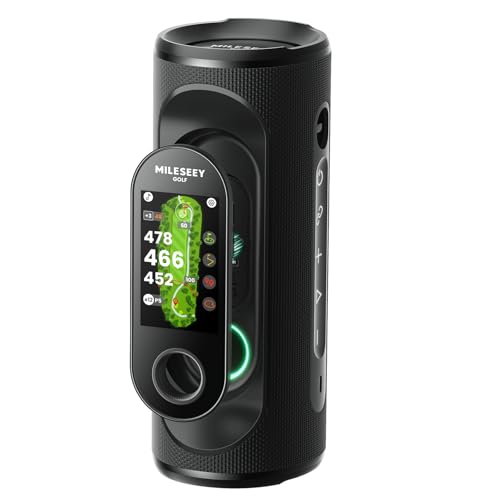
The most versatile category. These devices fire a laser at the pin for sub-yard accuracy, then switch to GPS mode for blind shots, hazard planning, and full-hole views. Premium models include color touchscreens and preloaded course maps.
- Exact pin distance with slope compensation
- Front/middle/back green distances via GPS
- Ideal for golfers who play varied courses
- Eliminates the "laser won't lock" problem
Pure Laser Rangefinder
Lightweight, fast, and focused. A pure laser gives you a single number to the flag in under a second. It is the right choice if your home course has open sightlines and you rarely face blind approach shots.
- Fastest target acquisition
- Smallest and lightest form factor
- Lower cost than hybrid models
- No course downloads or subscriptions
GPS-Only Handheld
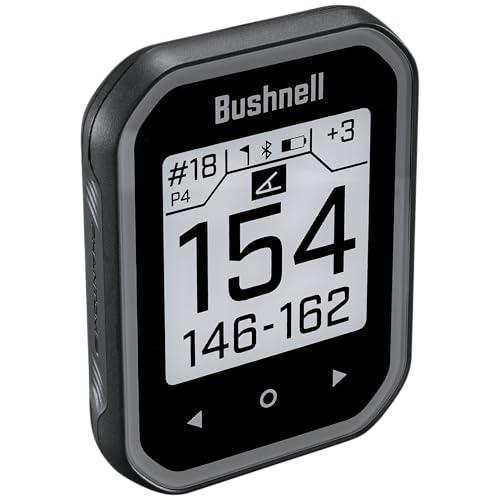
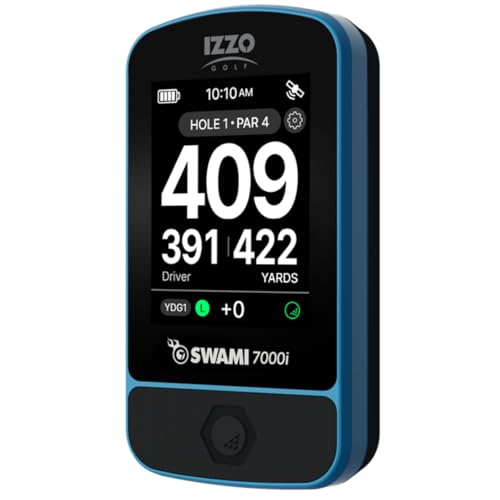
A dedicated GPS unit displays a course map with your position and distances to hazards, layup zones, and green sections. It requires no aiming and works from anywhere on the hole, but it cannot give you a laser-precise pin number.
- Full-course visibility at a glance
- No need to aim at a target
- Helpful for course management
- Often includes scoring and stat tracking
For most recreational and improving golfers, the hybrid category represents the best long-term value. You get the precision of a laser for scoring shots and the situational awareness of GPS for everything else. If you already carry a dedicated GPS watch, a pure laser may still make sense as a complement—but a hybrid replaces both.
Key Features That Separate Entry-Level from Premium Handhelds
Not all handheld GPS rangefinders are created equal. The differences between an entry-level hybrid and a premium model are not about whether the device can measure distance—they all can. The differences lie in how quickly and comfortably you get that distance, and what additional information the device provides.
| Feature | Entry-Level | Mid-Range | Premium |
|---|---|---|---|
| Display | Basic LCD, single color | Dual-color OLED | Full-color AMOLED touchscreen |
| GPS Mapping | None or minimal | Front/middle/back only | Full aerial views, hazard details, pin adjustment |
| Slope Compensation | Basic on/off | Adaptive slope with tournament switch | Advanced slope plus environmental factors |
| Target Lock Feedback | Vibration only | Vibration plus visual confirmation | Visual lock indicator with color change |
| Course Preloads | Limited or none | Thousands of courses | 40,000+ courses, often with updates |
| Battery Life | Replaceable battery, moderate life | Rechargeable, multiple rounds | Rechargeable, extended multi-round use |
The practical takeaway: if you play fewer than ten rounds per year and stick to your home course, an entry-level device covers the basics. If you play regularly and travel to different courses, the mid-range and premium tiers deliver meaningful improvements in speed, readability, and course intelligence. A key differentiator is the quality of the best golf rangefinder with slope for the money, which often determines how usable the device is on hilly terrain.
Accuracy Reality: What the Numbers Actually Mean
Laser rangefinders are typically accurate to within one yard of the target, while GPS devices generally fall within a few yards of the true distance. On flat, open shots, the difference is negligible. But on shots where the pin is tucked behind a ridge, a laser may not lock at all—and that is exactly when GPS proves its worth.
Independent testing has shown that the median discrepancy between laser and GPS readings in the scoring zone (100–200 yards) is around four yards, with the 90th percentile reaching seven to nine yards [citation:15]. That gap matters when it determines whether you pull an 8-iron or a 7-iron. A hybrid device lets you choose the right tool for each shot: laser when you have a clear look, GPS when you do not.
It is also worth noting that premium hybrids do not simply pack two devices into one shell. Their GPS modules often include advanced features like plays-like distance calculations that factor in elevation, wind, and temperature—essentially giving you a caddie-grade number without any manual math. For golfers focused on launch monitor data at the range, the GPS mapping in a hybrid can also help correlate on-course distances with practice numbers.
Who Should Buy a Handheld GPS Rangefinder?
This category is not for every golfer. Here is a straightforward breakdown of who benefits most:
You should buy a hybrid handheld if: You play at least fifteen to twenty rounds per year, you encounter blind shots or elevated greens regularly, and you want one device that covers all distance scenarios. You also value having a full-course view for planning your way around unfamiliar layouts.
You might prefer a pure laser if: Your home course is open and flat, you almost never face a shot where the flag is obscured, and you prioritize speed and minimalism above all else. A pure laser is also the better choice if you already use a GPS watch and simply want pin-precise confirmation.
You might prefer GPS-only if: You struggle to hold a laser steady, you prefer glancing at a screen rather than aiming at a target, or you are primarily interested in course management and hazard planning rather than exact pin distances.
For golfers who are also upgrading other parts of their bag, the same research-first approach applies. If you are considering new irons, our guide to the best game improvement irons for high handicappers follows a similar philosophy of matching equipment to real-world playing needs.
Practical Tips for Getting the Most from Your Device
Even the best handheld GPS rangefinder only helps if you use it correctly. Here are habits that separate golfers who get real value from their device from those who leave it in the bag:
Turn it on early. GPS devices need time to acquire satellite signals and identify the course. Power it on in the parking lot or on the first tee, not when you are standing over your approach shot.
Use laser for scoring clubs, GPS for planning. When you have a clear look at the pin and a scoring club in your hand, fire the laser. When you are deciding between a 3-wood and a hybrid off the tee, or when the pin is hidden, trust the GPS map.
Keep the slope function off for competition. Most hybrids include a physical or digital switch to disable slope compensation. Know where it is and how to use it before you play in a tournament round.
Mount it where you can see it. Many hybrids include magnets that attach to a cart frame. Keeping the device visible encourages you to use it on every shot rather than digging it out of a pocket.
If you are building a complete practice and on-course toolkit, the same attention to usability applies to other gear. Our recommendations for the best golf training aids for beginners and the best golf bag with 14 full-length dividers follow the same principle: choose equipment that fits how you actually play.
Frequently Asked Questions
Can a handheld GPS rangefinder replace both a laser and a GPS watch?
For most golfers, yes. A hybrid handheld gives you laser precision to the pin and GPS front-middle-back distances without needing to wear a watch. The only scenario where you might still want a separate GPS watch is if you prefer wrist-based convenience for quick glances and do not want to carry a handheld device.
Are handheld GPS rangefinders legal in tournament play?
Laser rangefinders are permitted under the Rules of Golf, but the slope compensation feature must be disabled during competition. Most modern devices include a switch or mode to turn slope off. GPS-only devices are also generally permitted. Always confirm with your tournament committee or club before play.
How often do GPS course maps need updating?
Reputable brands update their course databases regularly, and most devices allow you to download updates via Wi-Fi or a computer connection. Courses occasionally change layout or add new tees, so checking for updates at the start of each season is a good habit. Premium models typically include lifetime course access without subscription fees.
What is the biggest advantage of a hybrid over a pure laser?
The ability to get a usable distance when the flag is not visible. A pure laser cannot measure what it cannot see. A hybrid switches to GPS mode and shows you front, middle, and back distances, along with hazard locations and layup targets. That flexibility is why hybrids have become the preferred choice for golfers who play a variety of courses.
Do I need a subscription for GPS features on a hybrid rangefinder?
Most premium brands do not require a subscription for core GPS features like course maps and front-middle-back distances. Some may offer optional advanced features through an app, but the essential on-course yardages are typically available out of the box. Check the specific model details before purchasing to confirm.
Whether you choose a hybrid, a pure laser, or a GPS-only device, the goal is the same: removing uncertainty from your distance decision. The best handheld golf GPS rangefinder is the one you will actually use on every hole—not the one with the longest feature list. Match the device to your course conditions, your playing frequency, and your comfort with technology. If you are also looking for a thoughtful present for a playing partner, the best gift for a golfer who has everything often comes down to practical tools like this.