Portable Launch Monitors for Golf: The Complete Buyer's Guide
Take your practice sessions to the next level with a portable launch monitor. Compare features, data accuracy, and portability to find the perfect device for your game improvement journey.
Why a portable launch monitor? These compact devices provide instant feedback on critical metrics like ball speed, launch angle, spin rate, and carry distance — transforming your range sessions into data-driven practice. Whether you are refining your swing at home or dialing in distances on the course, a portable launch monitor delivers professional-level insight in a package you can carry anywhere.
What to Look for in a Portable Launch Monitor
Before exploring specific models, it helps to understand the core factors that separate a good portable launch monitor from a great one. Each feature impacts how useful the device will be for your unique practice style.
Data Reliability
Look for devices that measure key metrics — ball speed, club speed, launch angle, spin rate, and carry distance — with minimal deviation. Mid-range and premium tiers typically offer superior sensor technology and more consistent readings.
Size & Battery Life
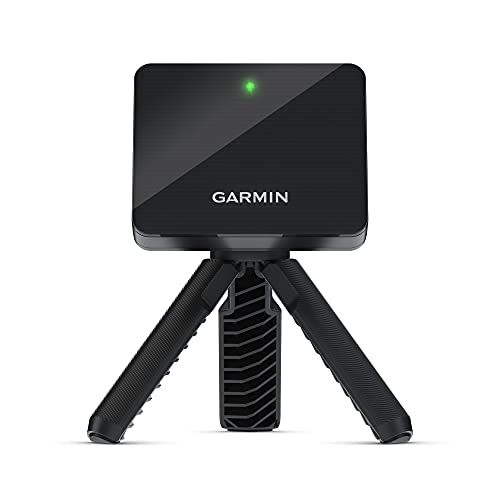
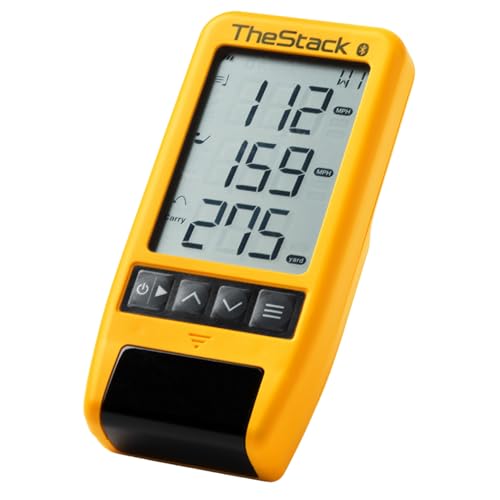
A truly portable launch monitor should fit in your golf bag and run for multiple practice sessions on a single charge. Entry-level units are often the most compact, while high-end models may include built-in displays and longer battery life.
Metrics Tracked
Entry-level models typically cover ball speed, distance, and launch angle. Mid-range devices add spin rate and club data. Top-tier portable monitors deliver full swing analysis including attack angle, smash factor, and shot shape.
App & Simulation
Many portable launch monitors pair with mobile apps for data logging, video analysis, and even simulated course play. Check whether the companion app is intuitive and whether the device supports third-party simulation software.
Understanding Portable Launch Monitor Tiers
Portable launch monitors fall into distinct tiers based on their sensor technology, data depth, and intended use. Here is a breakdown of what each tier typically offers, so you can match your selection to your practice goals.
Entry-Level Tier
These devices are ideal for recreational golfers who want basic feedback on distance, ball speed, and launch direction. They are compact, easy to set up, and usually pair with a straightforward mobile app. Many entry-level models use radar or infrared sensors to track the ball immediately after impact. For golfers focused on practice nets or home training setups, an entry-level unit provides excellent initial data without overwhelming complexity.
Mid-Range Tier
Mid-range launch monitors add spin rate, club speed, and sometimes club path data — enough for serious amateur golfers to diagnose swing flaws and track improvement over time. These devices often include built-in displays and support simulation software for indoor practice. If you are working on your power development or refining your swing fundamentals, a mid-range model offers a good balance between data richness and portability.
Premium & High-End Tier
Top-tier portable launch monitors deliver professional-grade metrics including attack angle, dynamic loft, smash factor, and detailed shot dispersion. They often feature dual-sensor systems (radar plus camera) and integrate seamlessly with advanced simulation platforms. These are the devices of choice for low-handicap players, coaches, and club fitters who demand the most accurate data in a portable form factor.
Portable Launch Monitor Feature Comparison
The table below compares common feature sets across the three tiers. Use it as a quick reference to understand what you can expect at each level of the market.
| Tier | Best For | Typical Data Points | Portability | Software Support |
|---|---|---|---|---|
| Entry-Level | Beginners & recreational practice | Ball speed, carry distance, launch angle | Ultra-compact, pocket-sized | Basic mobile app |
| Mid-Range | Serious amateurs & home practice | Adds spin rate, club speed, shot shape | Compact, fits in bag pocket | Advanced app + simulation-ready |
| Premium | Low-handicap players, coaches, fitters | Full swing analysis, attack angle, smash factor, dispersion | Portable with built-in display | Professional-grade software & API access |
Practical Use Cases for Portable Launch Monitors
A portable launch monitor is more than a gadget — it is a practice companion that can be used in several scenarios to accelerate your improvement.
Outdoor Range Sessions
Take your launch monitor to the driving range to get real-time feedback on every shot. Compare your driver swing tips in practice by observing how changes in setup and tempo affect launch angle and spin. This immediate data loop helps you make adjustments without guessing.
Indoor Home Practice
Pair your launch monitor with a practice net or an indoor simulator setup to keep your game sharp year-round. Many mid-range and premium models integrate with simulator setup software, allowing you to play virtual rounds and compete with friends while gathering detailed swing data.
Club Fitting & Gapping
Understanding your exact carry distances for each club is essential for smarter course management. A portable launch monitor lets you map your iron gapping precisely — a task that pairs well with a proper putter fitting and wedge bounce guide review. Knowing your numbers helps you select the right club with confidence on every shot.
Key Features to Prioritize Before You Decide
When narrowing down your options, keep these practical considerations in mind to ensure the device aligns with your practice routine and long-term goals.
- Sensor Technology: Radar-based units excel at tracking ball flight, while camera-based systems offer precise club and ball measurements at impact. Some premium models combine both for maximum accuracy.
- Display & Feedback: A built-in display lets you see data instantly without reaching for your phone. If you prefer app-only operation, ensure the companion app is responsive and well-designed.
- Battery Life: Look for a device that lasts through multiple range sessions. Entry-level units often run for hours on a single charge, while premium models with displays may require more frequent charging.
- Compatibility: Check whether the launch monitor works with third-party simulation software like E6 Connect or GSPro. This is especially important if you plan to build an indoor practice studio.
- Data Export & Analysis: The ability to export session data for review on a computer or tablet helps you track progress over weeks and months. This feature is common in mid-range and premium tiers.
Frequently Asked Questions
Final Thoughts: Choosing the Right Portable Launch Monitor
Selecting a portable launch monitor comes down to matching the device's capabilities to your practice habits and improvement goals. If you are just starting to explore data-driven practice, an entry-level unit provides an accessible entry point with essential metrics. As your game progresses and you seek deeper insight into spin rates, club path, and dispersion, upgrading to a mid-range or premium model unlocks the full picture of your swing.
Remember that the best launch monitor is the one you will actually use consistently. Consider portability, battery life, and app quality alongside the raw data specifications. With the right device in your bag, every practice session becomes an opportunity to learn, adjust, and improve — whether you are at the range, in your backyard, or inside a dedicated practice studio. Pair your launch monitor with quality training aids and a structured practice plan to maximize your progress and enjoy measurable improvement in your golf game.