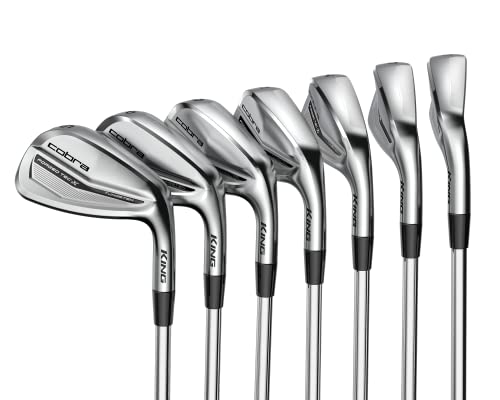
Most Forgiving Golf Irons for High Handicappers
Find the perfect game‑improvement irons to hit higher, straighter shots and build real confidence on the course.
SEE TOP PICKSUnderstanding Forgiveness: Forgiving irons use perimeter weighting, a low center of gravity, and an enlarged sweet spot to keep your ball on target – even when you don’t strike the centre of the face. This guide will help you choose the right set to lower your scores and enjoy the game more.
What Makes an Iron Forgiving?
Forgiveness in a golf iron isn’t about a magic technology – it’s a combination of design features that work together to reduce the penalty of off‑centre hits. Modern game‑improvement irons prioritise stability and launch, making them the ideal choice for high handicappers.
- Perimeter Weighting: By moving mass to the edges of the clubhead, manufacturers increase the moment of inertia (MOI). A higher MOI means the face resists twisting when you strike the ball away from the sweet spot, helping shots fly straighter.
- Low Center of Gravity (CG): A low CG helps launch the ball higher, which is crucial for generating enough carry distance, especially with slower swing speeds. Many forgiving irons also position the CG slightly back to aid launch.
- Wider Sole: A broader sole prevents the club from digging into the turf on fat shots, reducing the loss of distance. It also improves turf interaction for cleaner contact.
- Offset Design: Slight offset gives the face an extra moment to square up at impact, promoting a draw or reducing a slice – the most common miss for high handicappers.
Key Features of Game‑Improvement Irons
When you start shopping for forgiving irons, you’ll encounter a few consistent design traits. Here’s what to look for and why each matters.
- Cavity‑Back Construction: A cavity‑back iron concentrates weight around the perimeter, dramatically increasing forgiveness compared to blade‑style irons. This is the benchmark for all beginner and high‑handicap iron sets.
- Thick Topline and Visible Offset: While some players prefer a thin look, a thicker topline and offset inspire confidence at address and help align the club correctly. These visual cues make it easier to commit to the shot.
- Face Technology (Cup Face / Variable Thickness): Many modern irons use a thin, flexible face that wraps around the body. This enlarges the area of high ball speed, so even heel or toe strikes travel surprisingly far.
- Shaft Selection: Forgiveness isn’t just about the head. The right shaft flex and weight can improve launch, timing, and consistency. Lightweight graphite shafts often help slower swing speeds generate more clubhead speed.
- Vibration Dampening: Soft inserts or multi‑material construction reduce harsh feedback on mishits, keeping your hands comfortable and your focus on the next shot.
Why High Handicappers Benefit Most from Forgiving Irons
If you’re still building consistency, the difference between a flushed shot and a slight mishit can be the difference between a green in regulation and a lost ball. Here’s exactly how forgiving irons help.
Higher Launch & Easier Landings
A low CG and strong loft progression get the ball up quickly, so approach shots stop faster on the green – even from longer distances.
Better Distance on Off‑Center Hits
Advanced face designs preserve ball speed across a larger area. You’ll carry hazards more often and leave shorter putts.
Reduced Sidespin
High MOI and slight draw bias help straighten out slices, keeping the ball in play and avoiding penalty strokes.
Confidence at Address
The thicker profile and larger head inspire trust, which leads to freer swings and better tempo. Building confidence is half the battle.
For players who are just getting started in golf or carrying a handicap above 18, forgiving irons are not a crutch – they’re a smart piece of equipment that accelerates improvement. Combine them with a few iron swing tips and you’ll see your scores drop faster than you expect.
How to Choose the Right Forgiving Iron Set
With so many options available, narrowing down your choice can feel overwhelming. Use these steps to find the set that matches your game.
- Get a Basic Fitting: An iron fitting session measures your swing speed, launch angle, and lie angle. Even a free 15‑minute fitting at a retail store can point you toward the right shaft flex and length.
- Decide on a Category: “Super game‑improvement” irons offer maximum forgiveness but less workability, while standard game‑improvement models provide a bit more feel. If your primary goal is to break 100 consistently, lean toward super game‑improvement.
- Choose the Right Shaft: Graphite shafts are lighter and help generate speed, while steel shafts offer more control. Understanding shaft characteristics is essential – high handicappers often benefit from lightweight graphite in regular or senior flex.
- Set Makeup: Many forgiving sets replace long irons (3‑ and 4‑iron) with hybrids, which are easier to launch. Don’t be afraid to buy a 5‑iron through gap wedge set and add hybrids separately.
- Budget Realistically: Forgiving iron sets typically cost between $500 and $1,500, with premium models reaching $2,000+. A quality set in the $700–$1,000 range will serve you well for years.