Best Golf Hitting Mats for Simulator: Ultimate Buyer's Guide
Transform your indoor golf experience with the perfect hitting mat. Protect your joints, get realistic turf feedback, and unlock accurate launch monitor data.
VIEW RECOMMENDED MATSPro Tip: A high-quality golf hitting mat is the foundation of any reliable simulator setup. It not only replicates the feel of real turf but also reduces the risk of injury from repetitive swings on hard surfaces.
Why a Dedicated Hitting Mat Matters for Your Simulator
When building a home golf simulator, many golfers focus on the launch monitor and screen, overlooking the hitting surface. The mat you stand on and strike from directly influences your practice quality. A proper mat provides shock absorption to protect wrists, elbows, and shoulders during thousands of swings, while the turf's realism affects how the club interacts with the ground. This interaction is critical for accurate data from launch monitors, especially when measuring spin and launch angle. For a broader look at available options, see our hitting mat overview.
Key Features to Look For
Choosing the right mat means balancing durability, performance, and comfort. Here's what to consider:
- Turf Material: Look for nylon or polypropylene fibers that mimic real fairway or tee box lies. Premium mats often have multi-layer construction with a thatch layer for a realistic feel.
- Thickness & Cushioning: Mats range from 1/2 inch to over 2 inches thick. A thicker foam base (1‑1/2 inches or more) better absorbs impact and reduces joint strain. For heavy use or multi-golfer simulators, opt for at least 1‑3/4 inches.
- Realistic Ball Flight: The mat should allow the club to glide through without grabbing excessively, which can affect launch angle and spin readings. Some mats incorporate a “fairway” or “tight lie” panel to simulate different conditions.
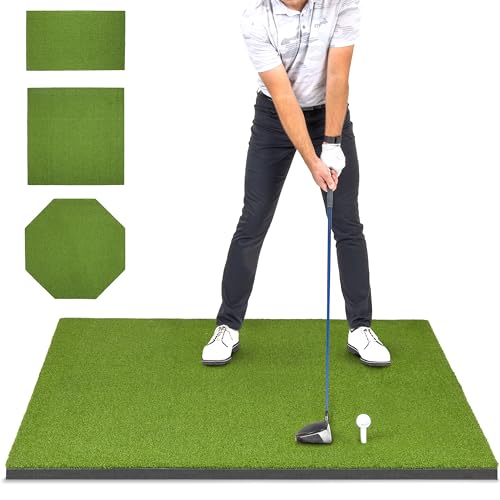
- Size & Configuration: A standard stance mat plus hitting strip provides a stable platform for the golfer while allowing a replaceable strip where most wear occurs. Hitting strips are cost-effective to replace over time.
- Sensor Compatibility: If you use a swing analyzer or optical launch monitor, ensure the mat doesn't create interference. Certain dark‑colored mats can affect camera‑based systems.
Types of Simulator Hitting Mats
There are three common styles:
- Stance Mat with Hitting Strip: A large mat where you stand, with a removable center strip that endures impact. This is the most popular for home setups because it allows you to replace the hitting strip when it wears out without buying an entire new mat.
- Hitting Mat with Integrated Tee: Some mats come with a built‑in tee holder or a separate tee box section, great for practicing driver shots indoors.
- Portable Hitting Mats: Lightweight, roll‑up mats for occasional use or those with limited space. They often lack the cushioning of permanent mats but work well with practice nets.
Sizing Guidelines for Your Simulator Space
Your available room dimensions dictate the mat size. A typical hitting area needs at least 5 feet width x 5 feet depth for the mat alone, plus additional room for your swing. For a dedicated simulator setup, a 5'x5' or 5'x10' mat is ideal. If you have a narrower space, consider a 4'x5' stance mat with a separate strip. Always leave enough clearance behind the mat for your backswing and follow‑through.
Price Ranges: What to Expect
Quality golf simulator hitting mats typically cost between $150 and $900. Basic portable mats start around $150, while mid‑range stance mats with replacement strips fall in the $300–$600 range. Premium commercial‑grade mats, designed for heavy use and featuring advanced turf technology, can exceed $900. Invest according to your usage frequency – a serious sim player should lean toward the higher end to protect their body and get consistent data.
Installation & Maintenance Tips
Most simulator mats are heavy and lie flat without adhesive, but you may need a non‑slip underlayment on smooth floors. Keep the turf clean by vacuuming debris and occasionally brushing the fibers upright. To extend the life of your hitting strip, rotate it periodically if not permanently fixed. After heavy use, inspect the foam backing for compression and replace the strip when it becomes uneven.
Ready to upgrade your indoor practice? A well‑chosen mat transforms the way you train. Browse our recommended mats below, all sourced for performance and value.