Flat Ball Golf Swing Training Aid: Improve Contact & Accuracy
Master ball‑first contact and eliminate fat and thin shots with this simple yet powerful training tool.
EXPLORE TRAINING AIDSWhat Is a Flat Ball Golf Swing Training Aid?
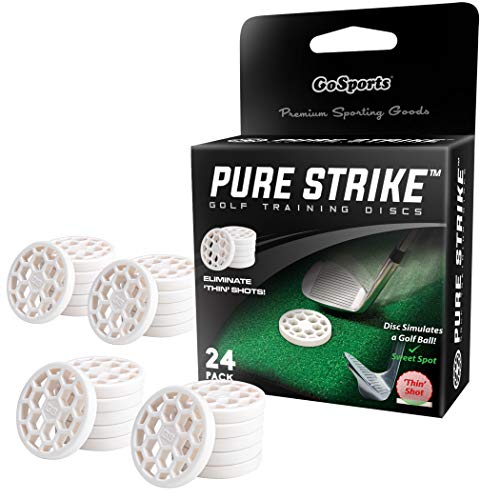
A flat ball training aid is a thin, disc‑shaped tool – usually made of durable rubber or plastic – that you place on the ground instead of a traditional golf ball. Because it sits almost flush with the turf, it forces you to deliver the clubhead on a descending angle of attack and strike the ball (the disc) before the ground. It’s a direct feedback device: if your swing is too steep or too shallow, you’ll either miss the disc completely or hit the mat first, immediately revealing the flaw.
Coaches and players of all levels use flat balls as part of their training aids arsenal because they isolate the fundamental skill of low‑point control – something every iron shot demands. Whether you practice on a hitting mat at the range or on a practice net in your backyard, a flat ball can transform how you deliver the club into impact.
How It Works and Key Benefits
The flat ball’s genius lies in its simplicity. A standard golf ball sits roughly 1.68 inches above the ground, offering a margin for error. The flat disc is only a fraction of an inch thick, so if your swing arc bottoms out behind the disc, you’ll hit the ground first and pop the disc up weakly – or miss it altogether. This immediate feedback teaches you to move the low point of your swing forward of the ball, creating the crisp “ball‑then‑turf” divot pattern that all great iron players share.
Five Reasons to Add a Flat Ball to Your Bag
- Eliminates Fat Shots: Can’t hit behind it – you’ll simply knock the disc away without making clean contact.
- Fixes Thin Shots: A swing that’s too shallow or “picking” the ball off the surface won’t compress the flat disc.
- Improves Low‑Point Control: Repeatedly clipping the disc off the turf grooves the correct low point for irons and hybrids.
- Builds Divot Awareness: You’ll start to create divots after impact, a hallmark of a sound swing fundamentals.
- Super Portable: Toss it in your bag and use it on any driving range or indoor mat.
Pro Tip: Pair the flat ball with an impact bag to work on both low‑point control and proper impact alignments in the same session.
How to Use a Flat Ball Training Aid
Using a flat ball is straightforward, but a structured practice routine will accelerate your improvement. Start by placing the disc on a level surface – a hitting mat or a tight lie on the practice tee. Align the disc as you would a normal golf ball, and set up with the clubhead resting directly behind it. From there, focus on these core drills.
The Basic Strike Drill
Make your normal iron swing with the single goal of striking the disc cleanly. If you catch it flush, the disc will pop up a few feet with a satisfying click. If you hit the ground first, the disc will hardly move. Repeat until you can clip the disc five times in a row without a mishit. This drill alone can dramatically improve your swing fundamentals.
Alignment & Path Check
Place two alignment sticks on the ground – one along your target line and one parallel to it for your stance. Set the flat ball at the intersection and work on striking it without disturbing the sticks. This checks both your strike quality and your club path simultaneously.
Progressive Distance Challenge
Once you can consistently strike the disc, move it progressively farther forward in your stance while still hitting it cleanly. This encourages a gradual forward shift of the low point, exactly what you need for longer irons and hybrids. For high‑handicappers, starting with a solid beginner foundation and then adding this drill can shave strokes quickly.
Who Should Use a Flat Ball Trainer?
Virtually every golfer can benefit, but the flat ball is especially valuable for:
- High‑handicappers and beginners who struggle with consistent contact (fat or thin shots are a primary source of lost strokes).
- Mid‑handicappers looking to tighten dispersion and hit more greens in regulation.
- Low‑handicap and competitive players as a pre‑round warm‑up or as a “reset” tool during a slump.
- Juniors and seniors because the flat ball requires no extra strength – only precise delivery.
Flat Ball vs. Other Swing Training Aids
While many aids promote better contact, each has a different focus. An impact bag teaches the feel of a compressed impact position, but it doesn’t roll or fly like a ball. A swing plane trainer helps you groove a neutral path, yet it doesn’t address low‑point control. The flat ball uniquely combines strike feedback, portability, and a true ball‑like feel. For the most comprehensive practice, consider using a flat ball alongside a swing analyzer that gives you data on attack angle and dynamic loft.
What to Look for When Buying a Flat Ball
Not all flat ball training aids are created equal. Here’s what to check before you add one to your cart:
- Material: High‑quality rubber or flexible plastic that can withstand repeated strikes without cracking.
- Thickness: Around ⅛ inch is standard – thin enough to punish poor strikes, yet thick enough to be visible.
- Diameter: Most discs are about 2.5 inches across, similar to a golf hole, making them easy to track in the air.
- Color: Bright orange, yellow, or neon green is easiest to spot on the range.
- Price: Expect to spend $15–$30 for a quality flat ball. Many packs include two or three discs so you always have a spare.
A flat ball is one of the most affordable training aids you can buy, and its simplicity means there are no batteries, apps, or moving parts – just pure, effective feedback.
Final Thoughts: Make the Flat Ball Part of Your Routine
The flat ball golf swing training aid is a proven, no‑nonsense tool that helps you build the most important skill in iron play: hitting the ball before the turf. By incorporating the drills above into your regular range sessions – whether you’re working into a practice net or using a golf swing app to record your motion – you’ll see tighter dispersion, cleaner contact, and lower scores.
Browse the recommended flat ball training aids below and choose the one that fits your practice style. A small investment of $15–$30 could be the catalyst for your most consistent ball‑striking season yet.