Best Practice Putting Green for Home: Train Smarter, Putt Better
Putting accounts for roughly 40% of all strokes in a typical round, yet it is the part of the game most golfers practice the least. A home putting green lets you build a repeatable stroke, dial in distance control, and lower your scores without ever leaving your house.
See Top PicksWhy a home putting green is a game-changer: You do not need hours at the course to improve your putting. Ten focused minutes a day on a quality practice green builds muscle memory faster than an occasional range session. This guide breaks down indoor versus outdoor options, the features that actually matter, and how to choose the right green for your space and skill level.
Why Invest in a Home Practice Putting Green?
The putter is the most-used club in your bag, and the fastest way to shave strokes is to become a more consistent putter. A home practice green removes the biggest barrier to improvement: convenience. When practice is only a few steps away, you will actually do it, and that repetition is what builds a repeatable stroke and reliable distance control.
Beyond convenience, a home green offers real feedback. Premium mats and artificial turf surfaces roll true and reward a square face and centered strike, while cheaper surfaces expose a decelerating or wristy stroke. Consistent practice also reinforces a stable pre-shot routine, which translates directly to the course under pressure. If you pair a home green with a structured practice plan, you can realistically cut several putts per round within a few months.
Indoor vs. Outdoor Putting Greens
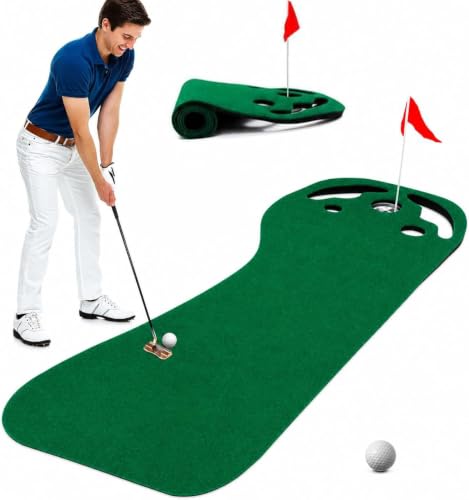
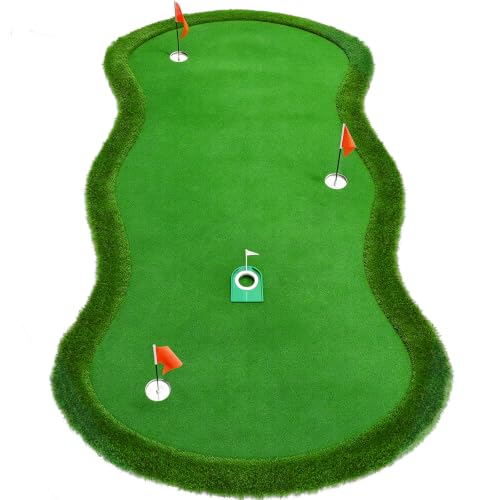
The first decision is where your green will live. Indoor and outdoor options serve different needs, and many golfers use both. If you are tight on space, an indoor practice putting green is the most practical choice, and models with a ball return make rapid-fire reps effortless. If you have a yard, an home practice putting green installed outdoors lets you practice longer putts and varied breaks.
| Factor | Indoor Green | Outdoor Green |
|---|---|---|
| Space needed | Small — a hallway or spare room works | Larger — a patio, yard, or garage area |
| Weather dependency | None — usable year-round | Seasonal, affected by rain and frost |
| Putt length | Typically shorter, focused reps | Longer putts and realistic breaks |
| Realism | Good for stroke and distance control | Closer to real green speeds |
| Setup effort | Minimal — roll out and putt | Moderate — installation and leveling |
| Best for | Daily reps, stroke work, small homes | Serious practice, yard owners |
Key Features to Look For
Not all putting greens are created equal. Whether you choose an indoor mat or an outdoor artificial surface, these features separate a green that will actually improve your game from one that collects dust:
- True roll surface: The mat or turf should roll the ball smoothly without hopping or drifting. A quality surface rewards a good stroke and exposes a bad one.
- Realistic stimp speed: Look for a surface that mimics typical course speeds, so your practice translates to the course. Adjustable-speed surfaces are a bonus for serious players.
- Durable backing: A non-slip, heavy-duty backing keeps the green in place, especially on smooth floors and in high-traffic areas.
- Multiple hole positions: Several cups or hole cutouts let you vary your target and practice different breaks.
- Ball return or containment: Ball-return systems and raised edges reduce time chasing putts, which means more reps per session.
- Portability and storage: Roll-up mats and modular systems are easy to store and move between rooms or indoors and outdoors.
- Alignment guides: Printed or built-in alignment lines help you set up square and verify your stroke path.
Choosing the Right Tier for Your Needs
Putting greens fall into broad quality tiers, and the right choice depends on your space, budget, and how serious you are about practice. Rather than fixating on a specific figure, think about which tier matches your commitment level and available room.
Budget-Friendly Mats
Best for casual golfers and beginners testing the habit. These roll-up mats are compact, easy to store, and ideal for quick daily stroke work. Surface realism and durability are more basic, but they are a low-commitment way to start practicing at home.
Mid-Tier Practice Greens
The sweet spot for most dedicated golfers. Expect smoother roll, better backing, multiple hole positions, and sturdier construction. These greens hold up well to daily use and offer a noticeably more realistic roll than entry-level mats.
High-End & Modular Systems
For serious players who want the most authentic experience. Premium artificial turf, adjustable speed, realistic contouring, and multi-hole configurations make these greens the closest thing to a real practice green. Ideal for larger spaces and year-round outdoor use.
Setting Up Your Home Putting Green
Setup matters as much as the green itself. On a hard floor, use a mat with a non-slip backing or place a thin rug underneath to prevent slipping. For outdoor installations, level the ground first — even a slight slope creates a permanent break you do not want. Position your green with enough room behind the hole to follow through and enough room in front to take a full stroke.
If you are buying an indoor green with a ball return, check that the return channel is clear and the green sits flat on the floor. For outdoor modular systems, snap the panels together on a leveled base and let them settle before practicing. A simple alignment stick or two placed on the green can help you verify your setup and stroke path during practice sessions.
How to Practice Effectively on a Home Green
Having a green is only half the equation. Structure your practice to get the most out of it:
- Start with setup: Spend a few minutes checking grip, posture, and alignment before every session.
- Practice distance control: Lag putts to a target without a hole, focusing on speed rather than line.
- Use gates and tees: Place two tees just wider than your putter head to train a square, centered stroke.
- Vary your target: Rotate between hole positions to avoid grooving a single line.
- Simulate pressure: Practice short putts with a "must-make" mindset to build confidence on the course.
If you want to go further, a dedicated putting mirror and gate trainer make a strong complement to your green. And if you are upgrading other parts of your bag alongside your putting practice, our guides on golf training aids for beginners and choosing a putter for a right-handed, left-eye-dominant golfer are worth a read.
Indoor vs. Outdoor: Which Should You Buy?
For most golfers, the answer is an indoor green first. It is the lowest-commitment option, it works year-round, and it delivers the biggest improvement per minute of practice. If you have yard space and want to practice longer putts, adding an outdoor green later is a natural upgrade. Golfers who want the most realistic home experience should look at premium modular systems that combine true-rolling turf with adjustable speed and multiple hole positions.
Whatever you choose, commit to a short daily routine. Consistency beats intensity, and a home green makes consistency easy. For a deeper look at indoor options with ball return, see our guide to the best indoor putting green with ball return.
Frequently Asked Questions
What is the best practice putting green for home use?
The best home putting green depends on your space and goals. Indoor mats are ideal for small apartments and quick daily reps, while outdoor artificial greens suit larger yards and provide realistic ball roll. Premium modular systems offer the most authentic experience for serious players.
How much space do I need for a home putting green?
A small indoor putting mat needs roughly 3 feet by 10 feet of floor space. Outdoor artificial greens typically require at least 8 feet by 10 feet, though larger installations of 15 feet or more allow for longer putts and multiple hole positions.
Are home putting greens worth it for improving my game?
Yes. Consistent, repetitive practice on a home putting green builds muscle memory, improves distance control, and reinforces a repeatable stroke. Even 10 to 15 minutes of daily practice on a quality mat can noticeably lower your putts per round.
Indoor vs outdoor putting green: which should I choose?
Choose an indoor green if you want convenience, weather independence, and compact storage. Choose an outdoor green if you have yard space and want to practice longer putts and varied breaks. Many golfers combine a small indoor mat with a larger outdoor green for year-round practice.
Ready to Lower Your Putts Per Round?
Browse our hand-picked selection of home practice putting greens and start building a repeatable stroke today.
View Recommended Putting Greens