Best Golf Wedges for Mid Handicappers: A Complete Guide
Mid‑handicappers need wedges that balance forgiveness with versatility. Our expert guide helps you choose the right lofts, bounce, and grind to turn your short game into a scoring weapon.
SHOP RECOMMENDED WEDGESWhy Wedges Matter for Mid Handicappers: At this level (scores 80‑95), you have the skills to attack pins but still need forgiveness on off‑center strikes. The right wedge setup saves strokes around the green and adds consistency to your approach game.
Understanding Wedge Needs for the Mid Handicapper
Mid‑handicap golfers typically hit their pitching wedge around 110‑125 yards. You already have a solid pitching wedge in your bag, but to bridge distance gaps and master the short game you need additional specialty wedges. The goal is to fill yardage gaps between your PW and your shortest iron, while giving you tools for bunker escapes and tight‑lie chips.
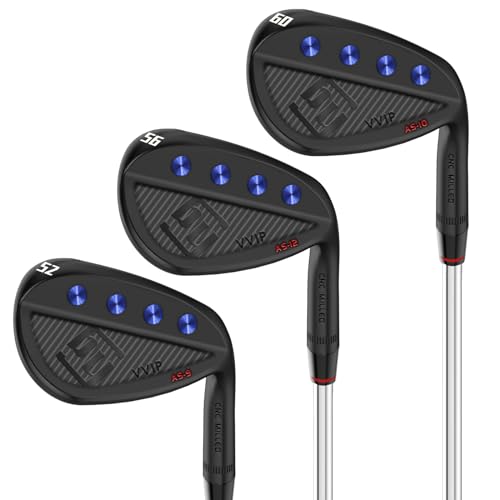
Most mid‑handicappers benefit from a three‑wedge system: a gap wedge (50‑52°), a sand wedge (54‑56°), and a lob wedge (58‑60°). This setup provides 4‑6° loft increments for precise distance gapping and offers versatility from any lie. Understanding wedge bounce is critical – the right bounce helps you glide through turf or sand without digging.
Key Wedge Features That Help Mid Handicappers
Forgiveness Through Cavity‑Back Design
Many modern wedges borrow game‑improvement technology from game improvement irons. A cavity‑back or pocket‑cavity wedge adds perimeter weighting, making off‑center hits fly straighter and higher – perfect for mid‑handicappers who don’t always flush it.
Optimal Bounce & Grind
Mid‑handicappers need a versatile sole. A medium bounce (10‑12° in the sand wedge) works well for most conditions. Pair it with a heel‑toe grind that allows you to open the face without adding effective bounce. A full wedge bounce guide explains how to match bounce to your swing type and course conditions.
Progressive Grooves & Face Texture
Look for wedges with CNC‑milled grooves and laser‑etched face texture (common in premium models). These increase spin on partial shots, helping you stop the ball quickly on the green. Even forgiving wedges now offer tour‑level spin technology.
Shaft & Grip Consistency
Keep your wedge shafts similar to your irons for feel consistency. If you play graphite in your irons, consider the same shaft weight and flex in your wedges. Many mid‑handicappers also benefit from a slightly softer tip shaft in the lob wedge for added touch.
The Perfect Wedge Setup for a Mid Handicapper
Your wedge setup should be built around your pitching wedge loft. If your PW is 44‑46°, the following trio eliminates yardage gaps and gives you every short‑game shot:
- Gap Wedge (50‑52°): Fills the distance hole between PW and SW. Ideal for full swings from 100‑115 yards and bump‑and‑run chips. Look for 8‑10° of bounce to handle tight lies.
- Sand Wedge (54‑56°): Your primary bunker club and versatile scoring tool. A 10‑12° bounce with a moderate sole grind lets you escape sand easily and still play from the fairway.
- Lob Wedge (58‑60°): For high, soft‑landing shots over hazards. A lower bounce (4‑8°) with heel relief allows you to slide the club under the ball on firm turf and hit flop shots with confidence.
If you prefer to carry only two extra wedges, you might combine a 54‑56° sand wedge with a 58° lob wedge, and rely on a 50° gap wedge that matches your iron set. For further wedge selection advice, see our guide on the best wedges for mid to high handicappers.
Forgiving Wedges vs. Traditional Blade Wedges
Mid‑handicappers often wonder whether to use blade‑style wedges (like tour pros) or more forgiving cavity‑back designs. While blade wedges offer maximum workability and a sleek look, they penalize off‑center strikes. A cavity‑back wedge provides a larger sweet spot and higher launch, which helps you hold greens even when you don’t hit the center.
Many players find that blending a cavity‑back gap wedge with a slightly more compact sand wedge and a traditional lob wedge works perfectly. The best wedges for high handicappers often illustrate how forgiveness technology can benefit any player, and those same features translate well to mid‑handicap scoring clubs.
Proven Short‑Game Tips for Mid Handicappers
Having the right equipment is only half the battle. Use these fundamental techniques to convert your wedge game into pars and birdies:
- Master the One‑Hop‑and‑Stop Chip: With your gap wedge, use a chipping technique where the ball lands on the fringe and rolls like a putt. This high‑percentage shot takes the guesswork out of touch around the green.
- Dial in Your Distances: Spend time on the range hitting ½, ¾, and full swings with each wedge. Distance control is the quickest way to eliminate three‑putts and up‑and‑down pressure.
- Bunker Play Simplified: Trust your sand wedge’s bounce. Open the face slightly, aim to hit the sand 2‑3 inches behind the ball, and accelerate through. A consistent bunker technique turns a penalty into a par save.
- Pitch with Precision: For 30‑80 yard shots, use a compact pitching motion with your lob or sand wedge. Keep your weight forward and control the trajectory with ball position, not hand speed.
For more in‑depth short‑game strategies, visit our wedge swing tips and learn how proper course strategy can set up more wedge opportunities inside 100 yards.
Choose Wedges That Fit Your Game
The best wedges for mid handicappers are those that inspire confidence at address and deliver consistent results. Prioritize forgiveness in the gap wedge, versatility in the sand wedge, and touch in the lob wedge. Remember that proper bounce and grind selection is just as important as the brand name on the club. When your wedges become reliable scoring tools, you’ll see your handicap drop – and your enjoyment of the game soar.