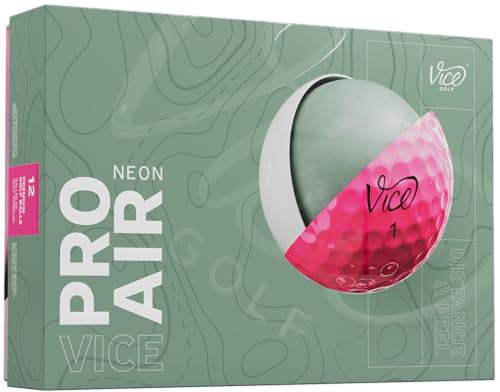
Best Golf Ball Compression for 85 MPH Swing Speed
A complete guide to choosing the right compression rating to maximize your distance, feel, and control on the course.
If your driver swing speed consistently clocks in around 85 mph, you're in a crucial performance window where the right equipment makes a massive difference. One of the most overlooked yet impactful choices is golf ball compression. Selecting a ball that's too firm will feel like hitting a rock and will cost you valuable yards. Conversely, a ball perfectly matched to your speed can unlock a softer feel, higher launch, and significantly more distance. This guide breaks down exactly what compression rating you need, why it matters, and which balls will help you shoot lower scores.
Key Takeaway: For an 85 mph swing speed, low-compression golf balls (rated 50–70) are the optimal choice. They compress fully at impact, maximizing energy transfer for a powerful, high-launching ball flight.
Understanding Golf Ball Compression
Golf ball compression measures how much a ball deforms under the force of impact. It's a simple concept with profound effects. A high-compression ball (90-100+) is designed for very fast swing speeds, typically 105 mph and above, as it requires tremendous force to compress the core. A mid-compression ball (70-85) is a versatile option for a broad range of players. A low-compression ball (50-70) is engineered to deform more easily, making it the ideal partner for swing speeds between 70 and 90 mph. The deformation isn't just about feel; it's about physics. When a ball compresses correctly, it stores and releases energy more efficiently, leading to higher ball speeds off the clubface.
Why Compression Matters at 85 MPH
An 85 mph swing exists in a sweet spot. It's fast enough to generate serious distance but not so fast that it overpowers a soft ball. Using a ball with a compression rating that's too high—say, a tour-level 100-compression model—means your swing speed can't fully deform the core. The result is a lower-energy rebound, which translates to a loss of up to 5-10 yards off the tee and a harsh, "clicky" feel. This is especially punishing on mishits. If you're working on your swing fundamentals to gain more speed, starting with the correct ball is a foundational step that provides immediate feedback and results. A properly fitted low-compression ball will launch higher, spin less with the driver, and feel exceptionally soft, turning those near-misses into playable shots.
Benefits of Low Compression at 85 MPH
- Maximum Distance: Full core compression generates higher ball speeds for longer carries.
- Softer Feel: Provides a buttery, responsive sensation on all shots, particularly on and around the greens.
- Higher Launch: Helps get the ball airborne easily, which is crucial for maximizing carry distance at moderate speeds.
- Reduced Driver Spin: Many low-compression designs are engineered to cut down on sidespin, leading to straighter drives.
Low vs. Mid Compression: A Detailed Comparison
The choice often comes down to low-compression (50-70) and soft mid-compression (70-80) balls. Understanding their nuanced differences is key to optimizing your game.
| Feature | Low Compression (50–70) | Soft Mid Compression (70–80) |
|---|---|---|
| Driver Distance | Excellent. Maximizes energy transfer for explosive ball speeds and high launch. | Very Good. Slightly lower launch but can be very long with a penetrating flight. |
| Feel & Sound | Ultra-soft, muted impact sound. Feels like the ball melts into the clubface. | Soft but with a slightly firmer, more responsive "click" that many better players prefer. |
| Iron & Wedge Spin | Lower spin design. Promotes distance on iron shots but offers less grab on the greens. | Higher spin, especially with urethane covers. Superior control for approach shots and short game. |
| Best For | Golfers who prioritize maximum distance and a plush feel, and who want to minimize a slice or hook. | Players who want a balance of distance and control, and who value workability and stopping power on the green. |
If your primary goal is to hit the ball further and straighter with a luxurious feel, a pure low-compression ball is your best friend. If you're confident in your iron swing tips and demand precise distance control and spin on your approach shots, a soft mid-compression ball with a urethane cover is a compelling alternative. For many players at this speed, a tour-performance ball in a lower compression model offers the best of both worlds.
How to Pick the Perfect Ball
Beyond compression, consider the cover material. A Surlyn (ionomer) cover is durable, reduces spin, and is fantastic for distance and durability. A Urethane cover is softer, provides significantly more spin and control around the greens, and is the choice of most serious players. For an 85 mph swing, a low-compression urethane ball is often considered the "smart" player's choice, delivering both distance and short-game prowess. Don't underestimate the importance of testing. Buy a sleeve of two different models and play them head-to-head on the course. Pay attention to how they react on your putting drills and crucial pitch shots. The ball that performs consistently under pressure is your gamer.
Also, consider your typical ball flight. If you struggle to get the ball airborne, a low-compression ball's high-launch characteristics are a must. If you have a higher natural flight, a soft mid-compression ball might bring the trajectory down to a more optimal, penetrating window. Ultimately, the ball is the only piece of equipment you use on every single shot, making it worth the time to find the perfect match. For those exploring other speed ranges, our guides on compression for 90 mph and 100 mph swing speeds offer targeted advice.
Ready to Unlock Your Best Distance?
Explore our top-rated, low-compression golf ball picks below, each selected to perfectly match an 85 mph swing speed and elevate your game.
VIEW RECOMMENDED BALLS